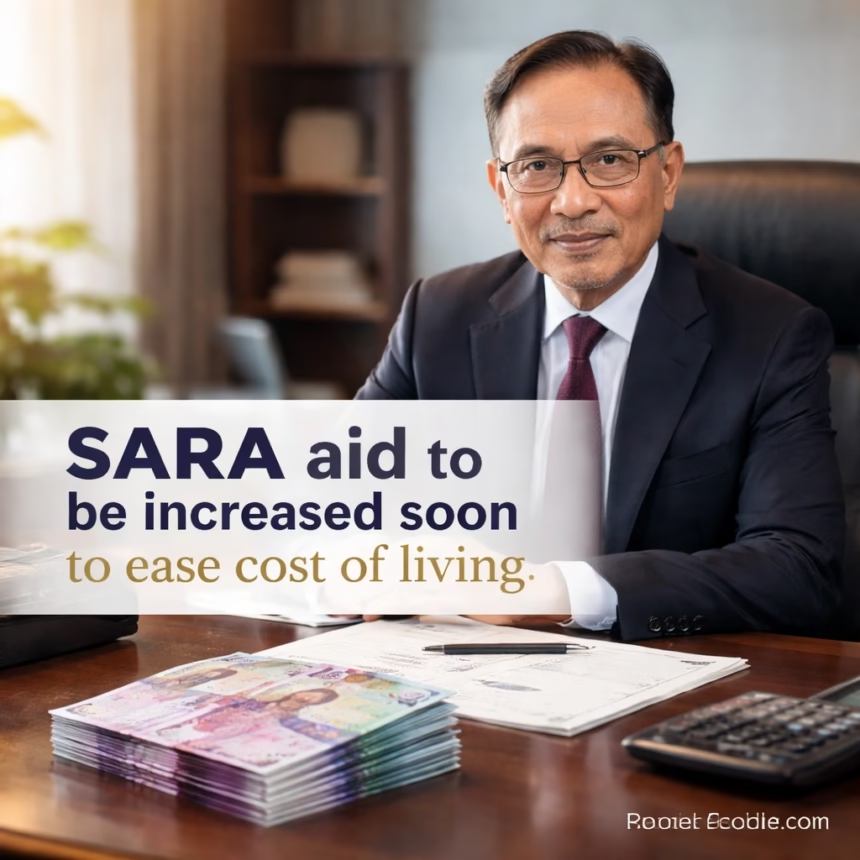
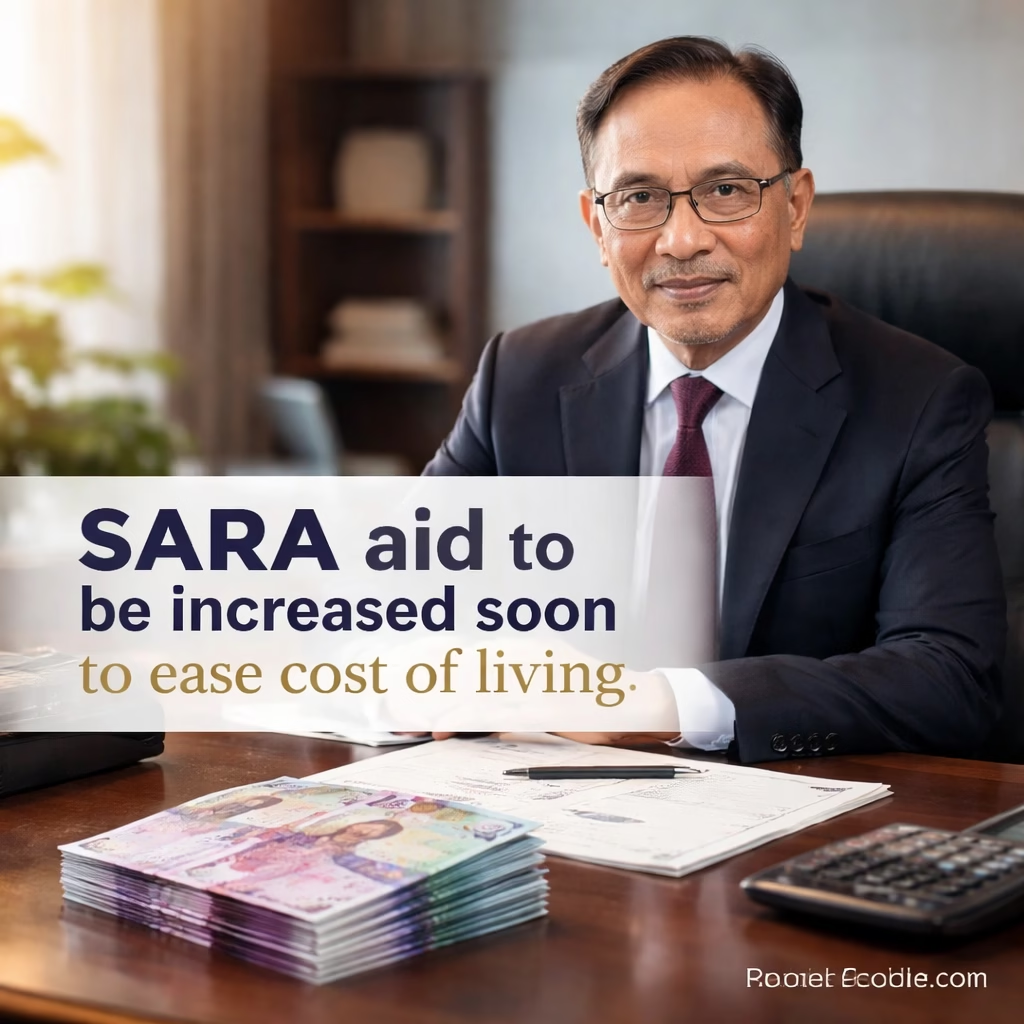
Prime Minister Datuk Seri Anwar Ibrahim recently announced an impending increase in the Sumbangan Asas Rahmah (SARA) aid program, signaling the government's intensified efforts to alleviate the burden of the rising cost of living for eligible households across Malaysia. This crucial announcement, made amidst ongoing economic pressures, promises enhanced financial support for the nation's most vulnerable communities, with implementation expected to commence soon.
Background: A Pillar of Malaysia’s Social Safety Net
The Sumbangan Asas Rahmah (SARA) program stands as a cornerstone of the Malaysian government's comprehensive social protection initiatives, designed specifically to assist low-income households in coping with daily essential needs. Introduced as part of the broader 'Payung Rahmah' (Rahmah Umbrella) strategy, SARA targets recipients of the Sumbangan Tunai Rahmah (STR) who are categorized as hardcore poor, ensuring direct financial assistance for purchasing basic necessities.
Evolution of Rahmah Initiatives
SARA itself is an evolution of various cash aid programs implemented by successive governments, reflecting a continuous commitment to supporting the economically disadvantaged. Prior iterations, such as Bantuan Rakyat 1Malaysia (BR1M), Bantuan Sara Hidup (BSH), Bantuan Prihatin Rakyat (BPR), and Bantuan Keluarga Malaysia (BKM), laid the groundwork for the current streamlined and targeted approach. The Rahmah framework, introduced by the unity government, aims to provide more holistic support, not just through direct cash transfers but also via food baskets, Rahmah Sales, and other targeted interventions to mitigate the impact of inflation.
Currently, eligible SARA recipients typically receive RM100 per month for 12 months, totaling RM1,200 annually. This aid is often disbursed monthly to their MyKad accounts, enabling them to purchase groceries and essential goods from designated retail partners. The program's design ensures that the funds are utilized for their intended purpose: securing food and other household necessities, thereby directly impacting the beneficiaries' purchasing power in a controlled manner. The ongoing challenge of rising inflation, particularly affecting food prices and utility costs, has underscored the critical importance of such aid programs, prompting the government to continually review and enhance their effectiveness.
Key Developments: Anwar’s Commitment to Enhanced Support
Prime Minister Anwar Ibrahim's recent declaration marks a significant enhancement to the SARA program, signaling a proactive response to the persistent challenges posed by the cost of living. While specific new figures are pending official gazetting, the announcement confirms the government's intention to substantially increase the quantum of aid, thereby providing more robust support to those most in need.

Details of the SARA Enhancement
The Prime Minister emphasized that the decision to boost SARA aid stems from a thorough assessment of the current economic landscape and the financial strain experienced by many Malaysian households. The increase is expected to directly translate into greater purchasing power for beneficiaries, allowing them to better manage their daily expenses for food, groceries, and other essential items. Although the precise revised amounts and the exact date of implementation are yet to be formally announced, the government has indicated that the changes will be rolled out "soon," reflecting an urgent timeline for execution.
This enhancement is not merely an incremental adjustment but a strategic move to reinforce the social safety net, particularly for the hardcore poor. It underscores the government's resolve to ensure that no segment of society is left behind amidst global and domestic economic fluctuations. The increased aid will likely be disbursed through the existing efficient channels, such as direct credits to MyKad accounts or bank transfers, maintaining the program's accessibility and ease of use for recipients. Further details regarding any potential adjustments to eligibility criteria or the expansion of beneficiary groups will be clarified as the implementation phase approaches. The focus remains on maximizing the impact of every ringgit disbursed to uplift the living standards of the target demographic.
Impact: A Lifeline for Vulnerable Households
The impending increase in SARA aid is poised to deliver a tangible and immediate positive impact on millions of Malaysian households, particularly those at the lowest rung of the income ladder. This enhancement is more than just a financial injection; it represents a crucial lifeline for families struggling to make ends meet amidst persistent inflationary pressures.
More Read

Direct Relief for Vulnerable Households
The primary beneficiaries of this increased aid will be the hardcore poor and the B40 income group, who are already identified as recipients of the Sumbangan Tunai Rahmah (STR). These households often allocate a significant portion of their income to basic necessities, making them highly susceptible to price fluctuations. The additional funds will directly bolster their ability to purchase essential food items like rice, cooking oil, sugar, and fresh produce, thereby improving food security and reducing instances of malnutrition. For many, this aid means the difference between having sufficient meals and going hungry, providing a much-needed buffer against economic shocks. It also offers relief from the constant stress of financial insecurity, allowing families to focus on other aspects of their well-being.
Broader Economic Implications
Beyond individual households, the increased SARA aid is expected to generate a positive ripple effect throughout the local economy. When beneficiaries spend their aid on groceries and daily essentials, they primarily do so at local shops, markets, and designated retailers. This increased consumer spending injects liquidity into local businesses, supporting small and medium-sized enterprises (SMEs) and helping to sustain jobs within the community. It can stimulate demand for locally produced goods, contributing to the growth of domestic industries. Furthermore, by stabilizing the purchasing power of a significant portion of the population, the government aims to prevent a deeper economic downturn and maintain a baseline level of economic activity. This targeted fiscal stimulus demonstrates the government's commitment to a human-centric economic policy that prioritizes the welfare of its citizens while fostering broader economic resilience.
What Next: Implementation and Future Vision
The announcement of increased SARA aid sets in motion a series of administrative and operational steps crucial for its successful implementation. The government is committed to a swift and efficient rollout, ensuring that the enhanced support reaches eligible Malaysians without undue delay.
Implementation Roadmap
Following the Prime Minister's announcement, the Ministry of Finance, in collaboration with relevant agencies, will finalize the specifics of the increase, including the new aid quantum, detailed eligibility criteria if any changes are made, and the exact disbursement schedule. This will likely involve parliamentary approval for any necessary budget reallocations or supplementary funds. The technical infrastructure for disbursement, primarily through MyKad accounts and bank transfers, is already robust, allowing for a relatively seamless transition to the new aid amounts. Public advisories and awareness campaigns will be launched to inform beneficiaries about the changes and how to access the increased funds. The government aims to commence the disbursement of the enhanced aid within weeks of the official announcement, reflecting the urgency of addressing cost-of-living concerns.
Long-Term Vision for Social Safety Nets
Looking ahead, the government plans to continuously monitor the impact and effectiveness of the SARA program and other Rahmah initiatives. This includes regular reviews of inflation rates, poverty lines, and household income levels to ensure that social safety nets remain responsive to the evolving economic landscape. Prime Minister Anwar Ibrahim has reiterated his administration's commitment to building a more equitable and resilient society, where robust social protection mechanisms are in place to support all citizens. This includes exploring further expansions or refinements to existing aid programs, as well as developing new initiatives that address specific vulnerabilities such within the B40 and hardcore poor segments. The long-term vision is to not only provide immediate relief but also to empower individuals and families towards greater economic self-sufficiency, ultimately reducing reliance on aid through education, skills training, and employment opportunities. The increased SARA aid is thus a vital step in a broader, ongoing strategy to uplift the living standards of all Malaysians and foster inclusive growth.