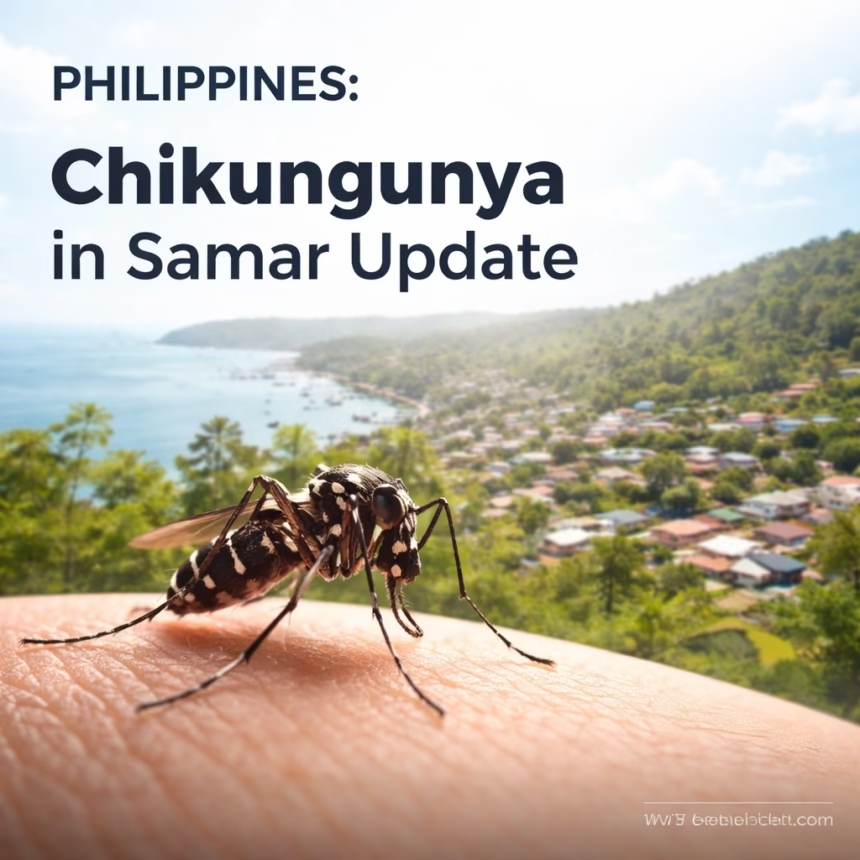
Samar province in the Eastern Visayas region of the Philippines is grappling with a significant surge in Chikungunya cases, prompting health authorities to intensify their response efforts. Since late 2023, the mosquito-borne viral disease has steadily spread across several municipalities, escalating into a public health concern by early 2024. The Department of Health (DOH) and local government units (LGUs) are now mobilizing resources to contain the outbreak and protect vulnerable communities.
Background: The Onset of an Unseen Threat
Chikungunya, a viral infection transmitted to humans by infected mosquitoes, primarily *Aedes aegypti* and *Aedes albopictus*, has a history of sporadic outbreaks in the Philippines. Characterized by sudden onset of fever, severe joint pain, muscle pain, headache, nausea, fatigue, and rash, its symptoms can be debilitating and persist for weeks or even months. While rarely fatal, the disease significantly impacts quality of life and productivity.
Initial reports of unusual fever and joint pain clusters emerged from rural barangays in Catbalogan City and Calbayog City, Samar, in late November 2023. Local health centers, accustomed to dengue season, initially managed these cases with symptomatic treatment. However, by mid-December, the increasing number of patients exhibiting classic Chikungunya symptoms, particularly the severe and persistent arthralgia, raised red flags among municipal health officers. Laboratory confirmation through RT-PCR testing, conducted at the Research Institute for Tropical Medicine (RITM) in early January 2024, officially identified the pathogen as Chikungunya virus. This confirmation triggered a heightened alert level across the province.
The humid tropical climate of Samar, coupled with recent intermittent heavy rains, created ideal breeding grounds for *Aedes* mosquitoes. Stagnant water in discarded tires, flower pots, and construction sites became prolific nurseries for the vector. Public health officials noted that several affected communities had inadequate waste management systems and limited access to regular clean-up drives, exacerbating the vector problem. The rapid increase in cases coincided with the peak of the rainy season, providing a conducive environment for the virus to spread efficiently through mosquito bites.
More Read

Key Developments: Escalating Response and Expanding Reach
As of late February 2024, the DOH Regional Office VIII reported over 1,200 suspected Chikungunya cases across Samar province, with more than 300 confirmed through laboratory tests. The municipalities of Catbalogan City, Calbayog City, Gandara, and Sta. Rita have been identified as the epicenters, accounting for nearly 70% of all reported infections. Health officials note a concerning trend of new cases emerging in previously unaffected barangays, indicating a wider geographical spread.
In response to the escalating crisis, DOH Region VIII Director Dr. Remedios Santos officially declared a "Health Alert" for Samar province on January 29, 2024. This declaration mobilized additional resources, including medical supplies, diagnostic kits, and personnel, to bolster local health systems. The DOH has also dispatched epidemiologists and public health experts to assist LGUs in contact tracing, surveillance, and vector control operations.
Local government units have intensified their "Oplan Alis Lamok" campaigns, focusing on the "4-S strategy": Search and destroy mosquito breeding places, Self-protection measures, Seek early consultation, and Say yes to fogging in outbreak areas. Catbalogan City Mayor Alfonzo Reyes spearheaded massive community clean-up drives, urging residents to actively participate in eliminating potential mosquito habitats. Fogging operations have been conducted in densely populated areas and schools, though health officials emphasize that source reduction remains the most sustainable long-term solution.
More Read

Challenges persist, including limited laboratory testing capacity at the provincial level, which slows down confirmation of suspected cases. Public awareness campaigns, while ongoing, struggle to reach remote communities effectively. Furthermore, the sheer volume of cases has begun to strain the capacity of district hospitals and rural health units, particularly in terms of medical personnel and bed availability for patients requiring observation or symptomatic relief.
Impact: Strain on Healthcare and Community Life
The Chikungunya outbreak has had a profound impact on the health and socio-economic fabric of Samar communities. Children and the elderly are disproportionately affected, often experiencing more severe and prolonged symptoms. Schools in several barangays have reported increased absenteeism among students and teachers, with some temporary class suspensions implemented to curb transmission and allow for thorough disinfection and clean-up.
The healthcare system is facing considerable pressure. Hospitals like the Samar Provincial Hospital in Catbalogan City have seen a significant increase in outpatient consultations and emergency room visits related to Chikungunya. While most cases are managed symptomatically at home, those with severe joint pain, dehydration, or co-morbidities require hospital admission, stretching bed capacity and medical staff. Doctors and nurses are working extended hours, and the demand for paracetamol, anti-inflammatory drugs, and intravenous fluids has surged.
Economically, the outbreak has resulted in lost productivity. Many residents, particularly daily wage earners and farmers, are unable to work due to the debilitating joint pain, leading to significant income loss for families already struggling with poverty. Local businesses, including small eateries and market vendors, have reported a decline in customers due to public apprehension and reduced mobility. Tourism, though not a primary industry in the immediate affected areas, could face indirect negative impacts if the outbreak is not contained swiftly.
Socially, there is a palpable sense of apprehension within affected communities. Fear of infection has led to a decrease in community gatherings and public events. Health education efforts are also addressing misinformation circulating through informal channels, emphasizing the importance of seeking professional medical advice rather than relying on unverified remedies. Community resilience, however, remains strong, with local barangay health workers and volunteers playing a crucial role in disseminating information and assisting in clean-up drives.
What Next: Sustained Vigilance and Long-Term Prevention
Looking ahead, DOH and LGUs in Samar are focusing on a multi-pronged strategy to suppress the current outbreak and prevent future recurrences. Sustained vector control remains paramount. The DOH plans to distribute more larvicides and insecticide-treated nets, particularly in high-risk areas. Community clean-up drives are scheduled to continue weekly in critical barangays, with local officials enforcing ordinances related to proper waste disposal and maintenance of clean surroundings.
More Read

Public education campaigns will be intensified, utilizing various media platforms, including radio, social media, and barangay assemblies, to educate residents on Chikungunya symptoms, prevention methods, and the importance of early consultation. The "4-S strategy" will be consistently promoted, encouraging every household to be proactive in mosquito control. Health officials also plan to train more barangay health workers on rapid diagnostic techniques and case management to decentralize some aspects of the response.
Epidemiological surveillance will remain heightened, with active case finding and prompt reporting crucial for monitoring the disease's progression. The DOH aims to improve laboratory testing turnaround times by potentially establishing closer testing partnerships or enhancing local capabilities. Collaborative efforts between the DOH, the Department of Education (DepEd), and the Department of the Interior and Local Government (DILG) are being strengthened to ensure a coordinated and comprehensive response, particularly in school environments and local governance.
While there is currently no specific antiviral treatment or widely available vaccine for Chikungunya, research efforts are ongoing globally. For Samar, the immediate focus is on symptomatic relief and preventing further transmission. Health authorities anticipate that with sustained community engagement, rigorous vector control, and robust public health interventions, the number of new Chikungunya cases should begin to decline over the next few months, ideally by late spring. However, the threat of mosquito-borne diseases is perennial in tropical regions, necessitating continuous vigilance and proactive health measures to safeguard public health in Samar.