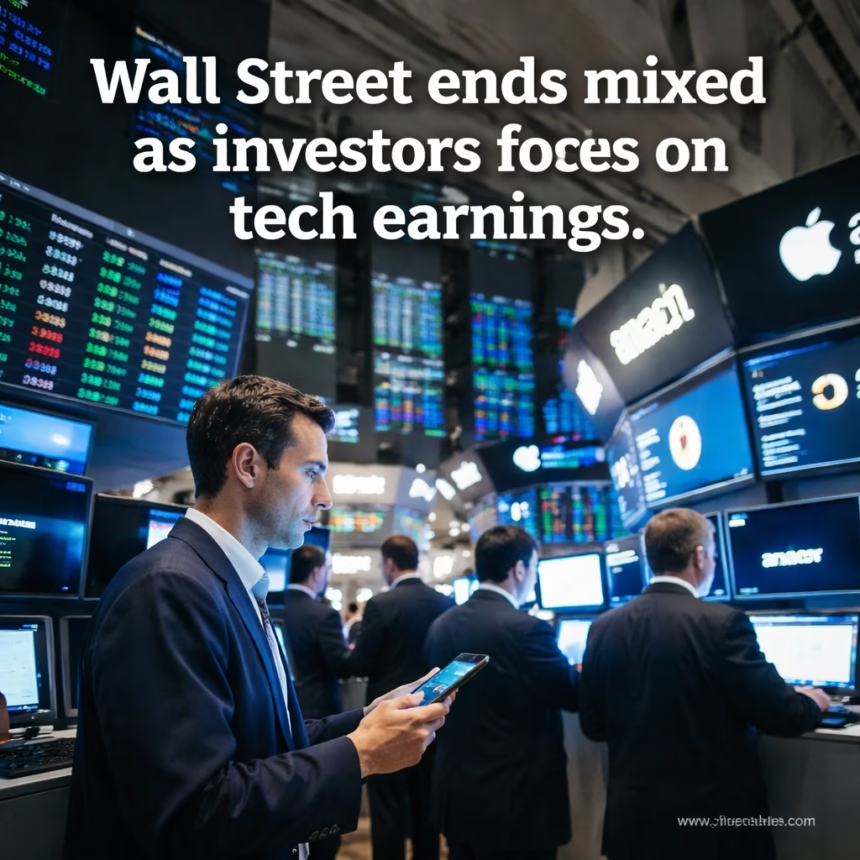
Wall Street concluded a recent trading session with a mixed performance across its major indices, as investors meticulously parsed a fresh wave of corporate earnings reports, particularly from the influential technology sector. The divergent movements on Tuesday, October 24, 2023, in New York City underscored a period of heightened market sensitivity to corporate fundamentals amidst broader economic uncertainties.
Background: A Decade of Tech Dominance Meets Economic Headwinds
The technology sector has been the undisputed engine of market growth for over a decade, propelling indices like the Nasdaq Composite to record highs and significantly contributing to the S&P 500’s ascent. Companies like Apple, Microsoft, Amazon, Alphabet, Meta Platforms, Nvidia, and Tesla – often dubbed the “Magnificent Seven” – command immense market capitalizations, with their collective performance frequently dictating the broader market’s direction.
The Rise of the Tech Giants
Since the global financial crisis of 2008, these tech behemoths have leveraged innovation in cloud computing, artificial intelligence, e-commerce, and digital advertising to achieve unprecedented scale and profitability. Their robust growth trajectories attracted massive capital inflows, making them cornerstone holdings for institutional and retail investors alike. The COVID-19 pandemic further accelerated digital transformation, providing an additional tailwind as reliance on technology surged across all facets of life and business.
Shifting Economic Landscape
However, the economic environment began to shift dramatically in late 2021 and 2022. Surging inflation, fueled by supply chain disruptions and strong consumer demand, prompted central banks globally, most notably the U.S. Federal Reserve, to embark on an aggressive campaign of interest rate hikes. Higher interest rates typically weigh more heavily on growth stocks, like many in the tech sector, as they diminish the present value of future earnings. This period saw a recalibration of valuations, with some tech stocks experiencing significant pullbacks from their pandemic-era peaks.
Anticipation Builds for Q3 Earnings
Entering the third-quarter earnings season of 2023, market participants were particularly keen to assess how tech companies were navigating persistent inflation, elevated interest rates, and a slowing global economy. Analyst expectations were tempered, with many anticipating a mixed bag of results, reflecting varying degrees of resilience and exposure to macroeconomic pressures. The stakes were high, as these reports would offer crucial insights into corporate health and provide clues for the market’s trajectory into the final quarter of the year.
More Read

Key Developments: Earnings Reports Spark Divergent Reactions
The trading day saw the Dow Jones Industrial Average register a modest decline, while the technology-heavy Nasdaq Composite edged higher, and the S&P 500 hovered near the flatline. This divergence was a direct reflection of the mixed signals emanating from a flurry of high-profile earnings announcements.
Microsoft and Alphabet Set the Tone
Early in the week, two of the “Magnificent Seven” – Microsoft and Alphabet – released their quarterly figures, immediately influencing market sentiment. Microsoft reported stronger-than-expected results, particularly driven by robust growth in its Azure cloud computing division and resilience in its enterprise software segments. The company’s optimistic outlook on artificial intelligence integration across its product suite also resonated positively with investors, causing its stock to climb and providing a boost to the broader tech sector.
Conversely, Alphabet, Google's parent company, presented a more nuanced picture. While its search advertising business continued to demonstrate strength, its cloud unit, Google Cloud, slightly underperformed analyst expectations on revenue growth. More notably, YouTube's advertising revenue showed signs of deceleration, raising concerns about the broader digital advertising market. Alphabet's stock experienced a noticeable dip following the announcement, acting as a counterweight to Microsoft's gains.
More Read

Broader Market Movements
The S&P 500, a broad gauge of U.S. equities, struggled to find a definitive direction, with gains in technology and communication services sectors partially offset by declines in industrials and consumer discretionary. The Dow Jones Industrial Average, which is less concentrated in technology, saw pressure from some of its cyclical components, reflecting concerns about manufacturing output and consumer spending. Trading volumes remained robust, indicating active participation from institutional investors adjusting their positions.
Analyst Commentary and Sectoral Shifts
Market analysts quickly weighed in, noting the increasing selectivity of investors. “The market is no longer painting all tech stocks with the same brush,” commented Sarah Chen, a senior market strategist at Apex Investments. “Companies demonstrating clear growth catalysts, especially around AI, and strong cost management are being rewarded, while those facing headwinds in their core businesses are being punished.” This sentiment led to some intra-sector rotation, with capital flowing into perceived winners and out of underperformers.
Impact: Ripple Effects Across Investor Portfolios and Economic Outlook
The mixed earnings reports and subsequent market reactions have sent ripples through various segments of the investment community, impacting portfolio values, strategic decisions, and the overall economic outlook.
Retail Investors and Retirement Accounts
For millions of retail investors, many of whom hold significant exposure to tech stocks through index funds, ETFs, or direct equity holdings, the mixed signals translate into daily fluctuations in their portfolio values. While a positive report from a company like Microsoft might offer a sense of relief, a disappointing outcome from Alphabet can quickly erode gains. This volatility can be particularly concerning for those nearing retirement, as capital preservation becomes a higher priority. Financial advisors are increasingly fielding questions about diversification and risk management in this environment.
Institutional Investors and Fund Managers
Institutional investors, including pension funds, hedge funds, and mutual fund managers, are actively re-evaluating their positions. The performance of key tech holdings directly impacts the quarterly returns of their funds. Fund managers are engaging in deeper fundamental analysis, scrutinizing balance sheets, cash flow statements, and management guidance to identify companies with sustainable competitive advantages. This period often sees increased trading activity as managers adjust sector allocations and rebalance portfolios to align with new market realities.

Tech Sector Employees
Beyond investors, the tech sector’s performance has a direct bearing on its vast workforce. Stock options and restricted stock units (RSUs) form a significant portion of compensation for many tech employees. A downturn in stock prices can reduce personal wealth, while strong performance can enhance it. Furthermore, the hiring outlook and job security within the industry are closely tied to corporate profitability and growth prospects. Companies facing revenue pressures might implement hiring freezes or even layoffs, as seen in previous periods of economic uncertainty.
Broader Economic Implications
The health of the tech sector also has broader macroeconomic implications. Tech companies are major spenders on research and development, capital expenditures, and advertising. Their performance can influence GDP growth, consumer confidence, and the overall business investment climate. A robust tech sector can signal innovation and economic dynamism, while a struggling one can indicate underlying economic weaknesses. Moreover, tech’s interconnectedness means that its performance can affect suppliers, partners, and even the real estate markets in major tech hubs.
What Next: Navigating Upcoming Milestones and Market Dynamics
The market’s mixed reaction to the initial wave of tech earnings sets the stage for a critical period ahead, with several key milestones and evolving dynamics poised to shape investor sentiment and market direction.
Remaining Tech Earnings and Guidance
The immediate focus will remain on the upcoming earnings reports from other tech giants, including Amazon, Apple, and Nvidia. Amazon’s performance will be closely watched for insights into e-commerce trends and cloud computing (AWS) growth. Apple’s results will offer a barometer of global consumer spending on premium devices, while Nvidia’s report will be scrutinized for its pivotal role in the burgeoning artificial intelligence hardware market. Any surprises, positive or negative, from these companies could significantly swing the broader market. Investors will pay particular attention to forward-looking guidance, as it provides crucial clues about management’s expectations for future revenue and profitability.
Federal Reserve Policy and Economic Data
Beyond corporate earnings, macroeconomic factors will continue to exert a powerful influence. The upcoming Federal Open Market Committee (FOMC) meeting in early November will be a critical event, as investors await further signals on interest rate policy. Any hints of a pause in rate hikes or a more dovish stance could provide a tailwind for growth stocks, while continued hawkishness might prolong market jitters. Concurrently, key economic data releases, such as the Consumer Price Index (CPI) report for inflation, the monthly jobs report, and GDP growth figures, will offer vital context on the health of the U.S. economy and the potential for a “soft landing” versus a recession.
Analyst Revisions and Market Consolidation
Following the earnings season, analysts will update their price targets and ratings for individual stocks, which can further influence trading activity. The market may also see a period of consolidation, where investors digest the latest information and reassess valuations. This could lead to a more discerning approach to investing, prioritizing companies with strong balance sheets, consistent profitability, and clear growth drivers over those with speculative narratives.
Potential for Market Rotation
Looking further ahead, market participants will be watching for signs of a potential market rotation. If economic growth continues to slow, some investors might shift capital from growth-oriented tech stocks into more defensive sectors like utilities or consumer staples, or into value stocks that appear undervalued. Conversely, if inflation cools and the Fed signals an end to rate hikes, tech stocks could regain momentum, particularly those at the forefront of transformative technologies like AI. Geopolitical developments, energy prices, and global supply chain stability will also remain background factors influencing the broader market narrative.