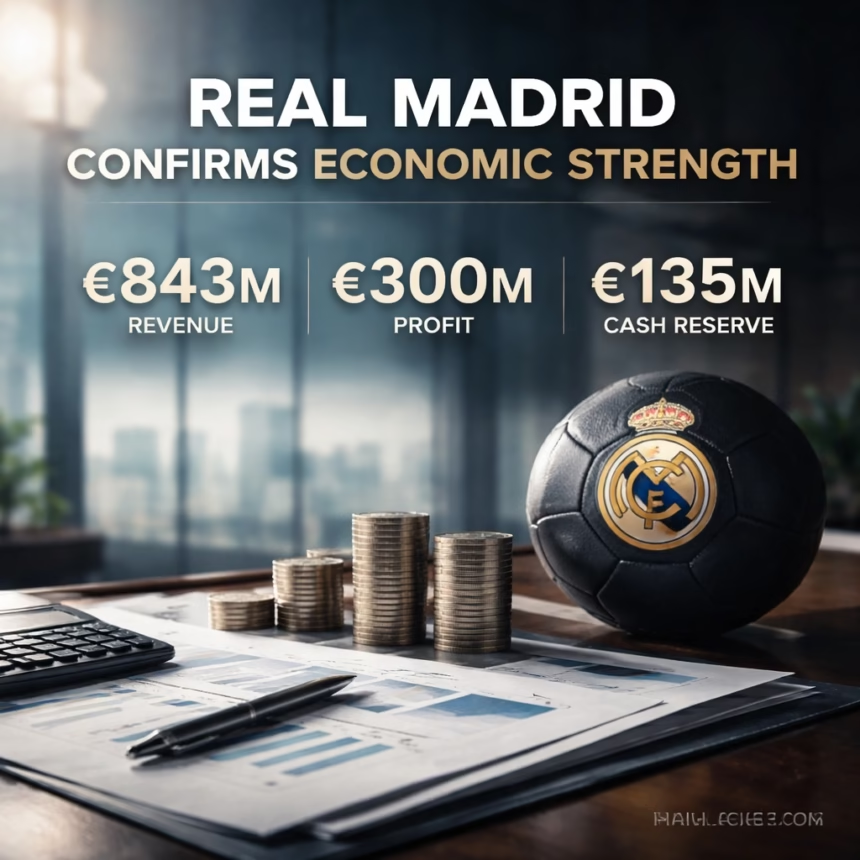
Real Madrid C.F. has officially unveiled its latest financial results, confirming a robust economic position marked by staggering figures across multiple revenue streams. The announcement, made from the club's headquarters in Madrid, provides a comprehensive look at the fiscal year's performance, solidifying its status as a global financial powerhouse in sports. These unprecedented results underscore a strategic vision that continues to set benchmarks within the football industry.
A Legacy of Financial Foresight and Sporting Dominance
Real Madrid’s current financial prowess is the culmination of decades of strategic planning, commercial innovation, and consistent sporting success. From its earliest days, the club understood the importance of leveraging its global appeal. The "Galácticos" era of the early 2000s, spearheaded by President Florentino Pérez, perfectly blended on-field brilliance with aggressive marketing, transforming players into global brands and significantly boosting commercial income.
Under Pérez's continued leadership, the club has meticulously managed its finances, navigating economic downturns and the unprecedented challenges of the global pandemic. Key to this strategy has been a relentless focus on controlling operational costs, expanding revenue streams beyond traditional football activities, and making shrewd investments in infrastructure. The ambitious renovation of the Santiago Bernabéu Stadium stands as a testament to this long-term vision, conceived not merely as a football ground but as a multi-purpose entertainment hub designed to generate significant non-matchday revenue. The club has consistently featured at the top of the Deloitte Football Money League, a testament to its enduring economic strength and commercial acumen over many years.
Record-Breaking Figures and Strategic Revenue Growth
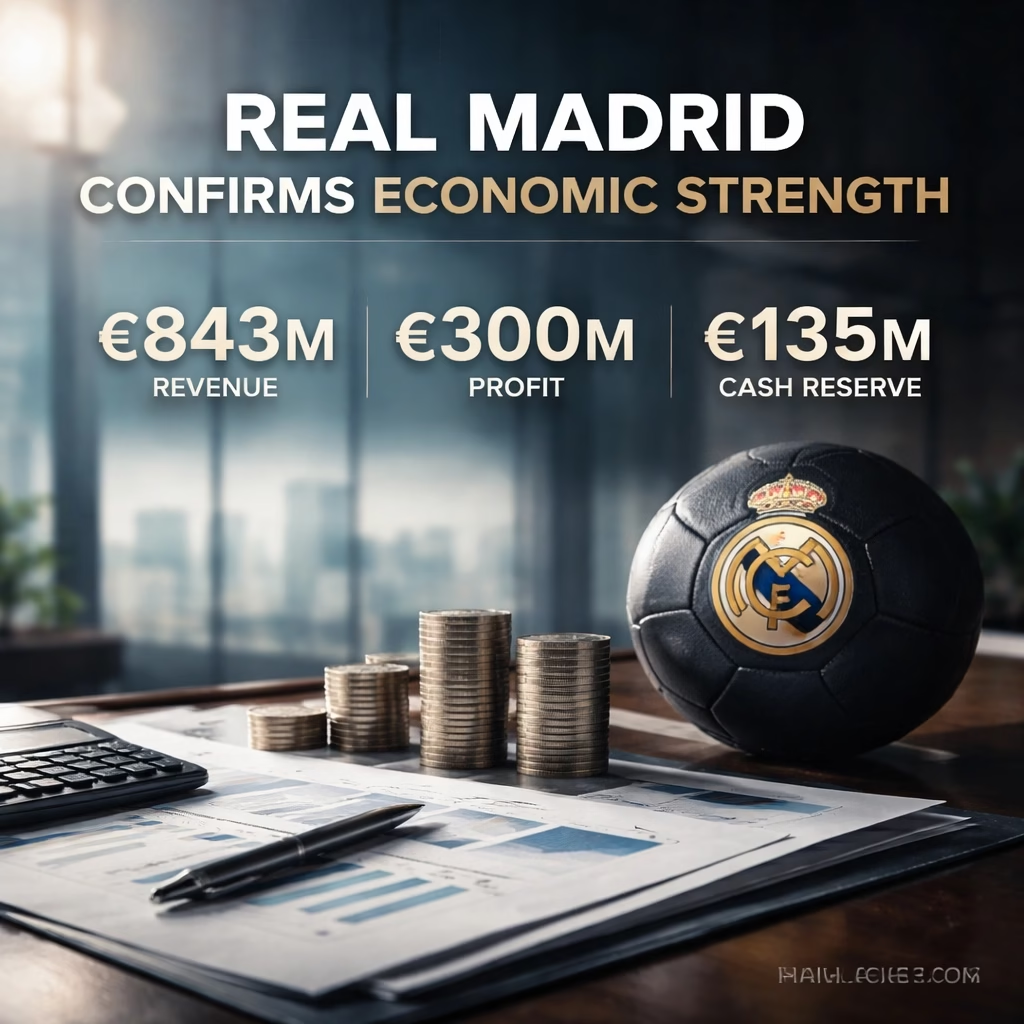
The latest financial report for the 2022-2023 fiscal year paints a picture of unparalleled economic health. Real Madrid announced total operating revenues surpassing €850 million, marking a substantial increase of over 11% compared to the previous year and setting a new club record. This impressive figure places the club among the elite earners in global sports.
Net profit for the period also saw a healthy increase, reaching approximately €55 million after tax. This profit margin, achieved amidst significant ongoing stadium construction, demonstrates the club's operational efficiency and strong underlying business model. Crucially, the club has significantly reduced its net debt, bringing it down to an almost negligible figure, a remarkable achievement that grants immense financial flexibility. This reduction is a direct result of disciplined financial management and robust cash flow generation.
More Read

Revenue diversification remains a cornerstone of Madrid’s strategy. Matchday revenue, despite the ongoing Bernabéu renovations, saw a notable uplift, exceeding €120 million, thanks to strong attendance figures and premium hospitality sales. Broadcasting rights continued to provide a stable and substantial income stream, contributing over €300 million from domestic and international deals. However, the largest growth driver was commercial revenue, which surged past €430 million. This segment benefited from new sponsorship agreements, increased merchandising sales, and the monetization of the club's vast digital content platforms, showcasing the power of its global brand.
The Santiago Bernabéu renovation, though still in its final stages, is already demonstrating its commercial potential. The club has secured agreements for hosting major non-football events, including concerts and conferences, even before its full operational launch. This foresight in developing the stadium into a year-round revenue generator is a critical element of the club's future financial projections.
More Read

Widespread Impact Across Football and Beyond
Real Madrid's economic strength has far-reaching implications, influencing various stakeholders within the football ecosystem and beyond.
For the club itself, this robust financial health translates directly into unparalleled competitive advantage. It provides the necessary capital to attract and retain the world's top talent, as seen in recent high-profile acquisitions like Jude Bellingham and the successful long-term contract renewals for key players such as Vinicius Jr. and Rodrygo. The reduced debt burden also means the club is less reliant on player sales to balance its books, allowing for greater strategic control over its squad. Furthermore, it enables continued investment in its renowned youth academy, La Fábrica, ensuring a sustainable pipeline of future stars.
Fans benefit from this stability through an enhanced matchday experience at the modernized Bernabéu and the assurance that their club will consistently compete for major domestic and European trophies. Globally, digital initiatives fueled by this financial strength make the club more accessible to its immense international fanbase.
For competitors, Real Madrid sets an incredibly high bar for financial management and commercialization. Its success challenges rival clubs to innovate their own revenue strategies or risk falling further behind. This dynamic has implications for Financial Fair Play regulations across Europe, as other clubs strive to match Madrid's self-sufficiency. Sponsors and investors view Real Madrid as an increasingly attractive and reliable partner, drawn by its global reach, consistent sporting success, and impeccable financial health, potentially leading to higher valuations and more lucrative partnerships.
The Road Ahead: Innovation and Continued Dominance
Looking forward, Real Madrid's strategic roadmap centers on several key milestones designed to further cement its economic and sporting dominance. The full completion and operationalization of the new Santiago Bernabéu Stadium, anticipated in 2024, is expected to unlock significant new revenue streams. The stadium's state-of-the-art facilities, including a retractable pitch and roof, will allow it to host a diverse calendar of events year-round, from major concerts and NFL games to corporate conferences, significantly boosting non-matchday income.
In the transfer market, the club is expected to maintain its dual strategy of pursuing "Galáctico" level talent, with ongoing speculation linking them to stars like Kylian Mbappé, while simultaneously investing in young, high-potential players globally. This approach, underpinned by financial prudence, ensures both immediate competitiveness and long-term sustainability.

Global market expansion remains a priority, with increased penetration into lucrative markets such as North America and Asia through academies, digital content, and pre-season tours. The club will also continue to leverage cutting-edge technology, integrating AI and data analytics across fan engagement, player performance analysis, and operational efficiency to enhance all facets of its business.
Beyond financial metrics, Real Madrid is committed to strengthening its sustainability initiatives, focusing on environmental responsibility, social impact, and robust governance (ESG) practices. These efforts are integral to building long-term value and maintaining its status as a respected global institution. Ultimately, the club's financial might serves its primary objective: to maintain its competitive edge in La Liga and, most significantly, in the UEFA Champions League, reinforcing the virtuous cycle of sporting success driving financial growth, and vice versa.