Mosquitoes: The Unlikely New Frontier in Malaria Immunity?
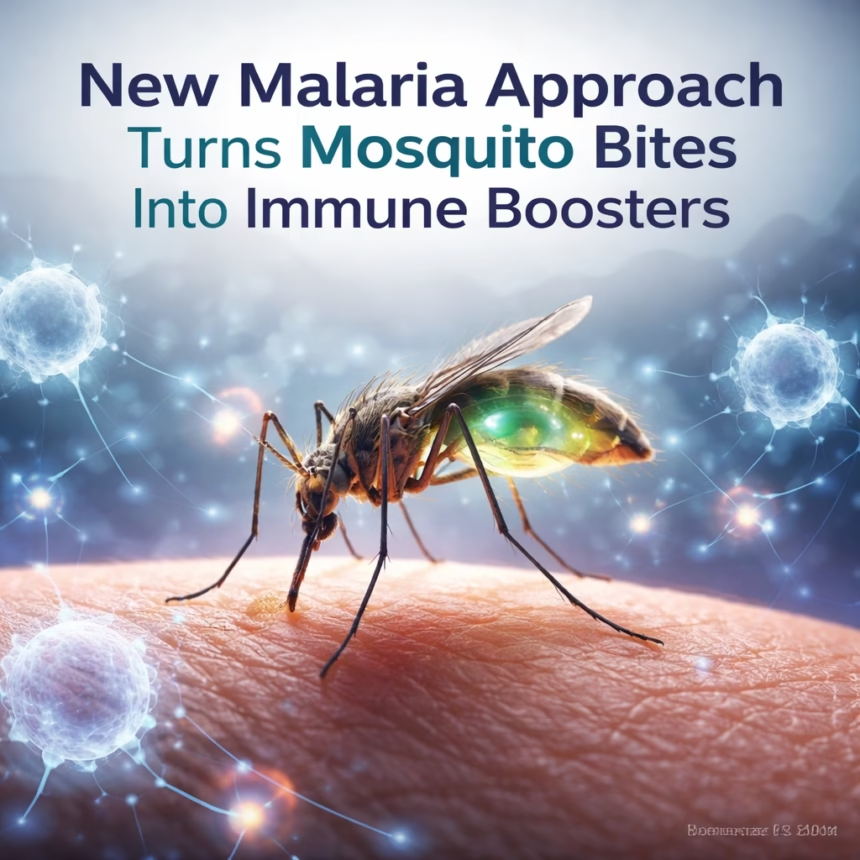
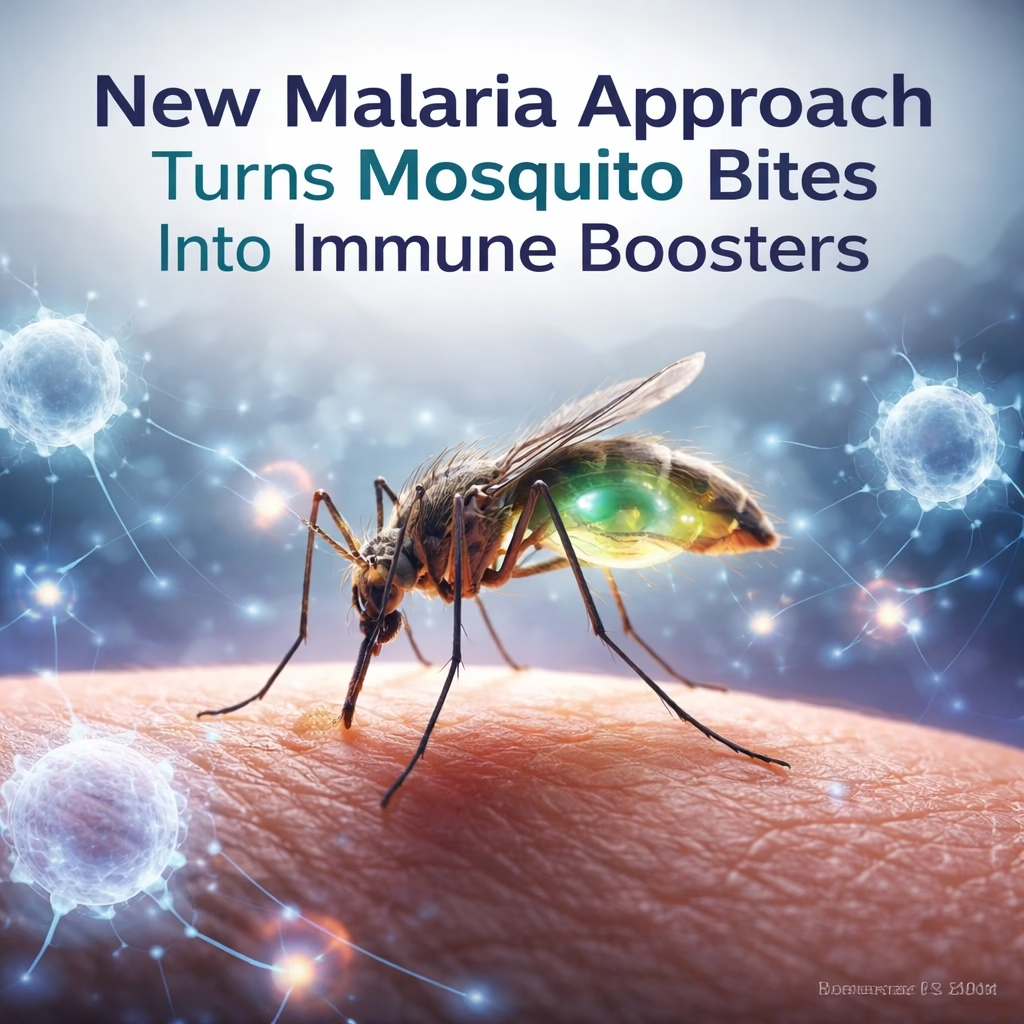
A groundbreaking study published this month reveals a novel approach to malaria prevention, transforming the very vector of the disease into a potential delivery system for immunity. Researchers have successfully engineered mosquitoes to deliver a vaccine-like payload through their bites, offering a radical departure from traditional immunization methods.
The innovative strategy, detailed in a prominent scientific journal, demonstrated significant protective immunity in preclinical models, marking a pivotal step towards a new era in the global fight against malaria, particularly in endemic regions across sub-Saharan Africa and Southeast Asia.
Background: The Enduring Challenge of Malaria
Malaria, caused by *Plasmodium* parasites and transmitted through the bite of infected *Anopheles* mosquitoes, remains one of humanity's oldest and most persistent infectious diseases. For centuries, it has exacted a devastating toll, particularly on vulnerable populations.
Global Burden and Current Strategies
According to the World Health Organization (WHO), malaria caused an estimated 249 million cases and 608,000 deaths in 2022, with children under five in Africa bearing the brunt of the disease. Efforts to combat malaria have historically relied on a multi-pronged approach: insecticide-treated bed nets, indoor residual spraying, rapid diagnostic tests, and antimalarial drugs.
While these interventions have significantly reduced malaria incidence in many areas, drug resistance and insecticide resistance pose ongoing threats. The development of highly effective vaccines has been a long and arduous journey.
More Read

Milestones in Vaccine Development
The first malaria vaccine, RTS,S/AS01 (Mosquirix), received WHO recommendation in 2021, followed by R21/Matrix-M in 2023. These vaccines offer partial protection, primarily against severe disease and death in young children, and require multiple doses administered via injection. Their rollout represents a monumental achievement, yet the quest for highly effective, easily deployable, and scalable immunization strategies continues.
The concept of harnessing the mosquito itself to deliver therapeutics or preventatives has been explored in various contexts, such as gene drives to reduce mosquito populations or inhibit parasite development. However, directly turning a mosquito bite into an immunizing event represents a distinct and ambitious scientific leap.
Key Developments: Engineering Immunity Through Bites
The recent study, spearheaded by a consortium of researchers from institutions including the University of Washington and the National Institutes of Health, centers on genetically modifying *Anopheles stephensi* mosquitoes, a significant vector of urban malaria in Asia and increasingly in Africa.
More Read

The Genetic Engineering Process
Scientists engineered these mosquitoes to express and secrete specific antigens from the *Plasmodium falciparum* parasite – the deadliest malaria parasite – directly into the host’s bloodstream during a blood meal. The chosen antigen, a modified version of the circumsporozoite protein (CSP), is a well-known target for malaria vaccine development, as it coats the parasite’s sporozoite stage, which is injected into humans by the mosquito.
The modification ensures that when the engineered mosquito bites, it not only takes a blood meal but also simultaneously delivers a small, immunogenic dose of the parasite antigen, effectively acting as a living, self-administering vaccine delivery system.
Preclinical Findings and Immune Response
In rigorous preclinical trials conducted on mouse models, exposure to bites from these engineered mosquitoes induced a robust immune response. The mice developed high levels of antibodies specifically targeting the *Plasmodium* CSP. Crucially, these antibodies were shown to neutralize sporozoites, preventing them from infecting liver cells, which is the critical first step in human malaria infection.
Furthermore, the study observed the generation of specific T-cell responses, indicative of a comprehensive cellular immunity. Mice exposed to multiple bites from the modified mosquitoes demonstrated significant protection against subsequent challenges with infectious *Plasmodium* parasites, showcasing the potential for durable immunity.
The research, published in *Science Translational Medicine* in late 2024, meticulously detailed the genetic modifications, the stability of the engineered trait across mosquito generations, and the safety profile observed in the animal models, with no adverse effects attributed to the modified mosquitoes themselves.
Impact: Reshaping Malaria Control Strategies
This novel approach holds profound implications for global malaria control, particularly in hard-to-reach communities and regions with limited healthcare infrastructure. The prospect of passive immunization through mosquito bites could circumvent many logistical challenges inherent in traditional vaccine campaigns.
More Read

Accessibility and Scalability
Current malaria vaccines require cold chain storage, trained healthcare personnel for administration, and multiple scheduled injections – significant hurdles in remote or conflict-affected areas. A mosquito-based delivery system, once established, could potentially deliver immunity without direct human intervention, reaching populations that are difficult to access through conventional means.
The strategy could also complement existing interventions, potentially accelerating the decline of malaria transmission. Imagine communities where the very presence of mosquitoes, usually a harbinger of disease, gradually contributes to collective immunity.
Ethical and Societal Considerations
While promising, the deployment of genetically modified organisms (GMOs) into the environment raises important ethical, social, and regulatory questions. Public acceptance will be paramount. Extensive community engagement and education will be necessary to explain the technology, its benefits, and its risks.
Regulatory frameworks for the release of GM mosquitoes are evolving, drawing lessons from similar projects aimed at controlling dengue or Zika. Ensuring environmental safety, preventing unintended ecological consequences, and establishing robust monitoring systems will be critical components of any future deployment strategy.
What Next: From Lab to Community
The success in preclinical models paves the way for the next crucial phases of development, transitioning this innovative concept from the laboratory into real-world application.
Clinical Trial Phases
The immediate next step involves rigorous human clinical trials. Phase 1 trials will assess safety and immunogenicity in a small group of healthy human volunteers, likely through controlled exposure to bites from the engineered mosquitoes under strict containment. Subsequent Phase 2 and Phase 3 trials would then evaluate efficacy, optimal dosing (e.g., number of bites/exposures), and long-term protection in larger populations within malaria-endemic areas.
These trials are expected to be complex, requiring careful ethical oversight and participant monitoring. Researchers will need to determine the frequency of exposure needed to maintain protective immunity and whether the approach provides broad protection against different *Plasmodium* strains.
Regulatory Pathways and Production
Navigating the complex regulatory landscape will be a significant undertaking. Agencies like the U.S. Food and Drug Administration (FDA) and international bodies like the WHO will need to establish clear pathways for evaluating and approving such a novel biological intervention. This includes assessing the genetic stability of the mosquitoes, their reproductive fitness, and the potential for unintended spread.
Should the approach prove safe and effective, scaling up the production and deployment of billions of engineered mosquitoes would present unprecedented logistical challenges. This would require developing efficient mass-rearing facilities and strategies for their controlled release and distribution in target regions.
Long-Term Vision and Challenges
Researchers envision a future where this technology could be integrated into broader malaria elimination campaigns. The timeline for widespread deployment remains speculative, likely spanning five to ten years, contingent on successful clinical trials, regulatory approvals, and sustained funding.
Challenges include maintaining the genetic integrity of the engineered mosquitoes in the wild, ensuring the stability of the antigen expression, and overcoming potential resistance development by the parasite. However, the sheer potential to turn a disease vector into a tool for immunity offers a compelling vision for a malaria-free future, transforming a dreaded bite into a shield of protection.