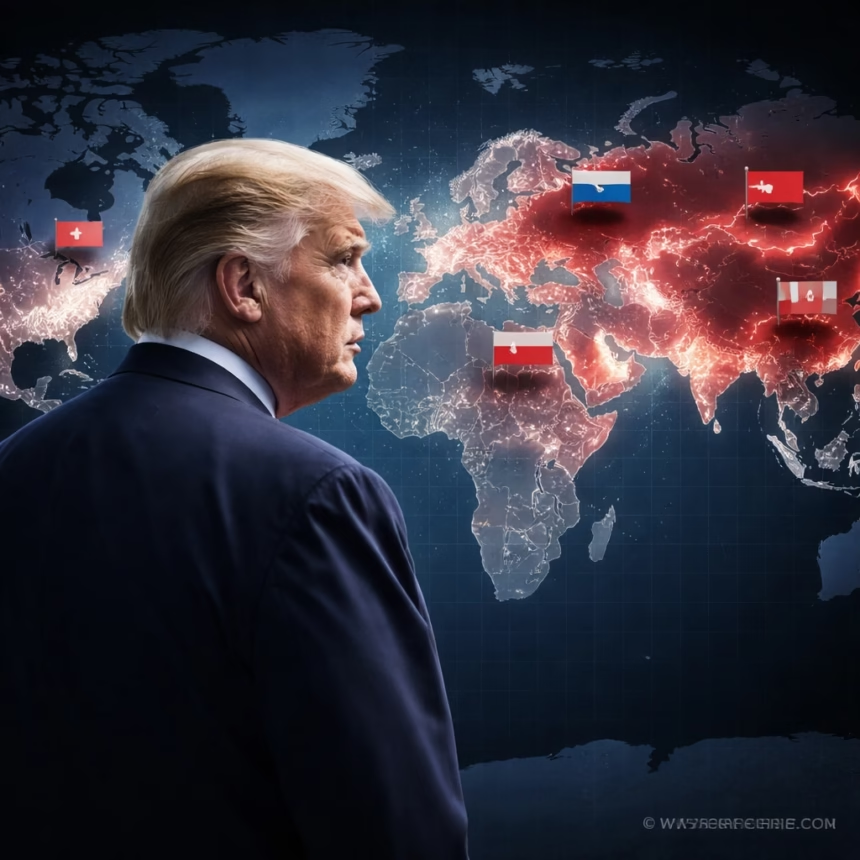
As the 2024 U.S. presidential election draws closer, the prospect of a second Donald Trump administration raises significant questions about its potential impact on international relations and global trade. His "America First" doctrine, characterized by assertive trade policies and challenges to existing alliances, could reshape economic and diplomatic landscapes worldwide. This article explores key countries and regions that might find themselves under renewed scrutiny, based on past rhetoric and potential future policy directions.
A Legacy of Disruption: Trump’s First Term Blueprint
Donald Trump's initial presidency from 2017 to 2021 was defined by a radical departure from conventional U.S. foreign policy, often prioritizing bilateral deals and national interests over multilateral agreements. His approach frequently involved the use of tariffs as a primary tool for economic leverage and negotiation.
Reconfiguring Global Trade
During his first term, the Trump administration launched a comprehensive trade war with China, imposing tariffs on hundreds of billions of dollars worth of Chinese goods under Section 301 of the Trade Act of 1974. This move aimed to address long-standing grievances regarding intellectual property theft, forced technology transfer, and a significant trade deficit. Simultaneously, he renegotiated the North American Free Trade Agreement (NAFTA), replacing it with the United States-Mexico-Canada Agreement (USMCA) in 2020, which included stricter rules of origin for automotive components and new provisions for digital trade. Broader tariffs on steel and aluminum imports, implemented globally under Section 232 of the Trade Expansion Act of 1962, also caused widespread economic ripples and strained relationships with allies like the European Union.
Alliance Strain and Burden Sharing
A cornerstone of Trump's foreign policy was a critical assessment of existing military alliances, particularly NATO. He consistently demanded that member states meet or exceed the alliance's guideline of spending 2% of their Gross Domestic Product (GDP) on defense, frequently singling out Germany for its perceived underinvestment. Similar pressure was applied to South Korea and Japan, with demands for increased financial contributions towards the cost of maintaining U.S. military bases on their soil. These calls created significant friction within long-standing security partnerships.
Immigration and Border Security
Immigration policy and border security with Mexico were central to Trump's domestic and foreign agenda. His administration pushed for the construction of a wall along the U.S.-Mexico border and implemented policies like the "Remain in Mexico" program, which required asylum seekers to wait in Mexico while their cases were processed. These measures significantly impacted bilateral relations and led to continuous diplomatic engagement on migration issues.
More Read

Key Contenders for Renewed Scrutiny
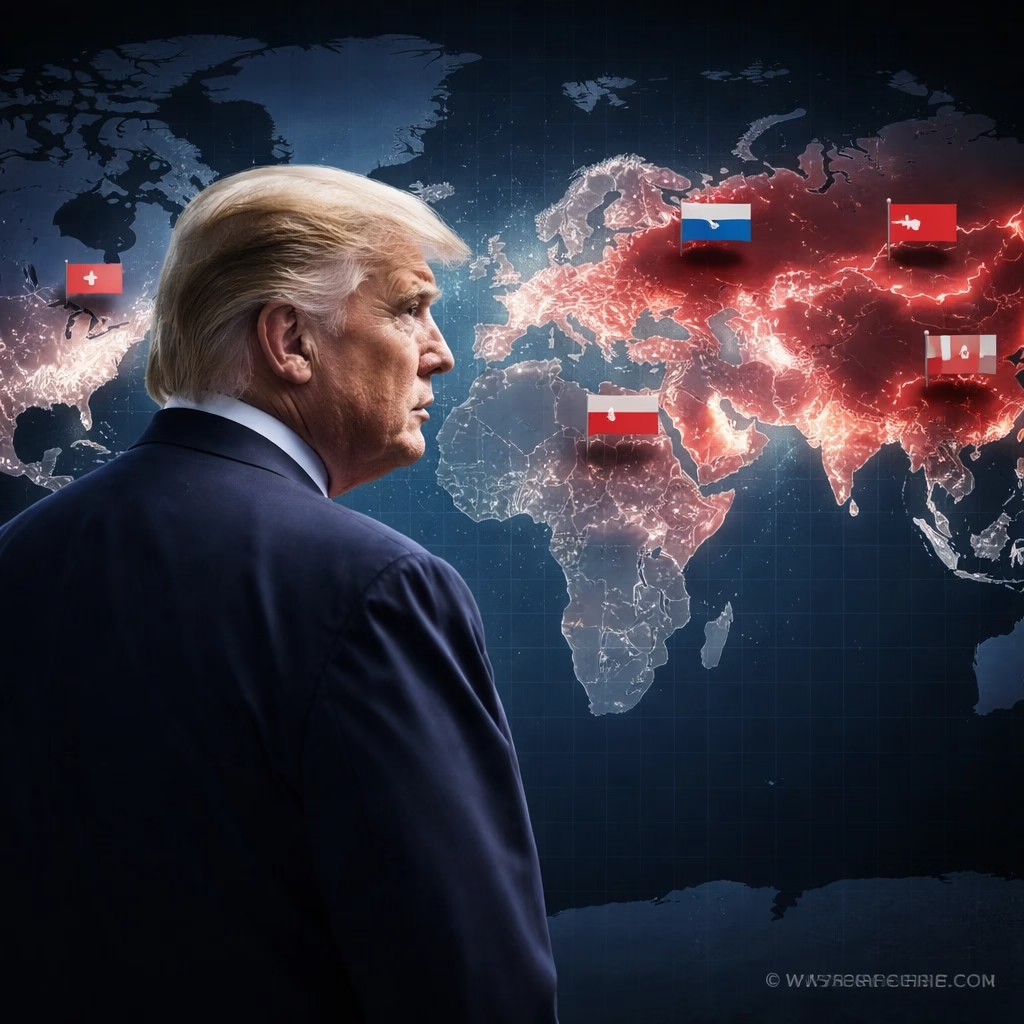
Should Donald Trump return to the White House, several nations and blocs appear particularly vulnerable to renewed pressure, reflecting both unresolved issues from his first term and new geopolitical realities.
China: The Unfinished Trade War
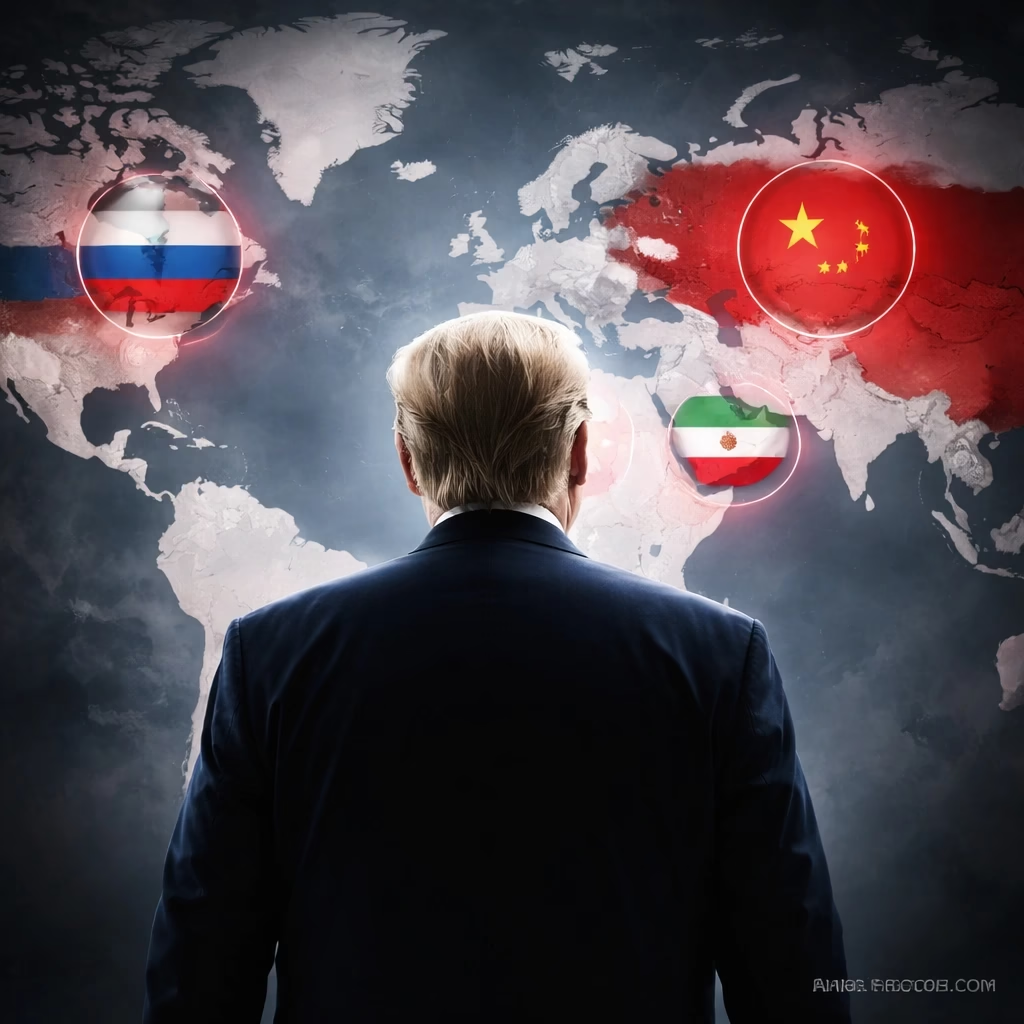
China remains at the top of the list for potential aggressive action. The trade war initiated in 2018 never fully concluded, with many tariffs still in place. A second Trump administration would likely intensify efforts to reduce the U.S. trade deficit with China, address intellectual property concerns, and challenge Beijing's ambitions for technological dominance. Proposed actions could include significantly higher tariffs, potentially reaching 60% on all Chinese imports as floated by Trump himself, alongside expanded investment restrictions targeting Chinese companies. Furthermore, pressure on supply chains to decouple from China, particularly in critical sectors like semiconductors and rare earths, would likely accelerate. The ongoing tensions surrounding Taiwan and China's military expansion in the South China Sea would also likely draw sharper rhetoric and potentially more confrontational policies.
The European Union: Old Grievances, New Tariffs?
The European Union, particularly Germany, could once again face Trump's ire over perceived unfair trade practices and insufficient defense spending. During his first term, Trump threatened auto tariffs on European cars, citing national security concerns under Section 232, a move that would have severely impacted German manufacturers like BMW and Mercedes-Benz. A renewed focus on the U.S. trade deficit with Europe, coupled with criticism of EU agricultural subsidies and digital services taxes, could trigger new trade disputes. Furthermore, the persistent demand for NATO members to meet their 2% GDP defense spending target would undoubtedly resurface, potentially leading to threats of reduced U.S. commitment or direct financial penalties for non-compliant nations.
More Read

Mexico: Border, Fentanyl, and Economic Leverage
Mexico's relationship with a second Trump administration would likely be dominated by immigration and border security concerns, exacerbated by the ongoing fentanyl crisis. Trump has previously threatened to impose tariffs on all Mexican imports (e.g., 5%) if Mexico did not sufficiently curb illegal immigration. Such threats could be revived or intensified. Pressure on Mexico to actively combat drug cartels and interdict the flow of fentanyl precursors would be paramount. The USMCA, while negotiated by his administration, might also be subject to renewed scrutiny if cooperation on these core issues is deemed insufficient, potentially leading to threats of withdrawal or renegotiation.
India: A Complex Strategic Partner
India presents a more nuanced challenge. While seen as a strategic partner in countering China's influence in the Indo-Pacific, India has also been a target of Trump's trade criticisms. During his first term, the U.S. revoked India's Generalized System of Preferences (GSP) trade status, citing market access barriers for American goods. A second Trump administration could exert pressure for greater market access for U.S. agricultural products and manufactured goods, and address the trade deficit. While not a primary adversary, India's large economy and protectionist tendencies could make it a target for specific tariff actions or trade negotiations aimed at opening its markets further.
Japan and South Korea: Alliance Costs and Trade Balance
Both Japan and South Korea, crucial U.S. allies in Asia, faced demands for increased "burden sharing" during Trump's first term. He repeatedly called for these nations to pay significantly more for the presence of U.S. troops on their soil, even suggesting withdrawal if demands were not met. A second administration would almost certainly revive these demands, potentially seeking substantial increases in host-nation support for U.S. Forces Korea (USFK) and U.S. Forces Japan (USFJ). While major trade disputes were largely resolved or mitigated during his first term (e.g., through bilateral trade deals), residual concerns over trade imbalances could still lead to minor skirmishes.
Potential Impact: A Ripple Effect Across Economies
The implications of such policies extend far beyond the targeted nations, creating a ripple effect across the global economy and international relations.
More Read

Global Trade Volatility
A renewed focus on tariffs and protectionist measures would undoubtedly increase global trade volatility. Businesses reliant on international supply chains would face heightened uncertainty, potentially leading to higher consumer prices as import costs rise. Investment decisions could be delayed or rerouted as companies seek to mitigate risks associated with unpredictable trade policies.
Strained Alliances
The emphasis on transactional relationships and "America First" could further strain existing alliances. NATO cohesion might be tested by renewed demands for defense spending, potentially weakening the collective security framework. In the Indo-Pacific, allies like Japan and South Korea might face difficult choices regarding their defense contributions, possibly impacting regional stability and efforts to counter China.
Domestic Economic Consequences
Domestically, U.S. industries heavily reliant on exports, particularly agriculture, could face retaliatory tariffs from targeted countries, mirroring the challenges seen during the first term. Consumers might experience inflation due to higher import costs, impacting purchasing power and overall economic stability.
What Next: Navigating the Geopolitical Unknown
The path forward hinges on several factors, including the translation of campaign rhetoric into actionable policy and the reactions of global actors.
Campaign Rhetoric vs. Governing Reality
While campaign promises often outline ambitious goals, the realities of governing, including the influence of advisors, Congress, and global events, can temper or reshape policy implementation. The extent to which a second Trump administration's trade and foreign policy aligns directly with campaign rhetoric will be a critical determinant.
Anticipated Milestones
Key milestones would include post-election policy reviews, the appointment of crucial trade and foreign policy officials, and early executive actions. Swift executive orders regarding tariffs or trade investigations could signal immediate intentions. Furthermore, the potential for new trade negotiations or withdrawals from existing agreements would be closely watched by international observers and markets alike. The world watches to see how these dynamics unfold, preparing for a potentially turbulent period in global trade and diplomacy.