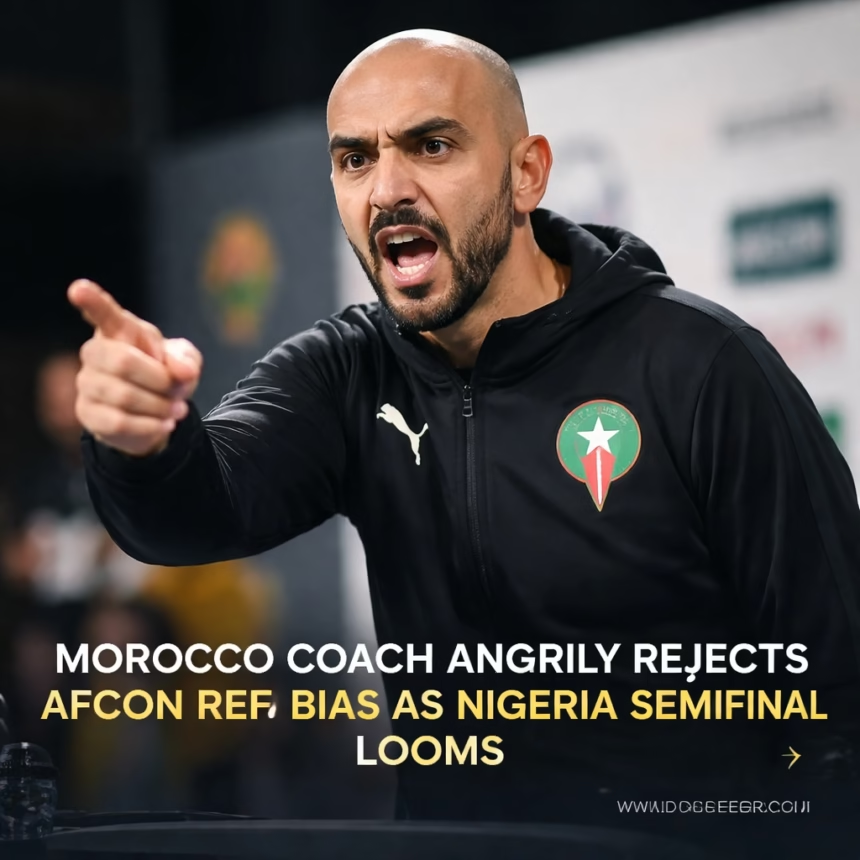
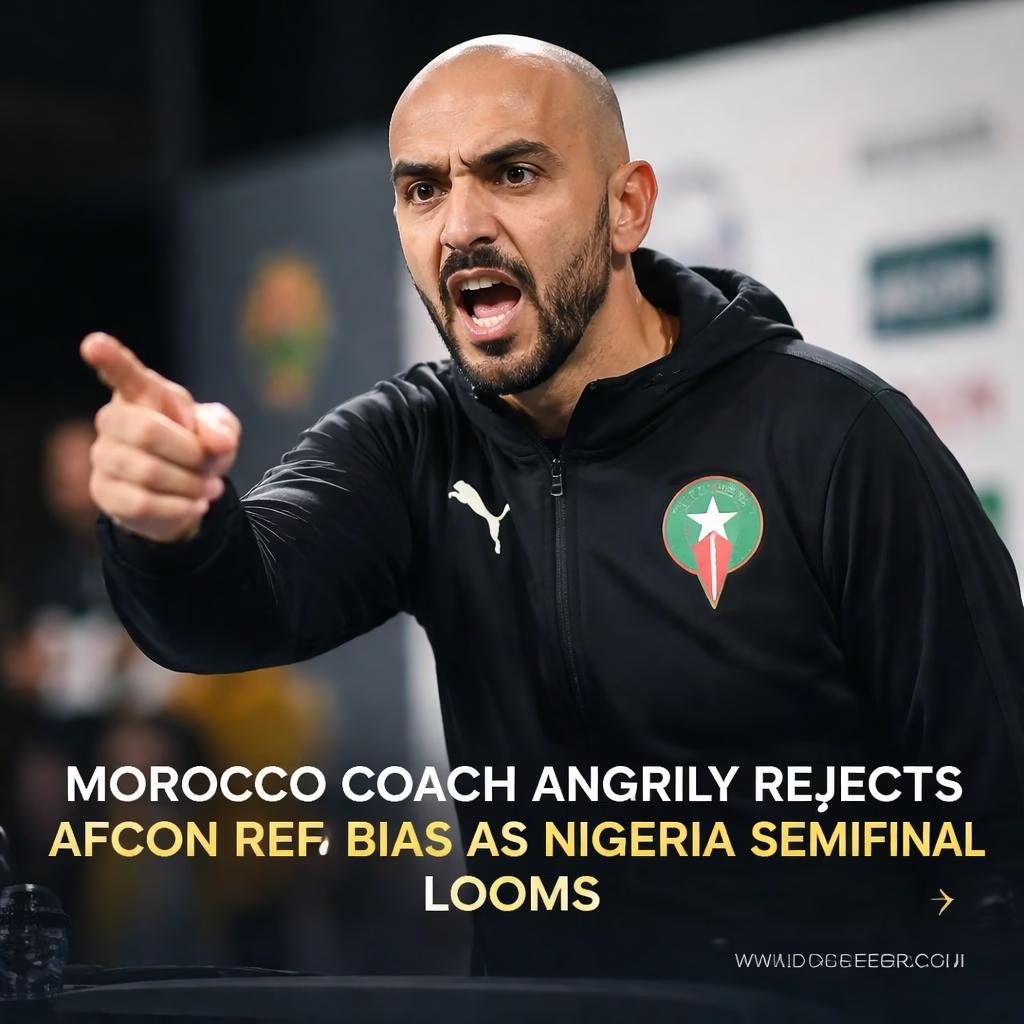
Morocco's national team coach, Walid Regragui, has ignited a significant controversy at the Africa Cup of Nations (AFCON) in Ivory Coast, publicly accusing tournament officials of systematic bias. His scathing remarks come just days before the highly anticipated semifinal clash between the Atlas Lions and Nigeria's Super Eagles, casting a shadow over the tournament's integrity.
The explosive comments have sent ripples through the Confederation of African Football (CAF) and the wider football community, intensifying scrutiny on refereeing standards as the competition approaches its decisive stages.
Tournament Background and Rising Tensions
The 2023 Africa Cup of Nations, hosted across several cities in Ivory Coast, has largely been celebrated for its vibrant atmosphere and competitive matches. Morocco, one of the pre-tournament favorites following their historic 2022 World Cup semifinal run, has navigated a challenging path to the semifinals. Their journey has included impressive victories in Group F, topping a tough group that featured DR Congo and Zambia, before overcoming a resilient Egypt side in a tense quarter-final encounter.
However, throughout the tournament, whispers and outright complaints about refereeing decisions have steadily grown. Several coaches and players from various nations have subtly, and sometimes not so subtly, voiced concerns regarding VAR inconsistencies, questionable foul calls, and the overall management of games. These grievances have often focused on perceived biases against certain regions or teams, fueling a narrative of uneven officiating.
Morocco's coach, Walid Regragui, known for his passionate demeanor and outspoken nature, has previously hinted at his displeasure with officiating. His post-match press conferences have occasionally featured veiled criticisms, but his recent outburst marks a significant escalation. The pressure of the knockout stages, combined with the high stakes of a semifinal berth against a formidable opponent like Nigeria, appears to have brought these simmering frustrations to a boiling point.
More Read

Key Developments: Regragui’s Accusations
Walid Regragui's direct accusations emerged during a pre-match press conference held at the Stade Olympique Alassane Ouattara in Abidjan on Tuesday. Addressing a packed room of journalists, Regragui did not mince words, explicitly stating his belief that there is a deliberate bias against North African teams in the tournament.
"We have observed a pattern," Regragui declared, his voice firm. "It is becoming increasingly difficult for North African teams to progress fairly in this competition. The decisions, the VAR interventions, or lack thereof, they consistently seem to go against us. This is not just about one match; it's a recurring issue that affects the integrity of the tournament."
He referenced specific incidents from Morocco's quarter-final victory against Egypt, highlighting what he described as "clear penalties denied" and "dubious yellow cards" issued to his players. While he refrained from naming specific referees, his comments implied a systemic problem rather than isolated errors. "We play football on the pitch, but it feels like there's another game being played off it, one where we are at a disadvantage," he added, visibly frustrated.
More Read

Regragui's remarks immediately went viral across social media platforms and sports news outlets. His claims were quickly met with mixed reactions, with some fans and pundits expressing solidarity and echoing similar sentiments, while others criticized his timing and questioned the validity of his allegations, suggesting they were an attempt to deflect pressure or influence future decisions.
CAF has yet to issue an official response to Regragui's specific allegations. However, the organization has consistently maintained its commitment to fair play and has previously defended the professionalism of its refereeing appointments, emphasizing ongoing training and the implementation of VAR technology to minimize errors.
Widespread Impact on Teams and Tournament
Regragui's inflammatory statements carry significant weight and have immediate repercussions across multiple stakeholders within AFCON.
Impact on Morocco and Nigeria
For the Moroccan squad, the coach's comments could be a double-edged sword. While intended to rally his players and perhaps put pressure on officials, they also add an immense layer of external scrutiny and psychological burden. The team will now enter the semifinal against Nigeria with not only the weight of expectation but also the perceived injustice of officiating. This could either fuel their determination or distract them from their primary objective.
Nigeria's Super Eagles, on the other hand, might view these accusations as an attempt to undermine their potential victory or create an unfair advantage. Coach José Peseiro and his players will likely be wary of the narrative, focusing on their game plan while navigating the heightened tension surrounding the match. The comments could also inadvertently galvanize Nigerian support, reinforcing a "us against them" mentality.
Impact on CAF and Officials
CAF's reputation for governance and fair competition is directly challenged by Regragui's claims. The organization faces pressure to either address the allegations transparently or risk further erosion of trust among participating nations and fans. The integrity of the tournament itself is now under a microscope, with every subsequent refereeing decision likely to be scrutinized with unprecedented intensity.
The referees appointed for the Morocco-Nigeria semifinal will be under immense pressure. Every call, every VAR check, will be analyzed from all angles, potentially affecting their confidence and decision-making. This added stress could inadvertently lead to more cautious or even hesitant officiating, impacting the flow and fairness of the game.
Impact on Fans and Media
Football fans, particularly those from Morocco and other North African countries, have largely rallied behind Regragui, amplifying his message and fueling online debates about perceived historical biases. This creates a more polarized atmosphere, potentially leading to increased animosity between fan bases. The media, both local and international, will undoubtedly capitalize on the controversy, making it a central narrative leading up to and during the crucial semifinal match.
What Next: Semifinal Showdown and Beyond
The immediate focus now shifts to the highly anticipated semifinal encounter between Morocco and Nigeria, scheduled for Wednesday, February 7th, at the Stade de la Paix in Bouaké. All eyes will be on the refereeing team appointed for this match, with their performance set to be the subject of intense post-match analysis, regardless of the outcome.
Beyond the semifinal, Regragui's statements could trigger a series of official actions. CAF may launch an internal investigation into the refereeing allegations, though such processes are often slow and lack public transparency. There is also the possibility of disciplinary action against Regragui himself for bringing the tournament into disrepute, a common sanction for coaches making public accusations against officials. However, any such move would likely be met with strong opposition from Morocco and its supporters.
In the longer term, this controversy could reignite broader discussions within African football about referee training, the consistency of VAR implementation, and the need for greater transparency in official appointments and decision-making. The incident underscores the ongoing challenge of maintaining impartiality and trust in major continental tournaments, pushing CAF to re-evaluate its strategies for ensuring fair play at the highest levels of African football.