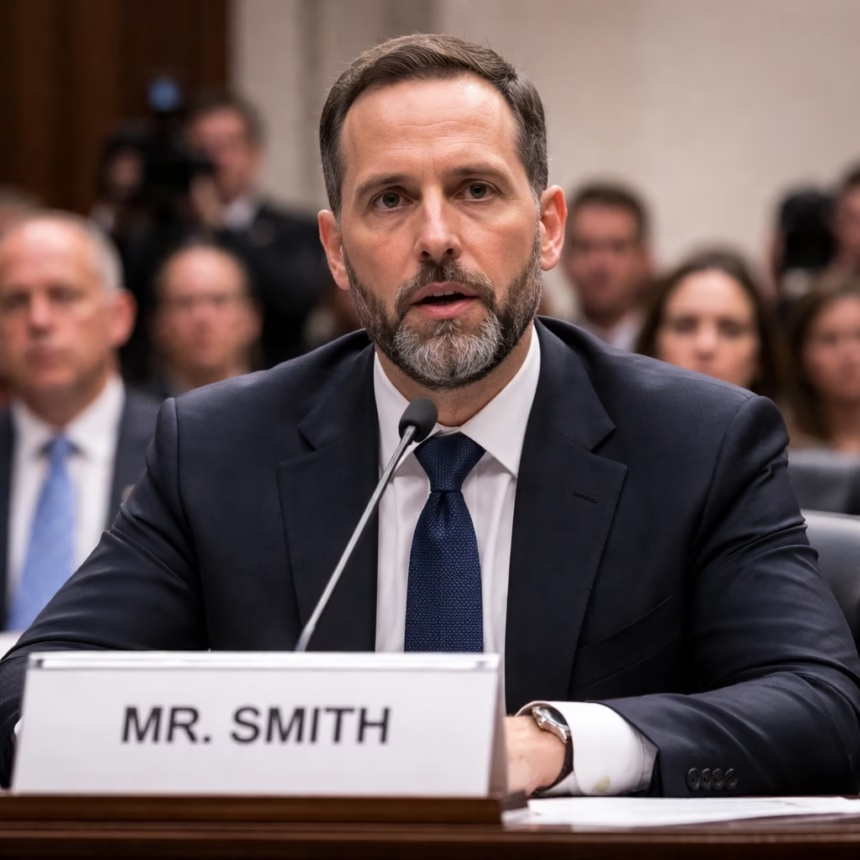
Capitol Crossroads: Jack Smith Testifies Amidst Heated House Inquiry into Trump Investigations
Capitol Crossroads: Jack Smith Testifies Amidst Heated House Inquiry into Trump Investigations
Special Counsel Jack Smith appeared before a U.S. House of Representatives committee on June 18, 2024, to address his ongoing investigations into former President Donald Trump. The highly anticipated hearing, held in Washington D.C., marked a pivotal moment in the contentious oversight battle between Congress and the Department of Justice regarding high-profile federal prosecutions. Smith's testimony aimed to provide transparency while defending the independence and integrity of his office's work.
Background: The Special Counsel’s Mandate
Attorney General Merrick Garland appointed Jack Smith as Special Counsel on November 18, 2022. This appointment followed Trump’s announcement of his 2024 presidential candidacy, a move Garland cited as a factor in ensuring public confidence in the investigations’ impartiality. Smith, a former chief prosecutor for the International Criminal Court and head of the Justice Department’s Public Integrity Section, was tasked with overseeing two distinct, sensitive inquiries.
The first investigation centered on efforts to obstruct the lawful transfer of power following the 2020 presidential election and the events surrounding the January 6, 2021, Capitol breach. This probe culminated in a four-count indictment against former President Trump in the U.S. District Court for the District of Columbia on August 1, 2023. Charges included conspiracy to defraud the United States, conspiracy to obstruct an official proceeding, obstruction of an official proceeding, and conspiracy against rights.
More Read

The second investigation focused on the alleged improper retention of classified documents at Trump’s Mar-a-Lago residence in Palm Beach, Florida, after his presidency, and any obstruction of government efforts to retrieve them. This inquiry led to a 40-count superseding indictment against Trump and two co-defendants in the U.S. District Court for the Southern District of Florida on June 8, 2023, and July 27, 2023. Charges included willful retention of national defense information, obstruction, and false statements.
Throughout these investigations, House Republicans, particularly members of the Judiciary Committee and the Select Subcommittee on the Weaponization of the Federal Government, have voiced strong concerns. They have repeatedly accused the Justice Department and the Special Counsel’s Office of political bias and “weaponizing” federal law enforcement against a political opponent. This congressional scrutiny has involved numerous letters, document requests, and demands for testimony from various DOJ officials, setting the stage for Smith’s direct appearance. The hearing represents a culmination of these oversight efforts, with lawmakers seeking direct answers regarding the scope, funding, and decision-making processes within the Special Counsel’s office.
Key Developments Leading to Testimony
The decision for Special Counsel Smith to testify before Congress represents a significant shift in the ongoing dynamic between the legislative and executive branches. Historically, special counsels have largely operated independently, with direct accountability primarily to the Attorney General. However, persistent demands from House Republicans, intensified by the proximity of the 2024 presidential election and recent legal setbacks for the prosecution, pushed for this public appearance.
More Read

One major catalyst for the hearing was the stalled progress in the D.C. election interference case. The Supreme Court’s ongoing deliberation on Trump’s presidential immunity claim has effectively paused the trial proceedings. Oral arguments were held in April 2024, with a decision expected by late June. This delay has fueled Republican arguments that the investigations are politically motivated, designed to interfere with the election cycle.
Concurrently, the Mar-a-Lago documents case in Florida has also faced procedural delays. U.S. District Judge Aileen Cannon has entertained various motions and set a leisurely pace, pushing back key deadlines and indicating a trial start unlikely before late 2024, if not 2025. These judicial actions have led to increased congressional questioning regarding the management and resources allocated to these high-profile cases.
House Republicans, led by Judiciary Committee Chairman Jim Jordan, R-Ohio, had issued multiple subpoenas and requests for documents and internal communications from Smith’s office. These requests often focused on the genesis of the investigations, alleged contacts with the Biden White House, and the allocation of taxpayer funds. Smith’s testimony provided a rare opportunity for direct questioning on these specific points, allowing lawmakers to press for details that had previously been withheld or provided in limited form. The hearing also followed several public statements from Trump and his legal team, reiterating claims of a “witch hunt” and political persecution, adding to the charged atmosphere of the congressional proceedings.
Impact Across Political and Legal Landscapes
The Special Counsel’s testimony carries significant implications across several critical spheres. For former President Donald Trump, the hearing intensified the political and legal pressures he faces. While Smith’s direct testimony does not alter the legal facts of the cases, it amplifies public discourse around them, potentially influencing jury pools and public perception. Trump’s legal team closely monitored the proceedings for any statements that could be used in his defense or to bolster claims of prosecutorial misconduct.
The Department of Justice and the Special Counsel’s Office find their independence and integrity under direct public examination. Smith’s appearance aimed to project transparency and defend the non-partisan nature of his work, but it also subjected the office to intense political scrutiny. The outcome of the hearing could either reinforce public trust in the DOJ’s handling of politically sensitive cases or further erode it, depending on how Smith’s testimony is perceived by the public and media.
For the U.S. House of Representatives, the hearing served as a high-stakes political event. For Republicans, it was an opportunity to showcase their oversight role, press their narrative of government overreach, and rally their base. For Democrats, it was a chance to defend the rule of law and the independence of federal investigations, potentially highlighting what they view as partisan attacks on the justice system. The hearing’s content and tone will likely be leveraged in campaign messaging leading up to the November 2024 general election.
More Read

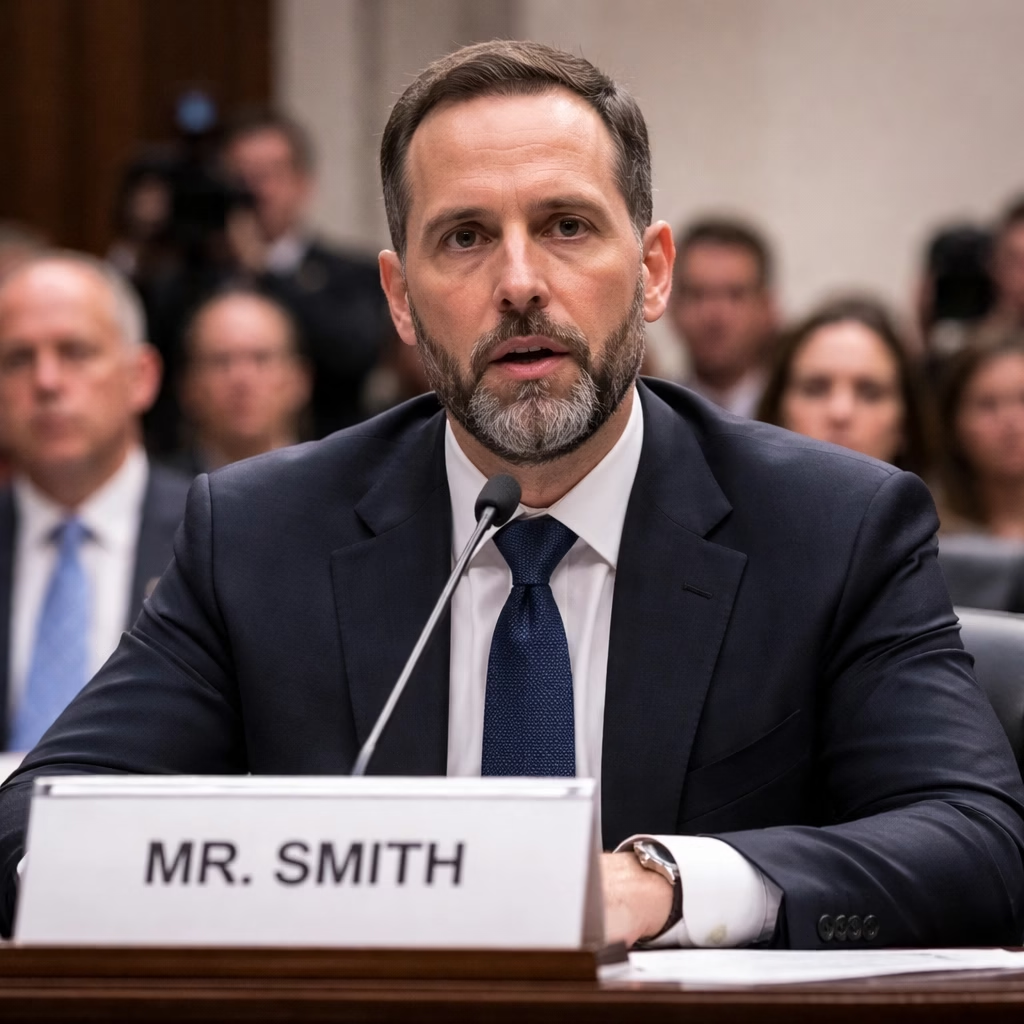
The broader American public is also directly affected. The transparency offered by Smith’s testimony, even if limited by ongoing legal proceedings, contributes to public understanding of complex investigations involving a former president. Public confidence in the judicial system and the fairness of high-profile prosecutions is paramount. The hearing’s impact on this confidence, especially amidst a deeply polarized political climate, remains a central concern. The way the information is presented and interpreted could shape voter sentiment and influence perceptions of justice itself.
What Next: Anticipated Milestones and Challenges
The immediate aftermath of Jack Smith’s congressional testimony will likely see a flurry of activity from both legal and political fronts. The most critical determinant for the trajectory of the investigations remains the Supreme Court’s decision on former President Trump’s claims of presidential immunity. A broad grant of immunity could significantly delay or even derail the D.C. election interference trial, potentially pushing it beyond the November 2024 election. Conversely, a narrow or rejected immunity claim would clear the path for Judge Tanya Chutkan to reschedule the trial, possibly for late summer or early fall.
In the Mar-a-Lago documents case, U.S. District Judge Aileen Cannon is expected to continue her methodical approach, presiding over various pre-trial motions. While a trial date has not been firmly set, legal analysts anticipate it will not commence before the 2024 election, given the current pace and complexity of discovery and classified information handling. Any new rulings from Judge Cannon will significantly influence the timing and scope of this prosecution.
From a congressional perspective, the House hearing may not be the final word. Republicans on the Judiciary Committee and other oversight bodies could issue further subpoenas for documents or additional testimony, depending on the information gleaned from Smith’s appearance. The Special Counsel’s Office will face continued pressure to balance congressional oversight demands with the need to protect ongoing investigations and grand jury secrecy.
Regardless of trial outcomes, appeals are almost certain in both cases, leading to protracted legal battles that could extend well into 2025 or beyond. The intertwining of these legal processes with the 2024 presidential election introduces unprecedented complexities. The timing of verdicts or significant legal developments could profoundly impact the political landscape, influencing voter behavior and shaping the narrative around the candidates. The legal and political systems will remain in a state of high tension as these events unfold.