Beyond Sanctions: A New Approach to Cuba?
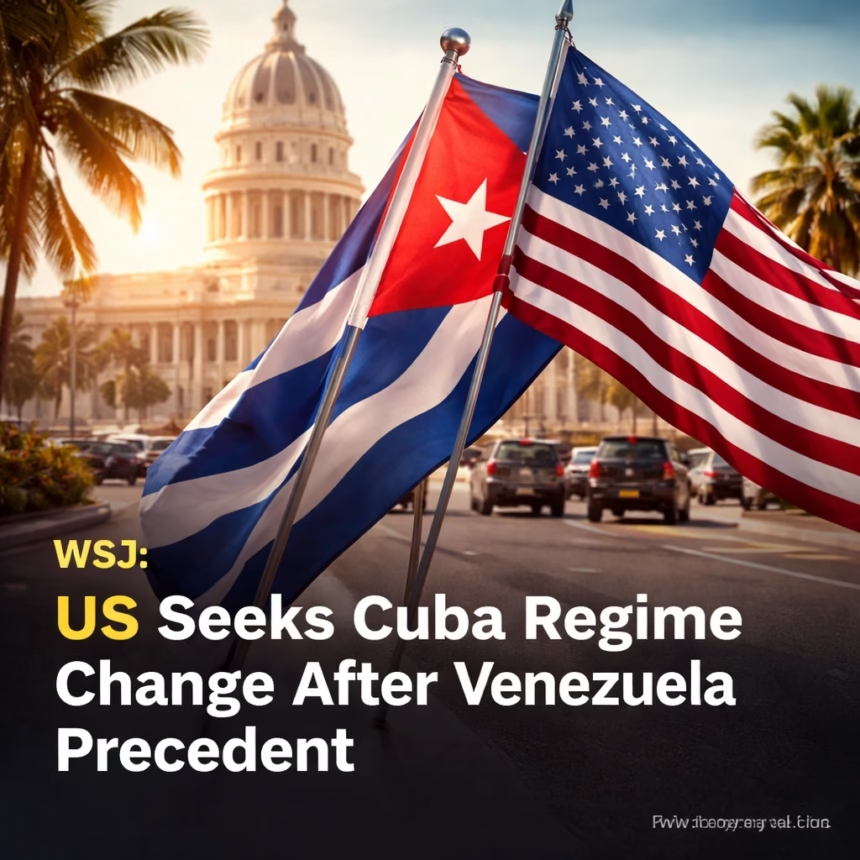
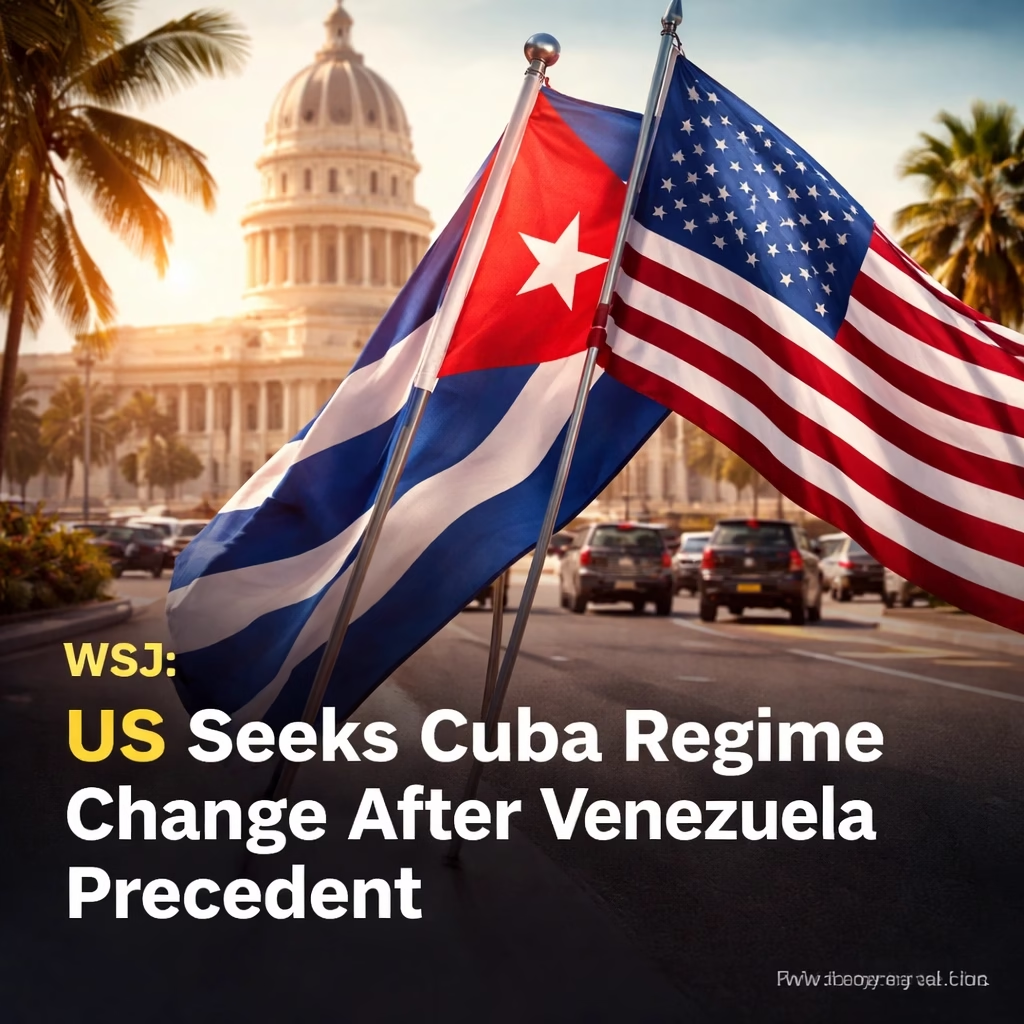
The United States is reportedly intensifying efforts to promote political change in Cuba, drawing parallels with its approach to Venezuela. This shift, detailed in a recent Wall Street Journal report, signals a potential departure from decades of primarily focusing on economic sanctions.
Background
The US-Cuba relationship has been fraught with tension since the 1959 Cuban Revolution, which established a communist government led by Fidel Castro. Following the revolution, the US imposed a trade embargo in 1960, which has been significantly strengthened and modified over the years through various pieces of legislation, including the Cuban Assets Control Regulations. The embargo, intended to pressure the Cuban government, has had a profound impact on the island's economy.
During the Obama administration (2009-2017), a period known as the "Cuban thaw," relations eased considerably. This included the re-establishment of diplomatic ties in 2015, the lifting of some travel and trade restrictions, and increased cultural and educational exchanges. However, these gains were largely reversed by the Trump administration (2017-2021), which reimposed stricter sanctions and adopted a more confrontational stance.
Key Developments
Recent reports indicate a renewed focus on regime change in Cuba, largely influenced by the US experience with Venezuela. The US government, according to the WSJ, is exploring new strategies beyond traditional sanctions, including bolstering support for Cuban civil society groups and strengthening diplomatic pressure on the Cuban government. This shift comes as the Cuban economy continues to struggle, exacerbated by the ongoing economic fallout from the COVID-19 pandemic and the US embargo.
More Read

The Biden administration has publicly expressed concerns about human rights abuses and political repression in Cuba. Statements from officials like Assistant Secretary of State for Western Hemisphere Affairs, Michael Posner, have indicated a willingness to consider more proactive measures to support democratic transition. These measures, however, are still largely under discussion and haven't been formally announced.
Impact
On the Cuban People
Any significant change in US policy could have a substantial impact on the everyday lives of Cuban citizens. While sanctions have undoubtedly contributed to economic hardship, they have also, according to some analysts, strengthened the resilience of Cuban society. A shift towards direct engagement, however, could potentially bring about improvements in access to goods, services, and opportunities.
Conversely, a more aggressive approach aimed at destabilizing the Cuban government could lead to increased economic instability, shortages, and social unrest. The potential impact on the Cuban people remains a significant concern, and any US policy shift will likely be closely scrutinized in that context.
More Read

On US-Cuban Relations
The renewed focus on regime change is likely to further strain relations between the two countries. The Cuban government has consistently condemned the US embargo as a violation of international law and has accused Washington of interfering in its internal affairs. Any move towards more direct action will almost certainly be met with strong condemnation and further hardening of positions on both sides.
What Next
The US strategy toward Cuba remains fluid, but several potential milestones are anticipated in the coming months.
Diplomatic Engagement
Increased diplomatic engagement with Cuban civil society groups is expected. This could involve providing financial support and training to organizations working to promote human rights, democracy, and economic reform. However, the Cuban government is likely to view such engagement with suspicion and may attempt to restrict the activities of these groups.
Policy Announcements
The Biden administration is expected to release a more detailed policy framework for Cuba in the near future. This framework is likely to outline specific goals, strategies, and metrics for measuring progress. The details of this policy framework are currently unknown, but it is expected to reflect the administration's evolving approach to the island.
International Cooperation
The US may seek to coordinate its approach to Cuba with other countries in the region and internationally. This could involve working with the European Union, Canada, and Latin American nations to increase pressure on the Cuban government or to provide support for Cuban civil society. The level of international cooperation will be a key factor in determining the effectiveness of any US policy shift.