South Africa's Reputation Under Scrutiny: Can It Attract Investment?
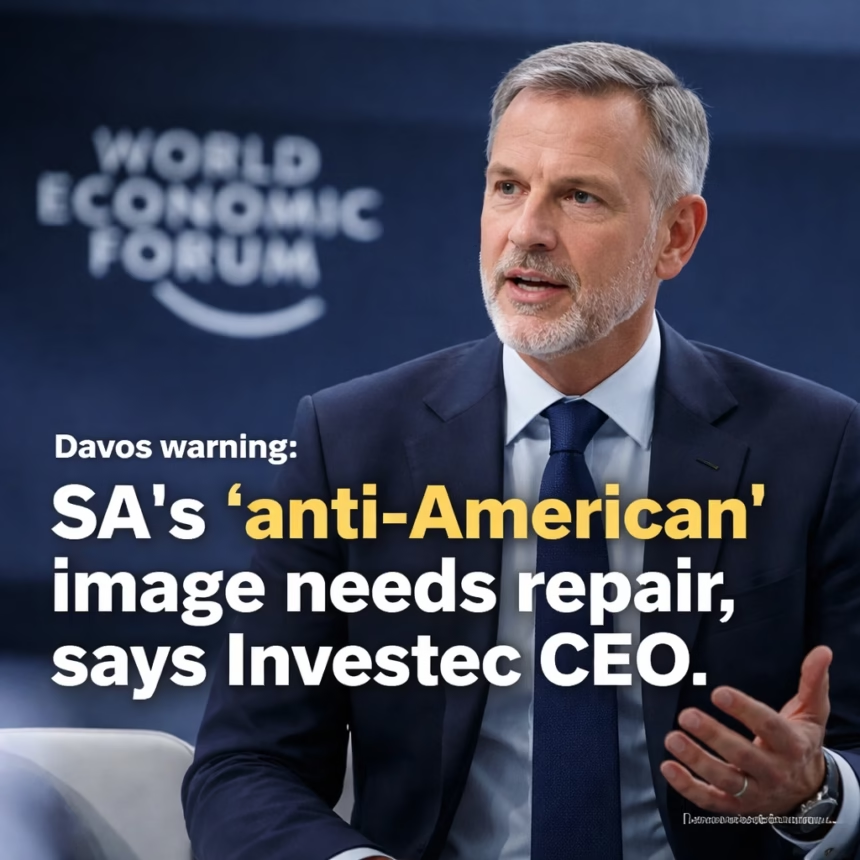
Davos, Switzerland – January 23, 2024 – South Africa’s image as an investment destination is facing a critical challenge, according to Investec CEO Alan Knott-Kuepper. Speaking at the World Economic Forum in Davos this week, he emphasized the urgent need for the country to address perceptions of being “anti-American” to attract much-needed foreign capital.
Background: A History of Shifting Perceptions
South Africa's international standing has fluctuated significantly since the end of apartheid in 1994. Initially lauded for its democratic transition and economic potential, the country has grappled with persistent issues including corruption, inequality, and policy uncertainty. The political landscape has been marked by changes in leadership and economic philosophies, contributing to an inconsistent narrative for foreign investors. Over the past decade, concerns have grown regarding land reform policies and nationalization efforts, leading to increased risk perceptions among international businesses.
The relationship between South Africa and the United States, a key source of foreign investment, has also experienced periods of tension, further complicating the country's image. Instances of critical statements by South African officials regarding US foreign policy have been widely reported and contribute to the perception of a strained relationship.
Key Developments: Recent Challenges and Concerns
Recent years have seen a series of events impacting South Africa's investment climate. The 2023 floods in KwaZulu-Natal caused billions of dollars in damage, disrupting supply chains and highlighting infrastructure vulnerabilities. Furthermore, persistent power outages (load shedding) continue to plague the economy, increasing operational costs for businesses and deterring foreign investment.

The government’s ongoing efforts to address land reform, while intended to rectify historical injustices, have also generated apprehension. Concerns persist about the potential for expropriation without compensation, affecting foreign-owned agricultural businesses and mining operations. The recent announcement of revised policies related to mining royalties has also triggered debate and uncertainty among mining companies.
Investec's CEO explicitly mentioned the perception of "anti-American" sentiment as a significant hurdle. This sentiment, often fueled by political rhetoric and policy decisions, creates a chilling effect on potential US investors, who are generally wary of investing in countries perceived as hostile.

Impact: Businesses and the South African Economy
The negative perception of South Africa is already impacting its economy. Foreign direct investment (FDI) inflows have been sluggish in recent years, failing to reach levels seen in the early 2000s. This lack of investment hinders job creation, economic growth, and technological advancement. The decline in FDI also weakens the South African rand, increasing the cost of imports and contributing to inflation.
Specific sectors, such as mining and manufacturing, are particularly vulnerable. Mining companies, which represent a significant portion of FDI, are increasingly hesitant to invest in South Africa due to policy uncertainty and perceived risks. Manufacturers are struggling with unreliable power supply and rising costs, leading to reduced production and job losses. Small and medium-sized enterprises (SMEs) are also disproportionately affected by these challenges.
What Next: A Path Forward
Addressing the "anti-American" image and broader investment concerns requires a multifaceted approach. The South African government needs to demonstrate a clear commitment to policy consistency, good governance, and the rule of law. Transparency and predictability in regulatory frameworks are crucial to reassure investors.
Policy Reforms
Specifically, the government needs to clarify its position on land reform, ensuring that it is implemented in a manner that respects property rights and provides fair compensation. Addressing the power crisis through investment in renewable energy and grid infrastructure is paramount. Streamlining bureaucratic processes and reducing corruption are also essential to improve the business environment.
Reputation Management
Actively engaging with international stakeholders, including the United States, is crucial. This includes proactive communication about policy changes, addressing concerns, and fostering a more positive narrative about South Africa's investment climate. Highlighting the country's strengths, such as its skilled workforce and strategic location, can also help to counter negative perceptions. Building trust through consistent action and transparent communication will be vital in attracting foreign investment and revitalizing the South African economy.
The coming months will be critical in determining whether South Africa can successfully repair its image and attract the investment it desperately needs. The commitment of the government to implement meaningful reforms and engage constructively with international partners will be key to unlocking the country's economic potential.