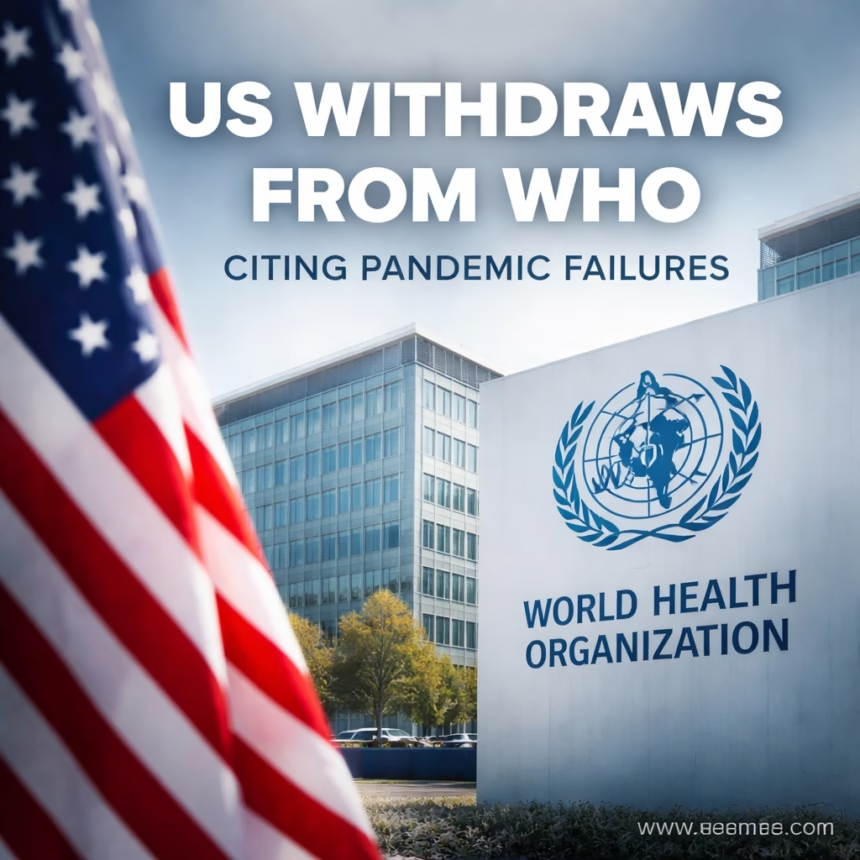
Health Crisis: US Pulls Out of Global Health Body
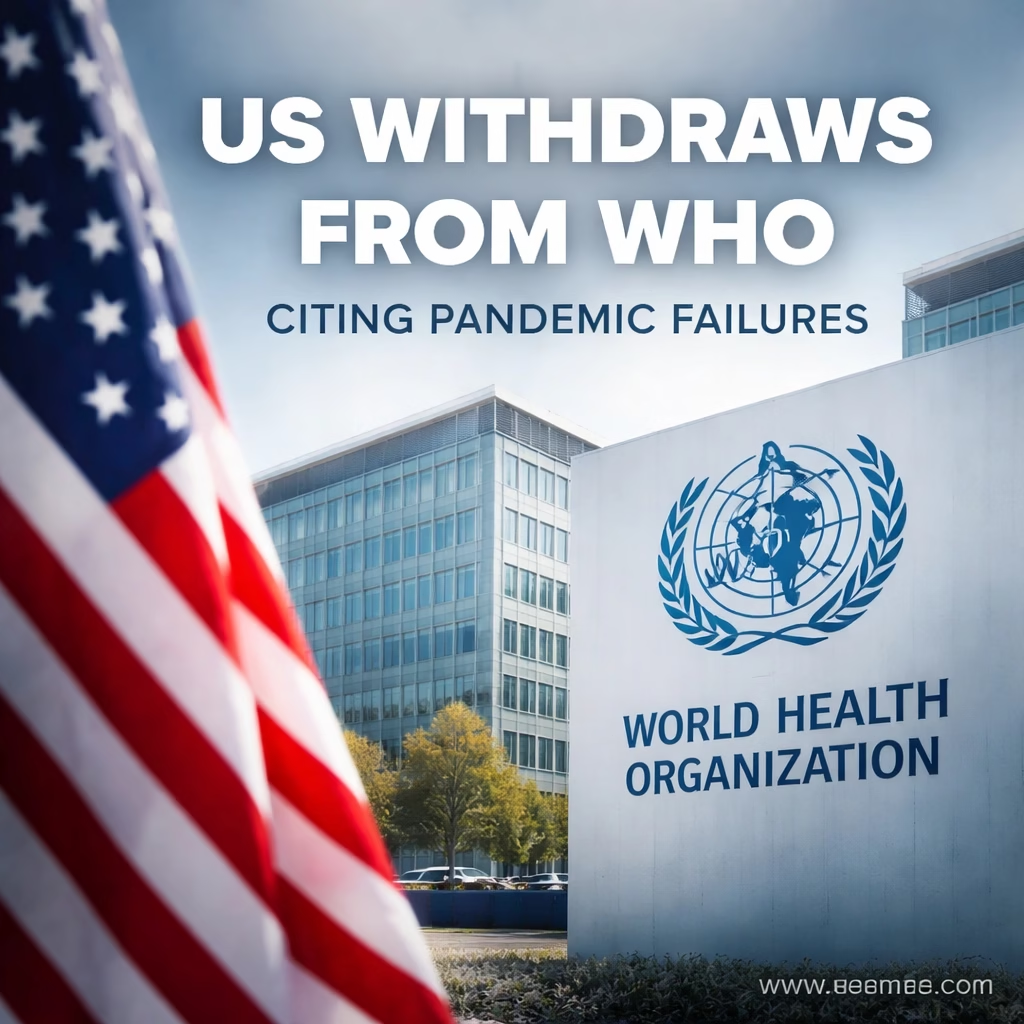
Washington D.C. – The United States officially completed its withdrawal from the World Health Organization (WHO) on July 7, 2022, a move finalized during the administration of President Donald Trump. The decision, rooted in concerns about the organization’s handling of the COVID-19 pandemic, marks a significant shift in global health governance.
Background
The US joined the WHO in 1948, playing a crucial role in its establishment. For decades, the US has been a major financial contributor to the organization, providing billions of dollars annually. However, tensions between the US and the WHO began to escalate during the COVID-19 pandemic. Criticism centered on the WHO’s initial response to the outbreak in Wuhan, China, particularly regarding information sharing and early warnings.
In January 2020, then-President Trump declared that COVID-19 was a "public health emergency" and subsequently imposed travel restrictions from China. He also repeatedly criticized the WHO, alleging its bias towards China and questioning its effectiveness in containing the virus. In May 2020, the Trump administration announced its intention to temporarily suspend financial contributions to the WHO, further straining relations.
The official withdrawal process began when the US formally notified the WHO of its intention to withdraw in July 2020. The withdrawal was scheduled to take effect on July 7, 2022, during the presidency of Joe Biden, who initially signaled a more cooperative approach towards international health organizations.
Key Developments
The Biden administration maintained the decision to withdraw, citing the WHO’s shortcomings in the early stages of the pandemic as justification. Administration officials have repeatedly voiced concerns over the organization's transparency and accountability, particularly regarding its investigations into the origins of COVID-19. The US government pointed to the WHO’s assessment of the pandemic’s origins as insufficient and lacking independent access to key data.
The withdrawal was not without controversy. Many international health experts and political leaders condemned the move, arguing that it weakened global efforts to combat infectious diseases. Concerns were raised about the potential repercussions for global health security and the ability to effectively respond to future pandemics.
Despite the official withdrawal, the US continues to cooperate with the WHO on specific health issues and maintains bilateral collaborations with other countries on global health initiatives. This includes collaborative research efforts and targeted assistance programs.
More Read
Impact
Global Health Security
The US withdrawal has raised concerns about the overall effectiveness of the WHO and the potential for a weakened global health security architecture. The loss of a major financial contributor and a key political voice could hinder the organization’s ability to respond to future health crises.
Pandemic Response
The move complicates international efforts to investigate the origins of COVID-19 and develop global pandemic preparedness strategies. The US’s absence could make it more difficult to establish a consensus on key issues and coordinate a unified response to future outbreaks.
International Relations
The withdrawal strained US relations with many countries, particularly those that strongly support the WHO. It also reflected a broader trend of skepticism towards multilateral institutions under the Trump administration.
Funding Implications
The US was a significant contributor to the WHO’s budget. Its withdrawal has created a funding gap, potentially impacting the organization’s ability to carry out essential programs and activities in developing countries.
What Next?
Alternative Approaches
The Biden administration has emphasized alternative approaches to global health security, focusing on bilateral partnerships and targeted investments in specific areas. This includes working with organizations like the Global Fund to Fight AIDS, Tuberculosis and Malaria and the Gavi, the Vaccine Alliance.
More Read

Future Engagement
While the US is officially withdrawn from the WHO, future engagement is possible. The US could potentially rejoin the organization at a later date, depending on the evolving global health landscape and the WHO’s reforms.
Monitoring Global Health
The US government will continue to monitor global health trends and collaborate with international partners to address emerging health threats. This includes investing in domestic public health infrastructure and supporting research efforts to develop new vaccines and treatments.