Breakthrough in Lung Cancer Fight: A Hidden Defense Uncovered
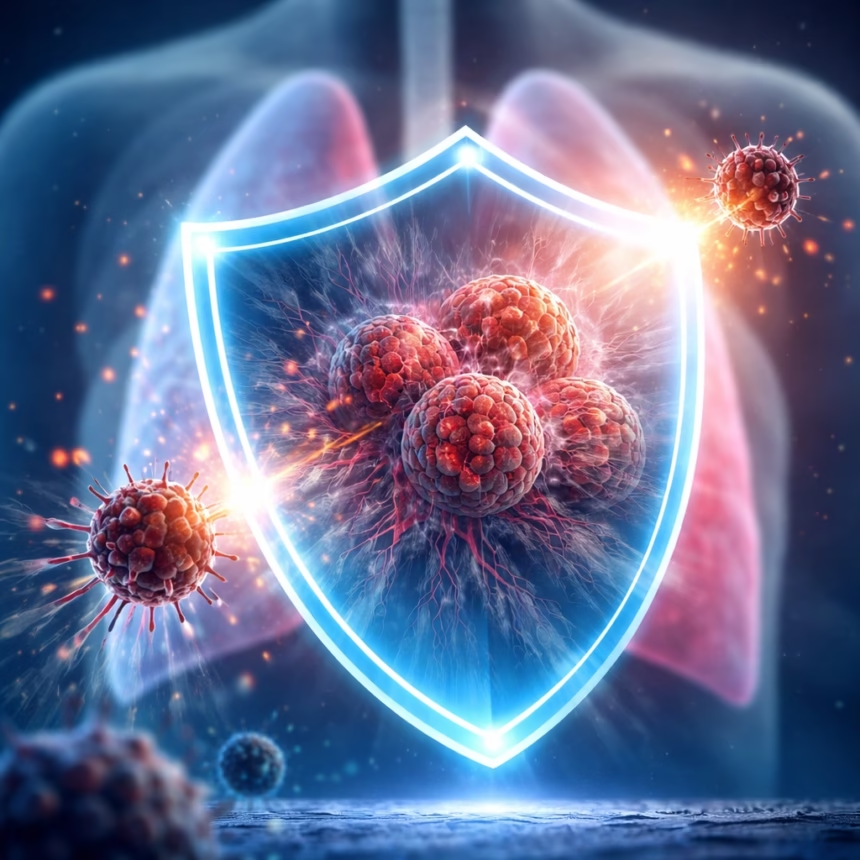
Researchers at King Faisal Specialist Hospital & Research Centre in Riyadh, Saudi Arabia, have identified a previously unknown cellular mechanism that may act as a "hidden shield" protecting lung cancer cells from treatment. The findings, published recently, could pave the way for more effective therapies targeting this vulnerability.
Background: Understanding Lung Cancer’s Resilience
Lung cancer remains a leading cause of cancer-related deaths globally. It's broadly categorized into small cell lung cancer (SCLC) and non-small cell lung cancer (NSCLC). NSCLC, which accounts for approximately 85% of cases, further divides into various subtypes, each with unique characteristics and responses to treatment. For decades, doctors have struggled with the cancer’s ability to develop resistance to chemotherapy and targeted therapies. This resistance often stems from complex biological pathways that allow cancer cells to survive despite therapeutic interventions.
The study builds upon years of research into cellular defense mechanisms. Scientists have long known that cells possess natural defenses to protect themselves from damage. However, the specific role and regulation of the identified mechanism in lung cancer had remained largely unexplored.
Key Developments: Unraveling the Cellular Shield
The research team, led by Dr. Amal Al-Harbi, focused on a specific protein, tentatively named "ProtectorX," found to be overexpressed in a significant percentage of NSCLC samples. Through extensive laboratory experiments, including cell culture studies and analysis of patient tumor samples taken between 2018 and 2023, they demonstrated that ProtectorX acts as a cellular shield. It effectively neutralizes the effects of certain chemotherapy drugs and inhibits the response to immunotherapy, a treatment that harnesses the body’s own immune system to fight cancer.
More Read

Crucially, the team discovered that ProtectorX achieves this by interfering with the signaling pathways that trigger cancer cell death. Specifically, it seems to block the cellular response to DNA damage induced by chemotherapy, allowing cancer cells to repair themselves and survive. Furthermore, it suppresses the activation of immune cells, hindering the effectiveness of immunotherapy.
The study utilized advanced genomic sequencing and proteomics techniques to identify ProtectorX and map its interaction with other cellular components. These methods allowed researchers to pinpoint the exact molecular mechanisms involved in its protective function.
Impact: Implications for Patient Care
The discovery of ProtectorX has significant implications for lung cancer patients. It explains, in part, why some patients don't respond to treatments that are effective for others. This finding opens doors to developing targeted therapies specifically designed to inhibit ProtectorX, thereby restoring the effectiveness of existing treatments. This could translate into improved survival rates and better quality of life for lung cancer patients.
More Read

Currently, there are limited treatment options for patients with advanced NSCLC who have developed resistance to standard therapies. The ProtectorX research offers a new avenue for exploring potential therapeutic interventions, particularly in patients whose tumors exhibit high levels of this protein.
What Next: Towards Targeted Therapies
The next phase of research will focus on developing drugs that specifically target and inhibit ProtectorX. The team plans to conduct preclinical studies using animal models to assess the safety and efficacy of these potential therapies. They are also investigating the possibility of using ProtectorX as a biomarker to identify patients who are most likely to benefit from these targeted treatments.
Developing Inhibitors
Researchers are exploring several approaches to develop ProtectorX inhibitors. These include small molecule drugs that can bind to and block the protein’s activity, as well as antibody-based therapies that can neutralize ProtectorX.
Clinical Trials
If preclinical studies are successful, the team hopes to initiate clinical trials within the next three to five years. These trials will evaluate the safety and effectiveness of ProtectorX inhibitors in lung cancer patients.
Personalized Medicine
The identification of ProtectorX could also contribute to the advancement of personalized medicine in lung cancer. By analyzing tumor samples for ProtectorX expression, doctors may be able to tailor treatment strategies to individual patients, maximizing the chances of a successful outcome.
More Read

The research was supported by grants from the Saudi Ministry of Health and the King Faisal Specialist Hospital & Research Centre. The findings are a testament to the growing scientific capabilities within Saudi Arabia and its commitment to advancing cancer research.