Golden Shockwave: Pakistan's Gold Price Jumps on February 3, 2026 Amidst Economic Turbulence
On Tuesday, February 3, 2026, the price of gold in Pakistan witnessed a significant increase, reflecting a complex interplay of international market trends and persistent domestic economic pressures. This surge has brought the per tola rate to a new benchmark, impacting investors, consumers, and the broader financial landscape across the nation.
Background: A Nation’s Enduring Affinity for Gold
Gold has long held a paramount position in Pakistani society, serving not only as a symbol of status and tradition but also as a crucial safe haven asset. For decades, it has been the preferred hedge against rampant inflation and the perennial depreciation of the Pakistani Rupee. This deep-rooted cultural and financial significance ensures that fluctuations in gold prices resonate widely, from bustling urban markets to remote rural communities.
The period leading up to early 2026 has been characterized by sustained economic volatility in Pakistan. Following a series of challenging years marked by high fiscal deficits, substantial external debt, and a depreciating currency, the nation has navigated multiple International Monetary Fund (IMF) programs. These programs, while crucial for stability, have often entailed austerity measures, including increased energy tariffs and taxation, which have fueled inflationary pressures across various sectors.
A History of Volatility and Economic Strain
Throughout 2024 and 2025, Pakistan's economy grappled with persistent challenges. The Rupee experienced continuous pressure against major international currencies, notably the US Dollar, driven by a widening current account deficit and dwindling foreign exchange reserves. This currency weakness directly translates into higher local gold prices, as the precious metal is primarily valued in dollars on the international market.

Global factors have also played a significant role. Lingering geopolitical tensions in Eastern Europe and the Middle East, coupled with uncertainties surrounding global economic growth and central bank monetary policies, have kept international gold prices elevated. Investors worldwide have increasingly turned to gold as a store of value amidst the unpredictable macroeconomic environment, creating a floor for its price that influences local markets.
Key Developments: Today’s Price Surge and Its Triggers
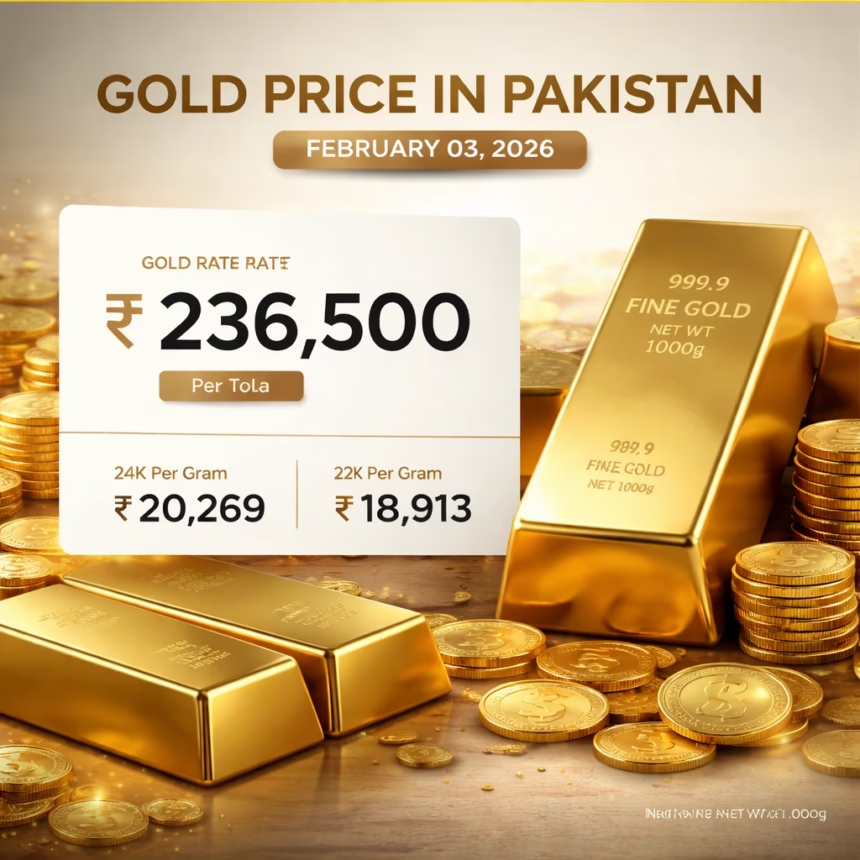
As of February 3, 2026, the price of 24-karat gold in Pakistan reached an unprecedented level. The precious metal was trading at approximately PKR 284,500 per tola, while 10 grams of 24-karat gold were priced around PKR 244,000. These figures represent a notable jump from the previous week, underscoring the immediate market reaction to both international and domestic cues.
International Triggers and Global Gold Momentum
The international spot price for gold hovered around $2300 per ounce on February 3rd. This robust global valuation was primarily driven by renewed concerns over potential escalations in geopolitical conflicts and a cautious outlook from major central banks regarding interest rate cuts. Reports of weaker-than-expected economic data from several major economies further bolstered gold's appeal as a safe-haven asset, pushing its dollar value higher.

Domestic Economic Strain Amplifies Local Impact
Locally, the continued depreciation of the Pakistani Rupee against the US Dollar served as a primary catalyst for the domestic price hike. On this particular day, the interbank exchange rate for the US Dollar hovered around PKR 330, a significant shift from previous months. This weakening of the national currency directly increases the Rupee equivalent of internationally priced gold, even if the global dollar price remains stable.
Furthermore, persistent high inflation, estimated to be around 22% year-on-year, continued to erode the purchasing power of the Rupee. This inflationary environment compels many Pakistanis to view gold as the most reliable means to preserve their wealth, leading to increased demand, especially from investors and those looking to safeguard their savings against economic uncertainties. Reports from local bullion markets indicate a steady stream of buyers, despite the elevated prices.
Impact: Far-Reaching Consequences Across Society
The soaring gold prices on February 3, 2026, have wide-ranging implications for various segments of Pakistani society, from individual consumers planning life events to the broader national economy and the intricate jewelry industry.
Consumers Face Tough Choices
For the average Pakistani consumer, particularly those planning weddings or cultural festivities, the exorbitant gold prices present a significant challenge. Gold jewelry is an integral part of bridal dowries and gifts, and its escalating cost places immense financial strain on families. Many are forced to scale down their purchases, opt for lower caratage gold, or even consider imitation jewelry, leading to a shift in traditional buying patterns.
Investors Seek Shelter Amidst Uncertainty
For investors, gold continues to serve its traditional role as a hedge against inflation and currency devaluation. Those who had invested in gold previously are seeing substantial gains in Rupee terms, further solidifying its reputation as a reliable store of value. However, new investors face a dilemma: whether to buy at these elevated levels or wait for a potential correction. The ongoing economic instability often pushes individuals towards tangible assets like gold, even at high prices, as a perceived safer alternative to bank deposits or real estate.
More Read

The Jewelry Sector’s Dilemma
The local jewelry manufacturing and retail sector faces considerable headwinds. High gold prices, coupled with reduced consumer purchasing power, lead to a decline in sales volume. Jewelers report slower business, impacting artisans, craftsmen, and small business owners who depend on the industry. The cost of importing raw gold also rises, putting pressure on profit margins and potentially leading to job losses within the sector. Some jewelers are exploring innovative designs with less gold content or promoting lighter, more affordable pieces to sustain demand.
Economic Repercussions and Government Response
From a macroeconomic perspective, high gold prices can exacerbate balance of payments issues if gold imports surge to meet demand, though the government has previously implemented measures to curb unofficial imports. The persistent flight of capital into gold also indicates a lack of confidence in other investment avenues within the country. The government and the State Bank of Pakistan face the ongoing challenge of stabilizing the Rupee, controlling inflation, and fostering an environment where gold is not the only attractive investment option.
What Next: Outlook and Expected Milestones
The outlook for gold prices in Pakistan for the remainder of 2026 remains subject to a complex interplay of global and domestic factors. While immediate volatility is expected, several key indicators will dictate the longer-term trajectory.
Outlook for the Coming Months
In the short to medium term, gold prices are likely to remain elevated, especially if the Rupee continues its depreciatory trend and global geopolitical tensions persist. Analysts suggest that any significant rally in international gold prices, potentially driven by further economic uncertainty or shifts in central bank policies abroad, would immediately translate into higher local rates. Conversely, a strengthening of the Rupee or a substantial drop in global gold prices could offer some relief, though such scenarios appear less probable in the immediate future given current trends.
Policy Responses and Market Dynamics
The State Bank of Pakistan's monetary policy decisions, particularly regarding interest rates and currency intervention, will be critical. Any successful efforts to stabilize the Rupee and curb inflation could temper the demand for gold as a hedge. The government's ongoing negotiations with the IMF and its ability to implement structural reforms will also play a pivotal role in restoring investor confidence and potentially diverting capital from gold into productive sectors of the economy.
Furthermore, seasonal demand patterns, such as the upcoming wedding seasons, will continue to influence local gold markets. Despite the high prices, cultural imperatives often ensure a baseline level of demand. The interplay of these forces suggests that while gold will likely remain a significant asset, its price will be a sensitive barometer of Pakistan's economic health and its connection to the volatile global landscape.
Golden Shockwave: Pakistan's Gold Price Jumps on February 3, 2026 Amidst Economic Turbulence
On Tuesday, February 3, 2026, the price of gold in Pakistan witnessed a significant increase, reflecting a complex interplay of international market trends and persistent domestic economic pressures. This surge has brought the per tola rate to a new benchmark, impacting investors, consumers, and the broader financial landscape across the nation.
Background: A Nation’s Enduring Affinity for Gold
Gold has long held a paramount position in Pakistani society, serving not only as a symbol of status and tradition but also as a crucial safe haven asset. For decades, it has been the preferred hedge against rampant inflation and the perennial depreciation of the Pakistani Rupee. This deep-rooted cultural and financial significance ensures that fluctuations in gold prices resonate widely, from bustling urban markets to remote rural communities.
The period leading up to early 2026 has been characterized by sustained economic volatility in Pakistan. Following a series of challenging years marked by high fiscal deficits, substantial external debt, and a depreciating currency, the nation has navigated multiple International Monetary Fund (IMF) programs. These programs, while crucial for stability, have often entailed austerity measures, including increased energy tariffs and taxation, which have fueled inflationary pressures across various sectors.
A History of Volatility and Economic Strain
Throughout 2024 and 2025, Pakistan's economy grappled with persistent challenges. The Rupee experienced continuous pressure against major international currencies, notably the US Dollar, driven by a widening current account deficit and dwindling foreign exchange reserves. This currency weakness directly translates into higher local gold prices, as the precious metal is primarily valued in dollars on the international market.
Global factors have also played a significant role. Lingering geopolitical tensions in Eastern Europe and the Middle East, coupled with uncertainties surrounding global economic growth and central bank monetary policies, have kept international gold prices elevated. Investors worldwide have increasingly turned to gold as a store of value amidst the unpredictable macroeconomic environment, creating a floor for its price that influences local markets.
Key Developments: Today’s Price Surge and Its Triggers
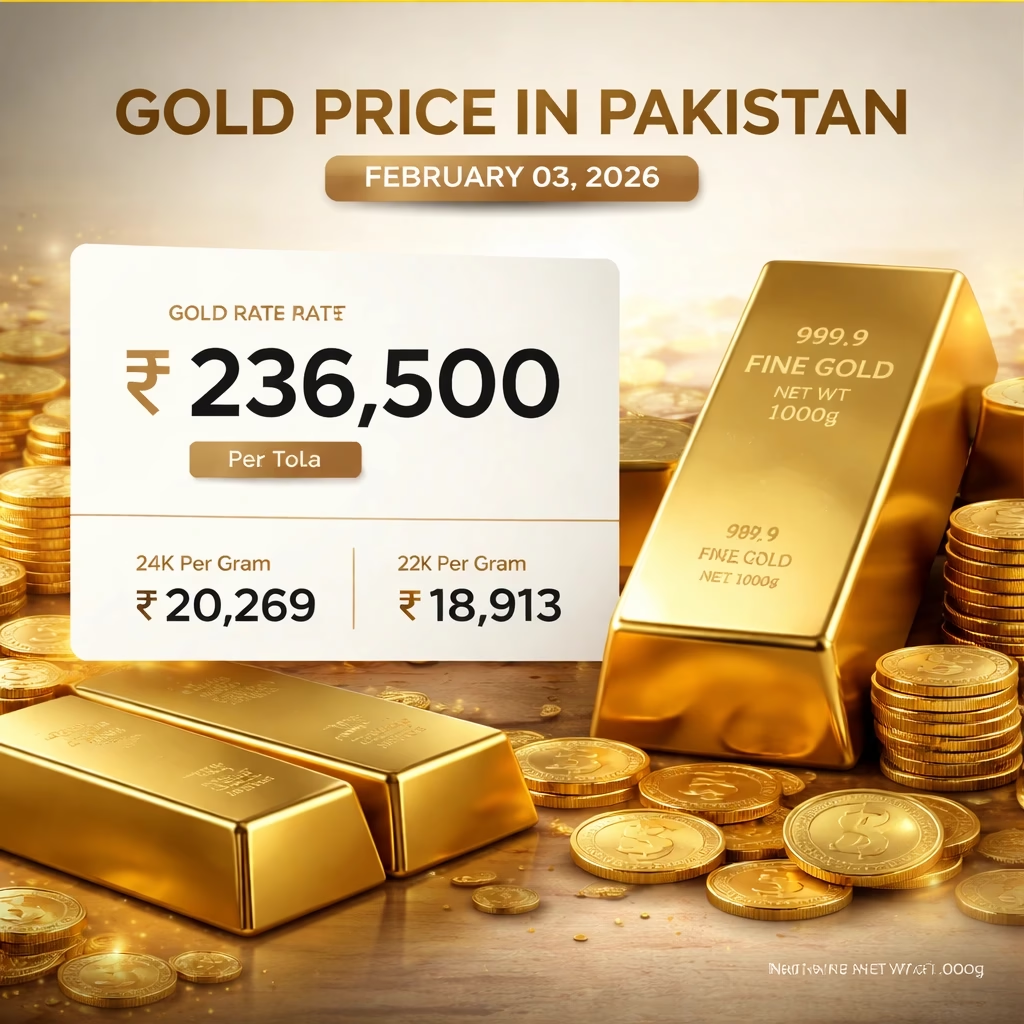
As of February 3, 2026, the price of 24-karat gold in Pakistan reached an unprecedented level. The precious metal was trading at approximately PKR 284,500 per tola, while 10 grams of 24-karat gold were priced around PKR 244,000. These figures represent a notable jump from the previous week, underscoring the immediate market reaction to both international and domestic cues.
International Triggers and Global Gold Momentum
The international spot price for gold hovered around $2300 per ounce on February 3rd. This robust global valuation was primarily driven by renewed concerns over potential escalations in geopolitical conflicts and a cautious outlook from major central banks regarding interest rate cuts. Reports of weaker-than-expected economic data from several major economies further bolstered gold's appeal as a safe-haven asset, pushing its dollar value higher.
Domestic Economic Strain Amplifies Local Impact
Locally, the continued depreciation of the Pakistani Rupee against the US Dollar served as a primary catalyst for the domestic price hike. On this particular day, the interbank exchange rate for the US Dollar hovered around PKR 330, a significant shift from previous months. This weakening of the national currency directly increases the Rupee equivalent of internationally priced gold, even if the global dollar price remains stable.
Furthermore, persistent high inflation, estimated to be around 22% year-on-year, continued to erode the purchasing power of the Rupee. This inflationary environment compels many Pakistanis to view gold as the most reliable means to preserve their wealth, leading to increased demand, especially from investors and those looking to safeguard their savings against economic uncertainties. Reports from local bullion markets indicate a steady stream of buyers, despite the elevated prices.
Impact: Far-Reaching Consequences Across Society
The soaring gold prices on February 3, 2026, have wide-ranging implications for various segments of Pakistani society, from individual consumers planning life events to the broader national economy and the intricate jewelry industry.
Consumers Face Tough Choices
For the average Pakistani consumer, particularly those planning weddings or cultural festivities, the exorbitant gold prices present a significant challenge. Gold jewelry is an integral part of bridal dowries and gifts, and its escalating cost places immense financial strain on families. Many are forced to scale down their purchases, opt for lower caratage gold, or even consider imitation jewelry, leading to a shift in traditional buying patterns.
Investors Seek Shelter Amidst Uncertainty
For investors, gold continues to serve its traditional role as a hedge against inflation and currency devaluation. Those who had invested in gold previously are seeing substantial gains in Rupee terms, further solidifying its reputation as a reliable store of value. However, new investors face a dilemma: whether to buy at these elevated levels or wait for a potential correction. The ongoing economic instability often pushes individuals towards tangible assets like gold, even at high prices, as a perceived safer alternative to bank deposits or real estate.
The Jewelry Sector’s Dilemma
The local jewelry manufacturing and retail sector faces considerable headwinds. High gold prices, coupled with reduced consumer purchasing power, lead to a decline in sales volume. Jewelers report slower business, impacting artisans, craftsmen, and small business owners who depend on the industry. The cost of importing raw gold also rises, putting pressure on profit margins and potentially leading to job losses within the sector. Some jewelers are exploring innovative designs with less gold content or promoting lighter, more affordable pieces to sustain demand.
Economic Repercussions and Government Response
From a macroeconomic perspective, high gold prices can exacerbate balance of payments issues if gold imports surge to meet demand, though the government has previously implemented measures to curb unofficial imports. The persistent flight of capital into gold also indicates a lack of confidence in other investment avenues within the country. The government and the State Bank of Pakistan face the ongoing challenge of stabilizing the Rupee, controlling inflation, and fostering an environment where gold is not the only attractive investment option.
What Next: Outlook and Expected Milestones
The outlook for gold prices in Pakistan for the remainder of 2026 remains subject to a complex interplay of global and domestic factors. While immediate volatility is expected, several key indicators will dictate the longer-term trajectory.
Outlook for the Coming Months
In the short to medium term, gold prices are likely to remain elevated, especially if the Rupee continues its depreciatory trend and global geopolitical tensions persist. Analysts suggest that any significant rally in international gold prices, potentially driven by further economic uncertainty or shifts in central bank policies abroad, would immediately translate into higher local rates. Conversely, a strengthening of the Rupee or a substantial drop in global gold prices could offer some relief, though such scenarios appear less probable in the immediate future given current trends.
Policy Responses and Market Dynamics
The State Bank of Pakistan's monetary policy decisions, particularly regarding interest rates and currency intervention, will be critical. Any successful efforts to stabilize the Rupee and curb inflation could temper the demand for gold as a hedge. The government's ongoing negotiations with the IMF and its ability to implement structural reforms will also play a pivotal role in restoring investor confidence and potentially diverting capital from gold into productive sectors of the economy.
Furthermore, seasonal demand patterns, such as the upcoming wedding seasons, will continue to influence local gold markets. Despite the high prices, cultural imperatives often ensure a baseline level of demand. The interplay of these forces suggests that while gold will likely remain a significant asset, its price will be a sensitive barometer of Pakistan's economic health and its connection to the volatile global landscape.