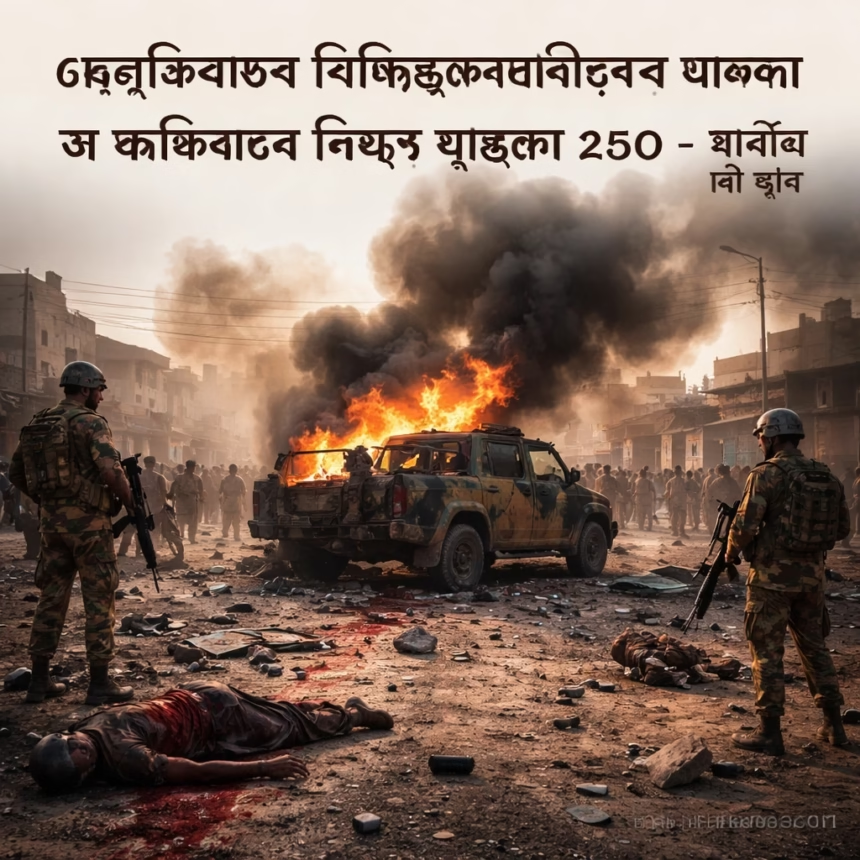
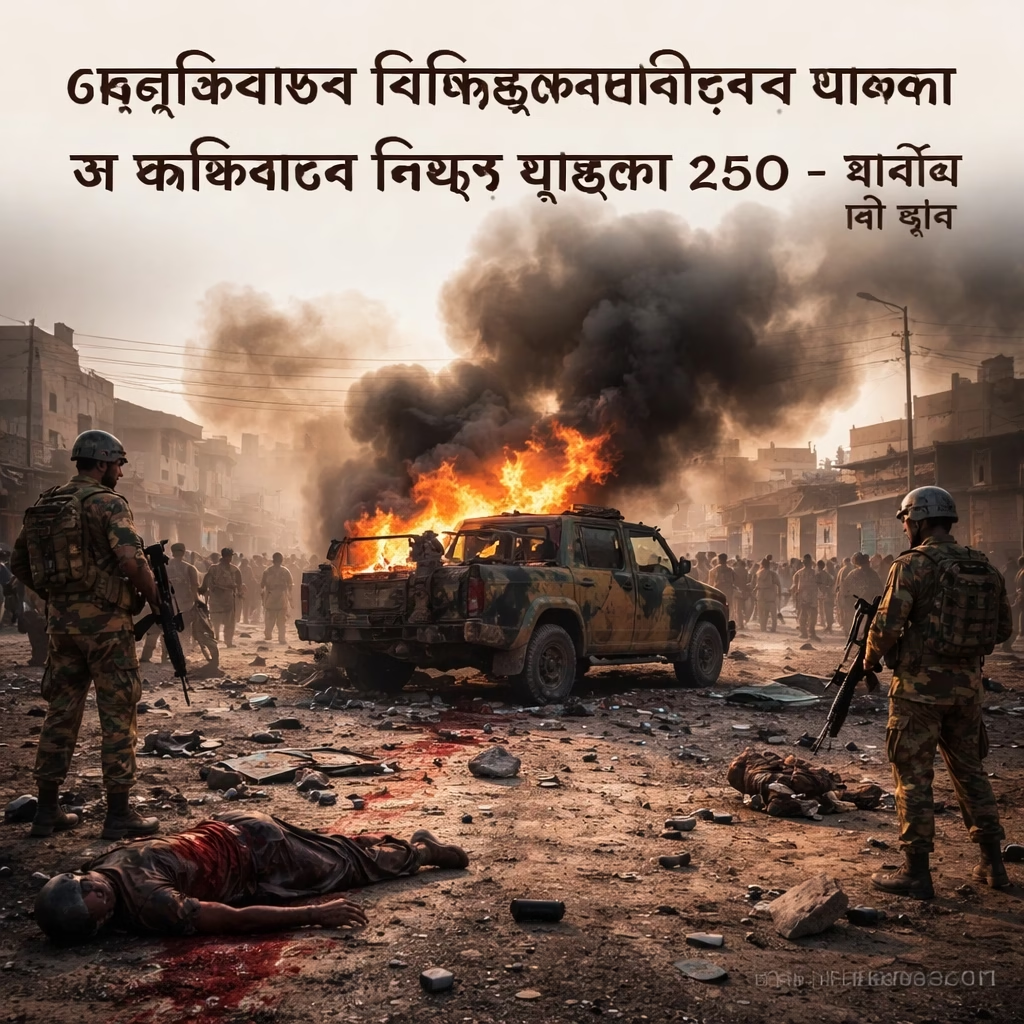
Balochistan, Pakistan's largest yet least populated province, is grappling with a severe escalation of separatist violence and subsequent security operations. Recent reports indicate the death toll from this protracted conflict has tragically surpassed 250 individuals, encompassing both security personnel and militants, over a concentrated period. This surge in fatalities underscores the deepening crisis in a region critical for Pakistan's economic ambitions and regional stability.
A Deep-Rooted Conflict: Balochistan’s Tumultuous Background
The roots of the insurgency in Balochistan are deeply embedded in a complex interplay of historical grievances, economic disparities, and political marginalization. Baloch nationalists and separatists contend that the province's vast natural resources, including gas and minerals, have been exploited by the federal government without equitable returns to the local populace. This perceived injustice fuels demands for greater autonomy, control over provincial resources, and in some cases, outright independence from Pakistan.
The conflict has seen multiple phases since Pakistan's independence in 1947, with significant insurgencies erupting in the 1970s and again in the early 2000s. Groups like the Balochistan Liberation Army (BLA), Baloch Republican Army (BRA), and Balochistan Liberation Front (BLF) have emerged as key players, employing guerrilla tactics against state institutions, security forces, and infrastructure projects. The government, in turn, has consistently framed these groups as terrorists, launching extensive counter-insurgency operations to quell the unrest and maintain territorial integrity.
Adding another layer of complexity is Balochistan's strategic geographical location, bordering Iran and Afghanistan, and its central role in the China-Pakistan Economic Corridor (CPEC). This mega-project, involving billions of dollars in infrastructure development, is viewed by some Baloch separatists as another form of exploitation, leading to targeted attacks on CPEC-related personnel and installations, particularly around the port city of Gwadar. The region's rugged terrain and sparse population also present significant challenges for both security forces and insurgent groups.
Escalation and Key Developments in Recent Months
The current period marks a significant intensification of violence, characterized by a marked increase in both the frequency and sophistication of separatist attacks. Over the past year, Baloch militant groups have demonstrated an enhanced capability to launch coordinated assaults on high-security targets, moving beyond sporadic bombings to complex siege operations.
A notable surge occurred in late January and early February, with multiple, well-coordinated attacks targeting security installations in Mach, Bolan, and Gwadar. In Mach, militants reportedly stormed government buildings and security checkpoints, leading to prolonged engagements. Similarly, Gwadar, a cornerstone of CPEC, experienced renewed assaults on its port and other vital infrastructure, including a sophisticated attack on the Gwadar Port Authority complex. These operations, often claimed by the Balochistan Liberation Army (BLA) and its Majeed Brigade, have resulted in substantial casualties among security forces and considerable material damage.
In response, Pakistani security forces have intensified their intelligence-based operations across the province. These counter-insurgency efforts have led to numerous encounters, resulting in the deaths of a significant number of militants. Authorities report dismantling several insurgent hideouts and recovering caches of weapons and explosives. The government maintains that these operations are crucial to restoring peace and protecting national assets, particularly those associated with CPEC. However, human rights organizations have frequently raised concerns about alleged extrajudicial killings and enforced disappearances during these security crackdowns, claims consistently denied by the state.
The involvement of foreign elements is a recurring accusation from Islamabad, which alleges that hostile intelligence agencies provide financial and logistical support to Baloch separatist groups. While these claims are routinely denied by the implicated countries, they add another dimension to the already complex security landscape of Balochistan. The recent developments suggest a more organized and resilient insurgency, capable of sustaining operations despite continuous pressure from state forces.

The Far-Reaching Impact of Enduring Conflict
The escalating conflict in Balochistan casts a long shadow over various aspects of life, affecting individuals, the economy, and regional stability. The human cost is undeniably the most tragic, with the death toll of over 250 reflecting a devastating loss of life among security personnel, militants, and often, innocent civilians caught in the crossfire. This violence leads to widespread displacement, disrupts livelihoods, and inflicts profound psychological trauma on communities already living under duress. Access to basic services like healthcare and education is frequently hampered in conflict-affected areas, exacerbating humanitarian concerns.
Economically, the unrest poses a significant threat to development initiatives, particularly the ambitious CPEC projects. Attacks on infrastructure, Chinese workers, and security forces deter foreign investment and delay crucial developmental work, thereby undermining Pakistan's vision for economic growth and regional connectivity. The constant need for heightened security measures also diverts substantial national resources that could otherwise be allocated to socio-economic development in a province that desperately needs it.
Politically, the conflict strains federal-provincial relations and fuels calls for greater transparency and accountability regarding security operations. Human rights concerns, particularly allegations of enforced disappearances and arbitrary detentions, continue to draw criticism from international bodies and rights groups, complicating Pakistan's image on the global stage. The cycle of violence further entrenches mistrust between the state and segments of the Baloch population, making reconciliation efforts increasingly challenging.
Regionally, the instability in Balochistan has implications for neighboring Iran and Afghanistan, particularly concerning cross-border movements of militants and refugees. The province's strategic location means that any significant escalation of conflict could destabilize a broader area, impacting trade routes and security dynamics in South and Central Asia.
What Lies Ahead: Pathways and Perils for Balochistan
The immediate future for Balochistan appears to be one of continued tension and potential for further conflict. The Pakistani government is likely to maintain its two-pronged strategy: robust military operations to counter insurgent activities and accelerated development projects aimed at addressing socio-economic grievances. Enhanced intelligence gathering, targeted strikes, and fortification of critical infrastructure, especially CPEC sites, will remain priorities for the security establishment. However, the effectiveness of a purely military solution without significant political engagement remains a subject of intense debate.
On the separatist front, groups are expected to persist with their low-intensity warfare, possibly seeking to expand their operational reach and target high-value assets to maximize impact and international visibility. The ability of these groups to adapt, recruit, and procure resources will determine the sustainability of their insurgency. Any perceived successes by the separatists could embolden them, leading to further attacks.
More Read

The prospect of a political dialogue remains complex and fraught with challenges. While some analysts advocate for inclusive negotiations with disgruntled Baloch elements, the government's stance against engaging with groups it designates as terrorists makes such a pathway difficult. Any future dialogue would require significant trust-building measures, a willingness from all parties to compromise, and a clear framework for addressing core grievances, including resource distribution and political representation.
The fate of CPEC projects in Balochistan will also be a critical barometer. Continued security threats could slow down progress, increase costs, and potentially deter future investment. Ensuring the security of Chinese personnel and assets will remain a paramount concern for Islamabad.
Ultimately, achieving lasting peace in Balochistan will necessitate a comprehensive approach that moves beyond security operations to address the underlying political, economic, and social issues. This includes fostering genuine political inclusion, ensuring equitable resource distribution, upholding human rights, and initiating credible reconciliation processes. Without such a holistic strategy, Balochistan risks remaining a flashpoint of conflict, with the cycle of violence continuing to claim lives and hinder progress.