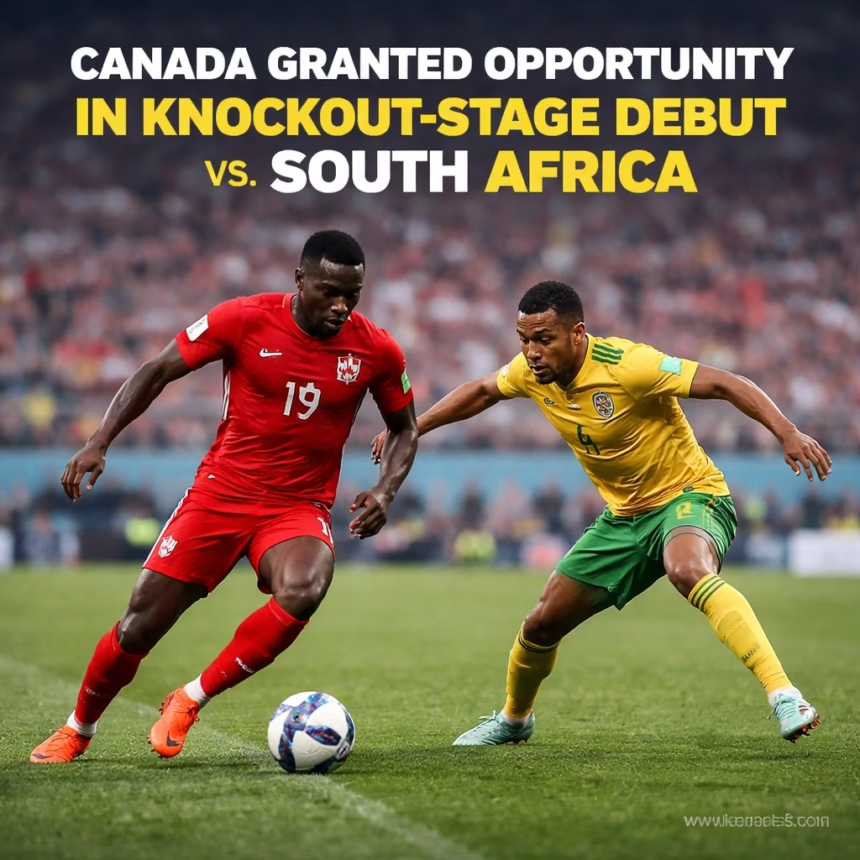
Canada is poised to make a monumental debut in a major international rugby knockout stage, facing the formidable South African Springboks. This historic quarter-final clash is scheduled for Saturday, October 26, 2024, at the iconic Stade Vélodrome in Marseille, France, marking an unprecedented moment for Canadian rugby on the global stage. The match represents not only a significant sporting challenge but also a defining opportunity for the sport's growth and recognition across Canada.
Background: A Nation’s Unprecedented Ascent
Canadian rugby, historically a developing nation in the sport, has long competed in major tournaments without reaching the knockout rounds since their 1991 Rugby World Cup quarter-final appearance. That lone foray into the last eight ended in a comprehensive defeat to New Zealand. This current campaign, however, has been different, marked by a blend of tactical brilliance, unwavering team spirit, and a series of unexpected victories that have captivated the rugby world.
Canada’s Unforeseen Journey to the Quarter-Finals
The journey to Marseille has been nothing short of remarkable for the Canucks. Competing in Pool C of the Rugby Nations Championship, Canada defied expectations from the outset. Their opening fixture saw a gritty 24-19 victory over a highly-ranked Italian side, a result that immediately signaled their intent. This was followed by a dominant 38-12 win against Uruguay, showcasing their attacking prowess and defensive resilience. A narrow 27-20 loss to host nation France, despite a valiant effort, secured their second-place finish in the pool, earning them a coveted spot in the quarter-finals for the first time in over three decades. This progression is a testament to years of strategic investment in player development and coaching infrastructure, culminating in a squad capable of competing at the highest level.
The Springboks’ Dominant Legacy
South Africa, by contrast, arrives in the knockout stage with a well-established pedigree as one of rugby's undisputed powerhouses. As reigning champions of the Rugby World Cup and a consistent top-three ranked nation, the Springboks command immense respect and fear from opponents. Their path through Pool D was equally impressive, securing dominant victories over Scotland (32-15), Tonga (49-18), and Ireland (26-17), demonstrating their trademark physical dominance, set-piece strength, and tactical acumen. The Springboks' squad boasts a wealth of experience, including multiple World Cup winners and seasoned professionals from top leagues globally. Their coaching staff, led by Rassie Erasmus and Jacques Nienaber, are renowned for their meticulous planning and innovative strategies, making them formidable opponents in any high-stakes encounter.
More Read

Key Developments: Tactical Shifts and Squad Preparations
The build-up to this quarter-final has been intense for both camps, with coaches fine-tuning strategies and players pushing for peak performance. For Canada, the focus has been on maintaining momentum while adapting to the heightened pressure of a knockout fixture against a top-tier opponent.
Canada’s Strategic Blueprint and Player Focus
Head Coach Kieran Crowley has emphasized a balanced approach, focusing on Canada's strengths in the breakdown and a surprisingly dynamic backline. Key players like fly-half Thomas Lafleur, whose tactical kicking and playmaking have been instrumental, and captain and flanker David Evans, a tireless leader and breakdown specialist, are central to Canada's game plan. The coaching staff has reportedly spent considerable time analyzing South Africa's defensive patterns and set-piece vulnerabilities, aiming to exploit any fractional weaknesses. Training sessions in the week leading up to the match have focused on high-intensity contact drills and precision in execution under pressure, reflecting the expected physicality of the Springboks. There are no significant injury concerns for Canada, allowing Crowley to select his strongest possible XV.
Springboks’ Calculated Approach
South Africa's preparation has been equally rigorous. Coach Nienaber has publicly acknowledged Canada's impressive run, dismissing any notion of complacency. The Springboks are expected to rely on their robust forward pack, with powerful scrummaging and mauling providing a platform for their attacking threats. Key figures such as lock Eben Etzebeth and scrum-half Faf de Klerk will be pivotal in dictating the pace and physicality of the game. Reports suggest the Springboks have been working on neutralizing Canada's quick ball at the ruck and disrupting Lafleur's kicking game. While their squad depth allows for some rotation, Nienaber is likely to field a near full-strength side, underscoring the importance of this knockout fixture in their campaign to retain their title.
More Read

Impact: A Ripple Effect Across the Rugby World
The mere presence of Canada in a major rugby knockout stage against South Africa has already generated significant impact, reaching far beyond the confines of the pitch in Marseille.
Boosting Canadian Rugby’s Profile and Development
Domestically, the excitement surrounding the Canadian team's performance has been unprecedented. Television viewership numbers have surged, and social media engagement has exploded, introducing rugby to a new generation of fans across the country. This increased visibility is expected to translate into greater participation at grassroots levels, with youth clubs reporting renewed interest. Rugby Canada anticipates a significant boost in funding opportunities, both from government sports bodies and corporate sponsors, which can be reinvested into player development pathways, coaching education, and infrastructure improvements. The success of this current squad serves as a powerful inspiration for aspiring athletes, demonstrating that with dedication and strategic support, Canadian rugby can compete with the world's best.
Global Implications and South African Pressure
Globally, Canada's run has been hailed as a triumph for emerging rugby nations, showcasing the potential for upsets and the growing competitiveness of the sport. A strong performance against South Africa, regardless of the outcome, will solidify Canada's position as a rising force, potentially influencing future tournament structures and investment in Tier 2 nations. For South Africa, the match carries immense pressure. As heavy favorites, anything less than a convincing victory would be seen as a disappointment. Their reputation as a rugby superpower is on the line, and they will be acutely aware of the historical significance of a potential upset, especially against a team making its knockout debut. The outcome will undoubtedly reverberate through the international rugby landscape, affecting World Rugby rankings and the narrative surrounding both teams.
What Next: Charting Future Trajectories
Regardless of the result in Marseille, the quarter-final clash against South Africa marks a critical juncture for Canadian rugby, offering clear pathways for future development and setting new benchmarks for success.
Immediate Aftermath and Tournament Progression
Should Canada achieve the unthinkable and defeat South Africa, they would progress to the semi-finals, facing either New Zealand or Ireland in what would be an even more astonishing chapter in their story. Such a victory would be etched into sporting history, fundamentally altering the perception of Canadian rugby forever. The immediate focus would then shift to recovery and tactical preparation for another monumental challenge. If, as expected, South Africa emerges victorious, they would advance to the semi-finals, continuing their quest for another major international trophy.
Long-Term Vision for Rugby Canada
For Canada, a loss would by no means diminish the achievements of this campaign. The experience gained by the players in a high-stakes knockout match against a world-class opponent is invaluable. The team will return home with newfound confidence, a clearer understanding of the demands of elite rugby, and a robust platform for future development. Rugby Canada's long-term strategy will likely focus on leveraging this success to accelerate professionalization within domestic leagues, attract more talent, and ensure consistent participation in future major tournaments. The goal will be to transform this breakthrough into sustained competitiveness, aiming for regular knockout stage appearances in future Rugby World Cups and other international competitions. The legacy of this team and this match will serve as a powerful catalyst for the sport's continued evolution in Canada, inspiring a new generation of players and fans to embrace the maple leaf on the global rugby stage.