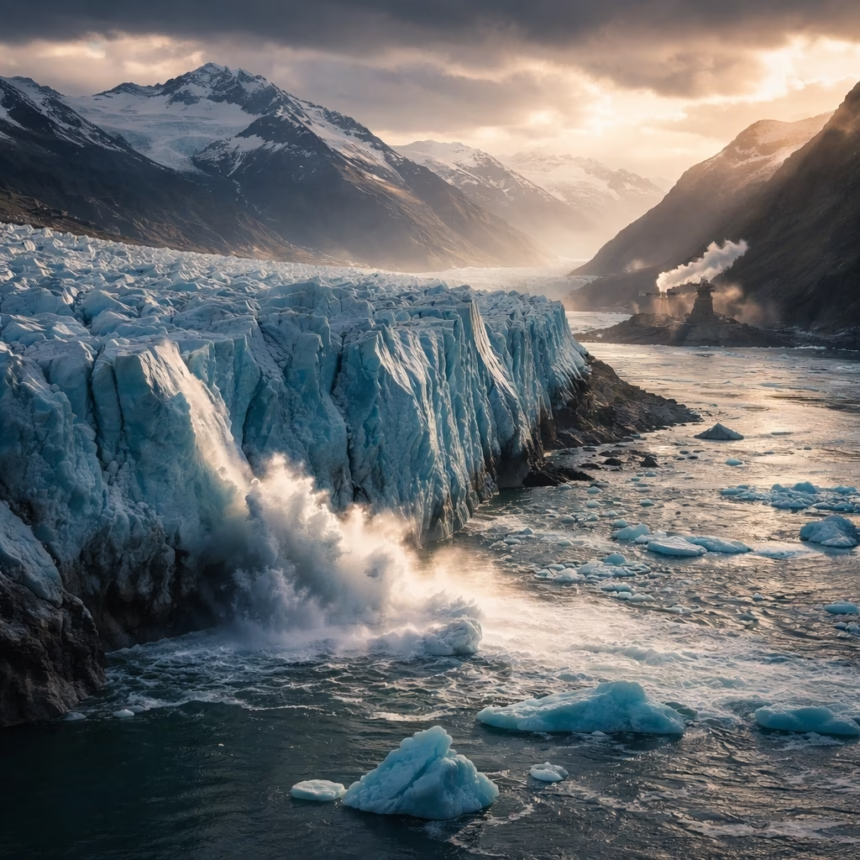
Jakobshavn Isbræ, a colossal glacier in West Greenland also known by its Kalaallisut name Sermeq Kujalleq, is experiencing an unprecedented rate of retreat. This dramatic acceleration in its ice loss, observed through satellite data and on-the-ground measurements, is now definitively linked to anthropogenic climate change, raising alarms among climate scientists globally. The glacier's rapid shrinkage poses significant implications for global sea levels and the stability of the Greenland ice sheet.
Background: A Century of Retreat
Jakobshavn Isbræ holds the distinction of being Greenland's fastest-melting glacier and one of the most significant contributors to global sea-level rise. Draining approximately 6.5% of the Greenland ice sheet, its ice flow is critical to the region's glaciological dynamics. Historical records indicate that the glacier has been retreating for at least a century, but the pace has intensified dramatically in recent decades.
Early Observations and Scientific Focus
Scientific interest in Jakobshavn Isbræ dates back to the early 20th century, with initial surveys documenting its position and flow. However, it was in the late 1990s and early 2000s that scientists began to observe a marked acceleration in its retreat. Studies published around 2004 confirmed that the glacier was thinning and flowing faster than ever recorded, discharging vast quantities of ice into Ilulissat Icefjord and subsequently into Disko Bay. This period marked a crucial shift, moving from gradual, natural fluctuations to a rapid, sustained decline.
The Role of Ocean Warming
For many years, the primary driver of Jakobshavn's rapid melt was understood to be warming ocean waters. The glacier's calving front, where icebergs break off, extends deep into a fjord, making it highly susceptible to warmer Atlantic waters circulating beneath the ice tongue. These warmer waters melt the ice from below, destabilizing the glacier and accelerating its flow towards the ocean. This process, known as submarine melt, was identified as a key mechanism in the early phases of its accelerated retreat, establishing a critical link between ocean temperatures and glacial stability.
Key Developments: Recent Changes and Reversals
The past two decades have seen a dynamic and sometimes surprising evolution in Jakobshavn Isbræ's behavior, with recent data painting a stark picture of accelerated loss. Scientists have meticulously tracked its movements, revealing both temporary reprieves and renewed, intensified retreat.
More Read

The Brief Slowdown (2016-2018)
Between 2016 and 2018, Jakobshavn Isbræ exhibited an unexpected slowdown in its retreat. Satellite observations from NASA's Oceans Melting Greenland (OMG) mission revealed that cooler ocean temperatures, primarily driven by a natural climate pattern known as the North Atlantic Oscillation, had temporarily reached the glacier's front. This influx of colder water caused the glacier to thicken and slow down, even advancing slightly. This brief period offered a glimpse into the complex interplay between atmospheric and oceanic conditions and their immediate impact on glacial dynamics.
Renewed and Intensified Retreat
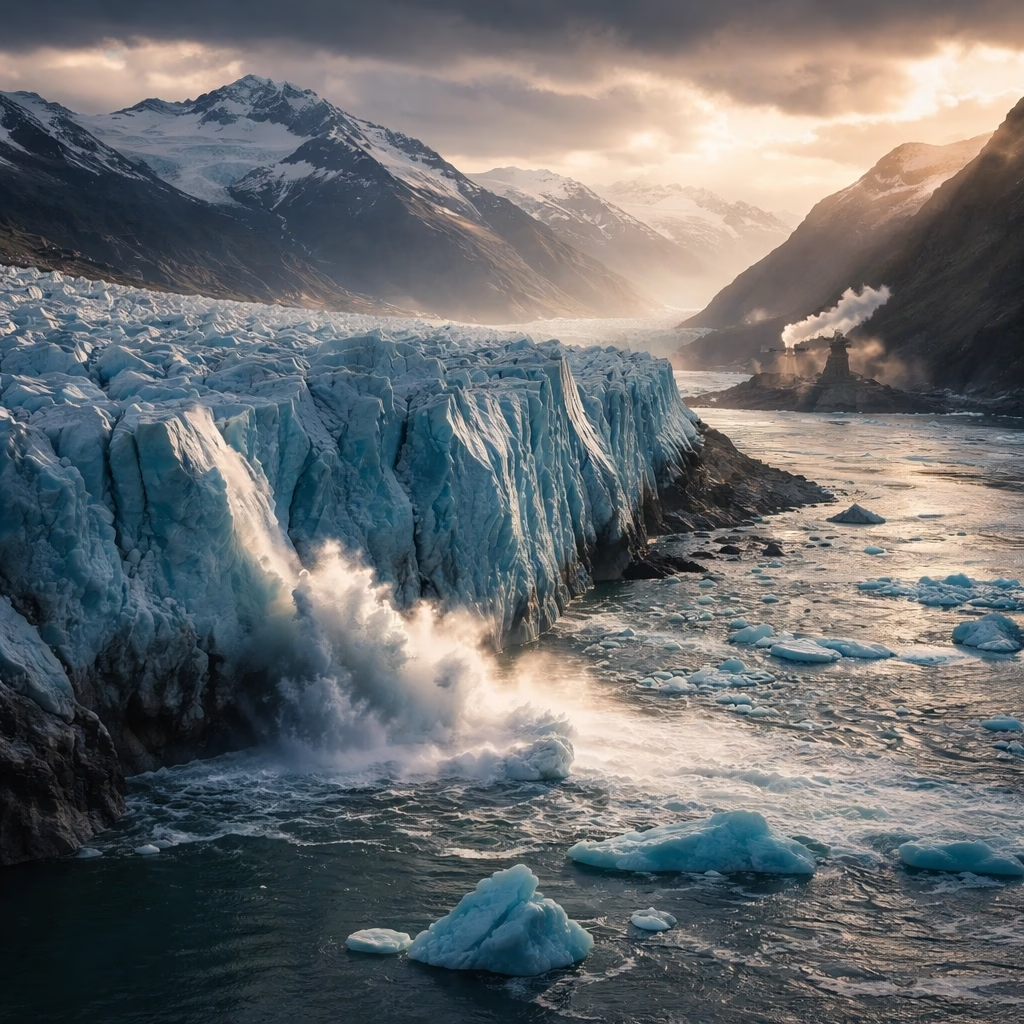
However, this respite proved short-lived. By late 2018 and into 2019, the glacier resumed its rapid retreat, surpassing its previous record speeds. Data from missions like NASA's ICESat-2 and ESA's Sentinel satellites confirmed a significant increase in ice loss. The glacier's front has now retreated further inland than at any point in recorded history, moving several kilometers upstream from its 2018 position. This renewed acceleration is attributed to a combination of persistent atmospheric warming, leading to increased surface melt, and the return of warmer ocean currents to the fjord. The temporary slowdown highlighted the glacier's sensitivity to even minor temperature shifts, underscoring its vulnerability to long-term warming trends.
More Read

Human Fingerprint on Acceleration
Recent research published in journals like *Nature Geoscience* has explicitly linked the renewed acceleration to anthropogenic climate change. While natural variability can influence short-term fluctuations, the underlying trend of increased atmospheric temperatures and ocean heat content is directly attributable to human-emitted greenhouse gases. This warming melts surface ice, creating meltwater rivers that bore through the glacier, and warms the ocean, eroding the ice from below. This dual attack, amplified by human activity, is driving the glacier's current unprecedented rate of disintegration.
Impact: Global Consequences of a Local Loss
The retreat of Jakobshavn Isbræ is not merely a regional phenomenon; its consequences reverberate across the globe, affecting coastal communities, ecosystems, and climate patterns far beyond Greenland's icy shores. The sheer volume of ice it contributes to the ocean makes it a bellwether for broader climate change impacts.
Rising Sea Levels and Coastal Vulnerability
The most immediate and tangible impact of Jakobshavn Isbræ's retreat is its contribution to global sea-level rise. Historically, this single glacier has been responsible for approximately 4% of the 20th-century global sea-level rise. As it continues to accelerate, its contribution increases, posing a direct threat to low-lying coastal cities and island nations worldwide. Higher sea levels exacerbate coastal erosion, increase the frequency and intensity of storm surges, and lead to saltwater intrusion into freshwater aquifers, threatening drinking water supplies and agricultural land. Communities from Miami to Bangladesh face growing risks of displacement and infrastructure damage.
Disruption of Arctic Ecosystems
The massive influx of freshwater from melting glaciers like Jakobshavn Isbræ alters the delicate balance of the Arctic marine environment. Changes in ocean salinity and temperature can disrupt marine ecosystems, impacting plankton, fish populations, and the larger predators that rely on them, such as seals and polar bears. These shifts can have cascading effects throughout the food web, threatening biodiversity and the traditional hunting and fishing practices of Indigenous communities in Greenland and other Arctic regions. The altered environment also affects ocean currents, potentially influencing global weather patterns.
Threats to Indigenous Livelihoods
For the Inuit communities living in West Greenland, the retreat of Jakobshavn Isbræ and the broader impacts of climate change are profoundly personal. Traditional hunting routes across sea ice become unsafe or disappear entirely, impacting access to vital food sources and cultural practices. Changes in weather patterns make predicting conditions for hunting and fishing increasingly difficult and dangerous. The very landscape that has sustained their culture for millennia is transforming at an alarming rate, forcing adaptations and raising concerns about the preservation of their unique way of life.
What Next: Future Projections and Global Response
The future of Jakobshavn Isbræ, and indeed many other glaciers worldwide, hinges on the trajectory of global climate change. Scientists are employing sophisticated models to project future melt rates, while international efforts aim to mitigate the underlying causes and adapt to the inevitable changes.

Projected Melt Rates and Tipping Points
Under current high-emission scenarios, projections indicate that Jakobshavn Isbræ will continue its rapid retreat, potentially accelerating further as the Greenland ice sheet becomes increasingly unstable. Some models suggest that certain parts of the ice sheet may have already passed a "tipping point," where collapse becomes irreversible even if global temperatures stabilize. While the complete disintegration of the entire Greenland ice sheet would take centuries or millennia, the continued loss from key outlet glaciers like Jakobshavn Isbræ could contribute several meters to global sea levels over the coming centuries, dramatically reshaping coastlines. Scientists are continuously refining these models, using data from satellites like ICESat-2 and GRACE-FO to improve accuracy.
Monitoring and Research Efforts
Ongoing monitoring is crucial for understanding the complex dynamics of glaciers and their response to a warming climate. Satellite missions provide invaluable data on ice thickness, flow speed, and calving rates, while airborne surveys and ground-based expeditions offer detailed insights into the glacier's structure and the ocean conditions at its front. Research is focused on improving climate models, understanding the interaction between ice, ocean, and atmosphere, and identifying potential feedback loops that could accelerate melt. International collaborations, such as those involving NASA, ESA, and various university research groups, are vital in this endeavor.
Mitigation and Adaptation Strategies
Addressing the retreat of Jakobshavn Isbræ ultimately requires a global commitment to reducing greenhouse gas emissions. The goals outlined in the Paris Agreement, aiming to limit global warming to well below 2 degrees Celsius, preferably to 1.5 degrees Celsius, are critical for slowing down the processes driving glacial melt. This involves transitioning to renewable energy sources, improving energy efficiency, and implementing sustainable land use practices. Concurrently, adaptation strategies are essential for communities already facing the impacts of sea-level rise. These include developing resilient coastal infrastructure, implementing early warning systems for extreme weather events, and planning for potential population displacement. The fate of Jakobshavn Isbræ serves as a stark reminder of the urgent need for collective global action.