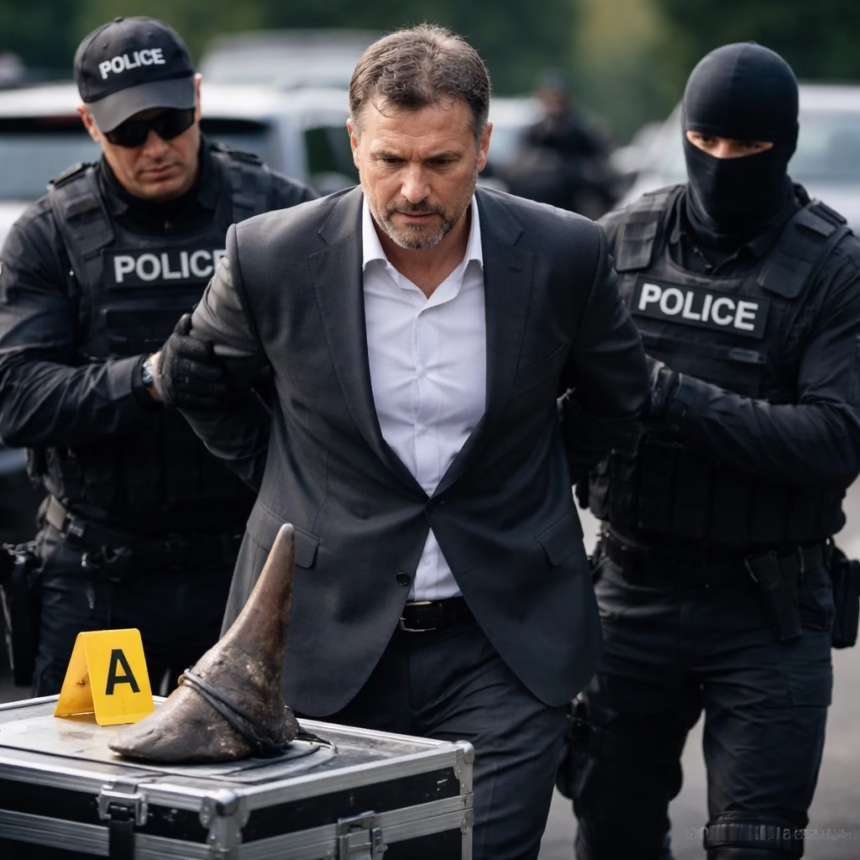
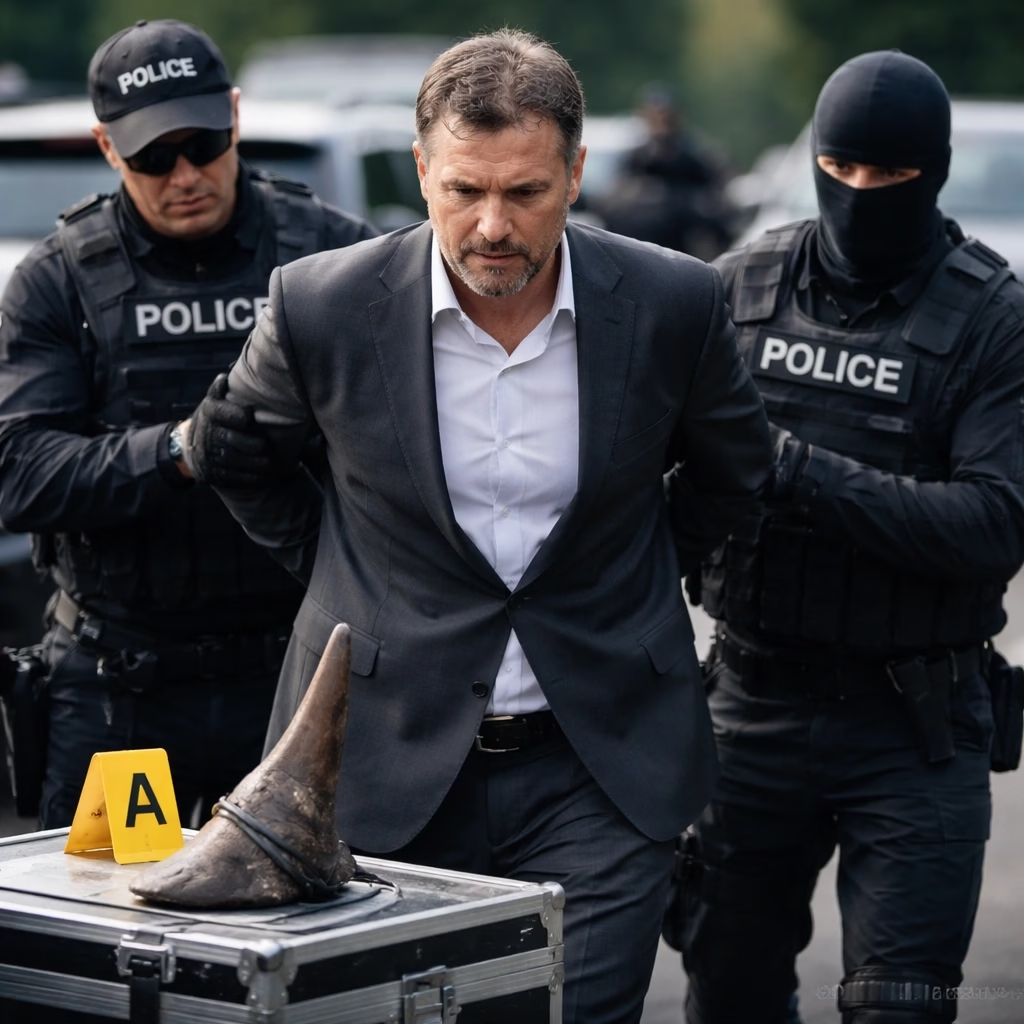
In a dramatic culmination of a multi-year international investigation, notorious wildlife trafficker Kian "The Collector" Sterling was apprehended in the early morning hours of November 15, 2023, at Dubai International Airport. The arrest followed an elaborate, staged rhino horn theft operation designed to lure Sterling into a critical transaction. This sophisticated sting marks a significant victory in the global fight against illegal wildlife trade.
Background: The Shadowy Empire of Kian Sterling
Kian Sterling, a figure long shrouded in mystery, has been on the radar of international law enforcement for over a decade. Known within criminal circles as “The Collector” due to his vast network and ability to procure rare wildlife products, Sterling is believed to have orchestrated the trafficking of rhino horns, elephant ivory, pangolin scales, and other endangered species derivatives across continents.
His operations spanned Africa, Asia, and the Middle East, leveraging intricate logistics chains and corrupt officials. Estimates suggest Sterling’s network was responsible for the illegal trade of hundreds of millions of dollars worth of wildlife products, contributing significantly to the decimation of critical populations, particularly rhinos.
The Plight of Rhinos
Rhino horn, composed primarily of keratin, is highly coveted in some Asian markets for its perceived medicinal properties, despite lacking scientific basis. This demand fuels poaching, pushing several rhino species to the brink of extinction. Southern white rhinos, black rhinos, and Javan rhinos face immense pressure from these illicit markets, making the disruption of major traffickers like Sterling paramount.
A Decade-Long Pursuit
The investigation into Sterling, dubbed “Operation Black Ivory” by INTERPOL, began in 2013. Early efforts focused on dismantling his supply chains in Southern Africa and demand networks in Southeast Asia. However, Sterling himself remained elusive, often operating through layers of intermediaries and shell companies registered in various tax havens.

Numerous attempts to track his physical movements or infiltrate his inner circle proved futile. Intelligence agencies across Kenya, South Africa, Vietnam, and the United Arab Emirates, alongside INTERPOL and the U.S. Fish and Wildlife Service, collaboratively built a complex profile of his operations, but a direct link to Sterling remained elusive until recently.
Key Developments: The Elaborate Sting Operation
The breakthrough in Operation Black Ivory came in late 2022, when intelligence suggested Sterling was actively seeking a large, high-quality consignment of rhino horn. This presented a unique opportunity for law enforcement to move beyond traditional surveillance and initiate a proactive sting.
The “Stolen” Consignment
Working with conservation organizations and forensic experts, a cache of ethically sourced, legally obtained rhino horns from natural mortalities was prepared. These horns, totaling 27 kilograms and valued at approximately $1.5 million on the black market, were meticulously documented and fitted with tracking devices and forensic markers.
More Read

On October 28, 2023, a staged “theft” was executed at a secure facility in KwaZulu-Natal, South Africa. Undercover agents, posing as disgruntled security personnel, orchestrated a believable breach, creating a narrative of a rogue insider offering a unique, un-traceable shipment directly to the highest bidder.
Luring the Kingpin
The news of the “stolen” horns, carefully leaked through controlled channels within the trafficking underworld, quickly reached Sterling’s network. Undercover operatives, maintaining deep cover, established contact with Sterling’s primary procurement agent, eventually setting the stage for a direct negotiation.
Sterling, known for his meticulousness and paranoia, initially resisted direct involvement. However, the perceived “uniqueness” of the stolen horns – their size, quality, and the supposed anonymity of the source – proved too tempting. After weeks of careful negotiation and verification, he agreed to oversee the final transaction personally.
The Dubai Rendezvous and Arrest
The planned exchange was set for November 15 at a private cargo facility adjoining Dubai International Airport. This location was chosen strategically due to its central position in global trade routes and the UAE’s strong stance against wildlife trafficking, ensuring a robust legal framework for the arrest.
As Sterling arrived to inspect the consignment, accompanied by two bodyguards, a joint task force comprising UAE Federal Police, INTERPOL agents, and U.S. Fish and Wildlife Service personnel moved in. The arrest was swift and without incident. The bodyguards were also apprehended.
“This operation was a masterclass in international cooperation and strategic deception,” stated Dr. Anya Sharma, head of INTERPOL’s Environmental Crime Unit. “Sterling believed he was untouchable, but we meticulously built a trap he couldn’t resist.”
More Read

Impact: A Blow to Global Wildlife Crime
The arrest of Kian Sterling sends a resounding message to the illegal wildlife trade community. Experts believe this capture will significantly disrupt one of the largest and most sophisticated trafficking networks operating globally.
Dismantling a Network
Intelligence gathered during the sting operation and from Sterling’s seized devices is expected to lead to further arrests and the dismantling of his extensive network of poachers, transporters, corrupt officials, and buyers. “This is not just about one man; it’s about severing the head of a hydra,” commented Dale Jenkins of the U.S. Fish and Wildlife Service.
The financial infrastructure supporting Sterling’s operations, including bank accounts, shell companies, and money laundering channels, is now a primary target for forensic investigators. Freezing these assets will further cripple the organization’s ability to recover.
A Win for Conservation
For critically endangered rhino populations, Sterling’s arrest offers a glimmer of hope. While poaching pressures remain immense, removing a major demand driver and supply orchestrator can provide much-needed respite. Conservation groups, including the World Wildlife Fund and Save the Rhino International, lauded the efforts of law enforcement.
“Every major trafficker taken off the streets means fewer rhinos dying in the bush,” said Dr. Eleanor Vance, a conservation biologist. “This operation demonstrates that with sustained effort and innovative tactics, even the most entrenched criminal enterprises can be challenged.”
Strengthening International Cooperation
The success of Operation Black Ivory underscores the critical importance of international collaboration in combating transnational environmental crime. The seamless coordination between multiple national agencies and international bodies like INTERPOL was crucial to the operation’s intricate planning and execution.
This case sets a precedent for future complex undercover operations targeting high-level wildlife criminals, showcasing the effectiveness of combining traditional intelligence gathering with innovative, proactive sting tactics.
What Next: Legal Battles and Ongoing Fight
Kian Sterling is currently being held in Dubai, awaiting formal charges and potential extradition proceedings. The complexity of his international crimes means that legal processes will likely be protracted.
Extradition and Trial
Multiple jurisdictions, including South Africa, the United States, and Vietnam, are expected to seek Sterling’s extradition, each with their own set of charges related to wildlife trafficking, money laundering, and racketeering. The UAE authorities will determine the appropriate jurisdiction for the primary prosecution, a decision that could take several months.
Legal experts anticipate a high-profile trial, potentially revealing unprecedented details about the inner workings of global wildlife trafficking. The evidence collected during Operation Black Ivory, including forensic markers on the horns and digital communications, is robust.
Continued Network Disruption
Law enforcement agencies are now leveraging the intelligence gained from Sterling’s capture to identify and apprehend other key players in his network. Raids and arrests are anticipated across several continents in the coming weeks and months, targeting poachers, transporters, corrupt officials, and buyers.
“Sterling’s arrest is a monumental step, but the fight is far from over,” warned INTERPOL’s Dr. Sharma. “We anticipate a period of intense activity as we work to dismantle the remaining elements of his empire and send a clear message that these crimes will not go unpunished.”
Future of Wildlife Crime Enforcement
The success of this operation is expected to inspire similar proactive and intelligence-led initiatives against other high-value environmental criminals. Investment in advanced forensic techniques, digital surveillance, and international task forces will likely increase.
However, the underlying demand for illegal wildlife products remains a significant challenge. Continued efforts in public awareness, demand reduction campaigns, and community engagement in source countries will be crucial to securing the long-term survival of endangered species. The arrest of Kian Sterling marks a pivotal moment, but the war against wildlife trafficking endures.