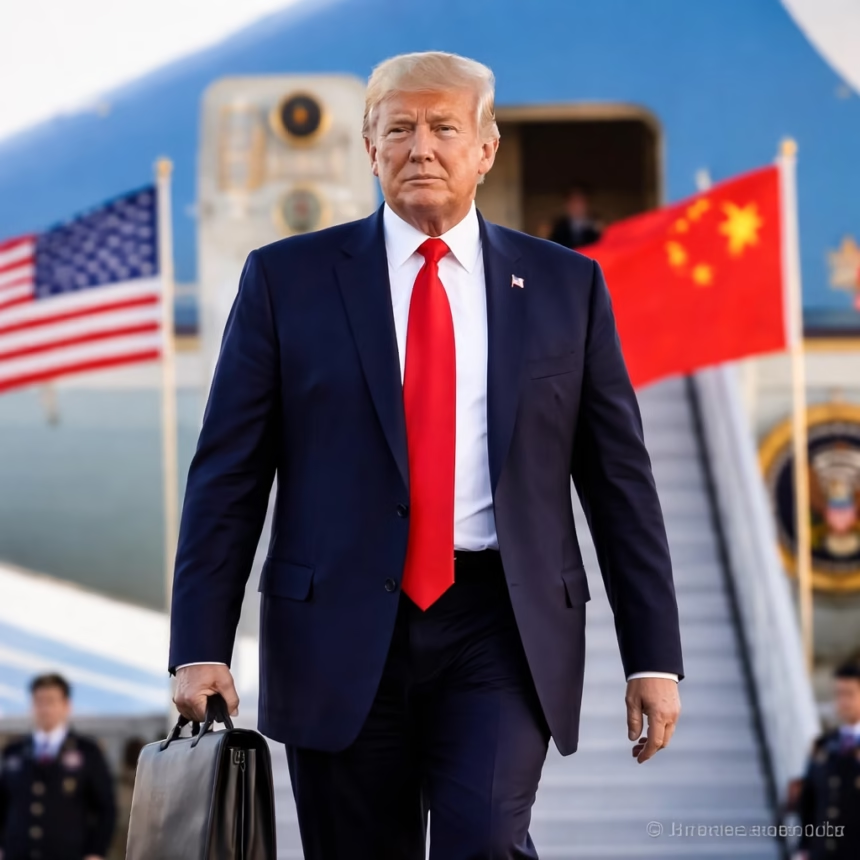
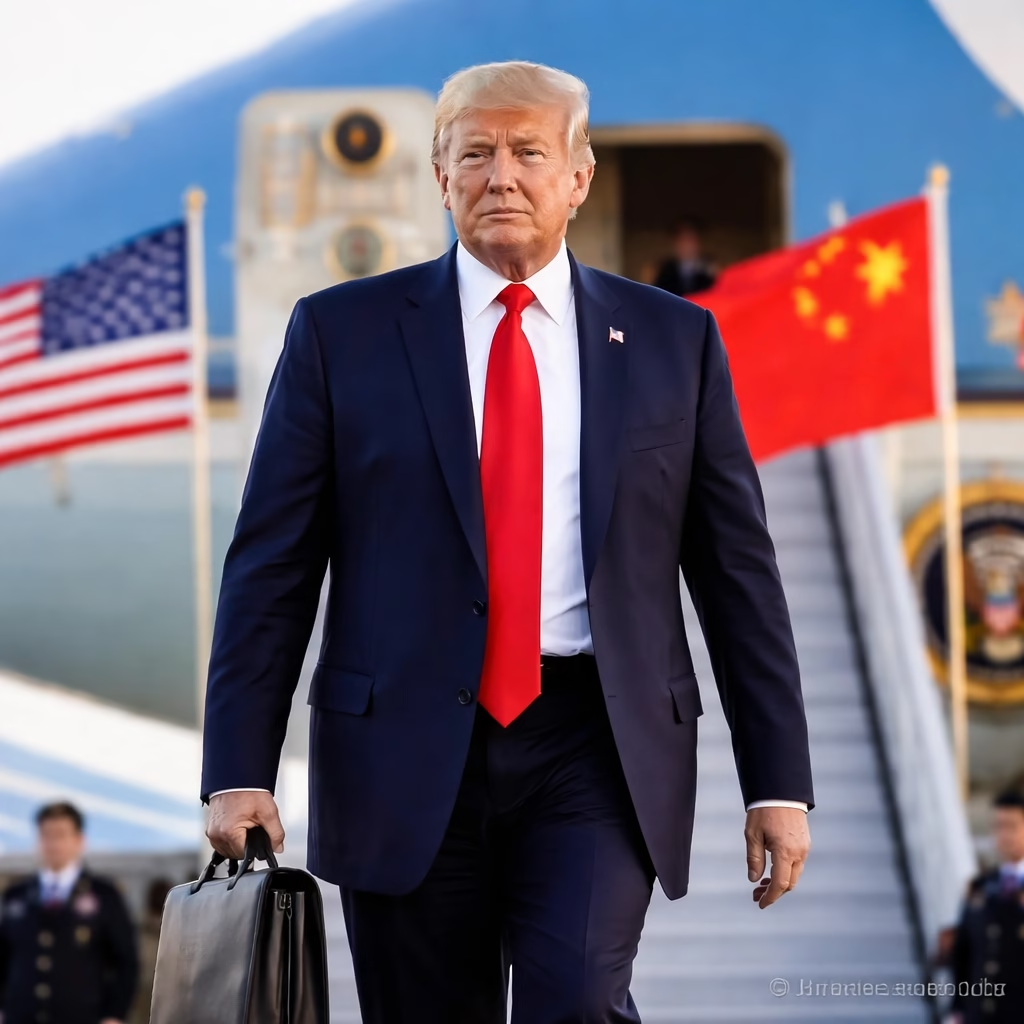
President Donald Trump concluded a high-stakes visit to Beijing, returning to Washington on October 27, 2023, after intense negotiations aimed at defusing escalating trade tensions and fostering a more predictable relationship with China. The trip yielded a fragile equilibrium, characterized by immediate de-escalation alongside the persistence of core, unresolved disputes.
Background: A Decades-Long Rivalry Escalates
The relationship between the United States and China has been marked by a complex blend of cooperation and competition for decades. Under President Trump's "America First" doctrine, this dynamic shifted dramatically towards open confrontation, primarily centered on economic imbalances and technological supremacy.
The initial tremors began in 2018 with the imposition of Section 232 tariffs on steel and aluminum, soon followed by Section 301 tariffs targeting specific Chinese goods. These actions, justified by allegations of intellectual property theft, forced technology transfer, and state subsidies, rapidly escalated into a full-blown trade war. By late 2019, hundreds of billions of dollars in goods on both sides were subject to punitive duties, impacting global supply chains and economic forecasts.
A temporary reprieve emerged with the signing of the "Phase One" trade agreement in January 2020. This deal committed China to purchasing an additional $200 billion in American goods and services over two years, alongside some minor concessions on intellectual property and market access. However, many of these purchase targets remained unfulfilled, particularly amidst the global pandemic, and the agreement left untouched the fundamental structural issues that fueled the initial conflict.
Beyond trade, tensions simmered over China's growing military presence in the South China Sea, its policies in Xinjiang and Hong Kong, and the persistent question of Taiwan's sovereignty. The technological rivalry intensified, with the U.S. implementing restrictions on Chinese tech giants like Huawei and TikTok, citing national security concerns. This backdrop of economic friction and geopolitical maneuvering set the stage for President Trump's latest diplomatic foray into Beijing, a trip underscored by the urgent need to prevent further deterioration.
More Read

Key Developments: A Calculated Pause
President Trump's visit to Beijing, spanning three days of closed-door meetings with President Xi Jinping and senior Chinese officials, culminated in a series of outcomes that offered both immediate relief and a clear indication of enduring disagreement. The overarching theme of the trip was a strategic pause in hostilities, rather than a comprehensive resolution.
Stabilizing Measures
The most significant immediate achievement was a mutual commitment to avoid any new tariffs for a period of six months. This "tariff truce," effective from November 1, 2023, provides critical breathing room for businesses and markets, halting the cycle of tit-for-tat escalations that have plagued the global economy. Specific agricultural purchase agreements were also announced, with China pledging to increase its imports of American soybeans, corn, and pork by an estimated $15 billion over the next fiscal year. This commitment offers a direct, albeit temporary, benefit to American farmers who have borne the brunt of retaliatory tariffs.
Furthermore, both nations agreed to re-establish several high-level economic dialogue channels that had fallen dormant. These include a revitalized Joint Economic Committee and a new working group focused on intellectual property rights enforcement, signaling a willingness to engage constructively on specific, less contentious issues. Senior Treasury and Commerce officials are slated to lead these discussions, aiming to build confidence and transparency.

A crucial development for global stability was the agreement to resume regular, direct communication between the U.S. Department of Defense and China's People's Liberation Army. This military-to-military dialogue, which had seen significant disruption, is intended to prevent miscalculations and manage potential flashpoints in contested regions.
Persistent Stalemate
Despite these stabilizing measures, the core structural issues driving the U.S.-China economic conflict remain fundamentally unresolved. Existing Section 301 tariffs on approximately $300 billion worth of Chinese goods, and China's retaliatory tariffs on American products, will remain in place throughout the six-month truce period. There was no indication of a path towards their removal, signaling a continued reliance on these duties as leverage.
Discussions on forced technology transfer and state subsidies for Chinese industries, two central grievances of the U.S., reportedly made little substantive progress. Chinese officials reiterated their stance on national industrial policies as internal affairs, while American negotiators emphasized the need for a level playing field. No concrete commitments were secured regarding significant reforms to these practices.
Geopolitical disagreements also persisted. While the leaders discussed issues concerning Taiwan, human rights in Xinjiang, and maritime disputes in the South China Sea, public statements from both sides indicated no shift in respective positions. President Trump reaffirmed the U.S. commitment to its "One China" policy but also emphasized concerns over regional stability, while President Xi underscored China's sovereignty claims. These areas of deep disagreement continue to cast a long shadow over any economic rapprochement.
Ultimately, the visit did not produce a framework for a "Phase Two" trade deal or a comprehensive agreement addressing the deeper systemic issues. Instead, it delivered a tactical pause, allowing both sides to manage immediate pressures without conceding on long-term strategic objectives.
More Read

Impact: A Mixed Bag of Relief and Uncertainty
The outcomes of President Trump's China visit have sent ripples across various sectors, creating a complex landscape of short-term relief juxtaposed with lingering long-term uncertainties.
Economic Repercussions
For American businesses, the six-month tariff truce offers a vital, albeit temporary, respite. Companies like Iowa-based agricultural exporters and manufacturers relying on Chinese components can plan with slightly greater predictability, potentially deferring supply chain diversification costs. Global stock markets reacted positively to the de-escalation, with indices in New York, Shanghai, and Frankfurt seeing modest gains following the announcement, reflecting investor relief that the trade war would not immediately intensify.
However, the continued existence of existing tariffs means that American consumers will still face higher prices on a range of imported goods, and businesses will continue to absorb additional costs. Long-term investment decisions, particularly in sectors like technology and advanced manufacturing, remain clouded by the unresolved structural issues and the potential for renewed tariff escalation after the truce expires. Chinese manufacturers, while relieved by the absence of new tariffs, still grapple with existing duties and the broader push by many international companies to "de-risk" or "de-couple" supply chains from China.
Political and Diplomatic Fallout
Domestically, President Trump can frame the outcome as a diplomatic success, demonstrating his ability to engage with adversaries and secure concessions, particularly for the agricultural sector. This narrative could resonate with key voter bases ahead of the next election cycle. In China, President Xi Jinping can similarly portray the visit as a testament to China's diplomatic strength and its commitment to stability, while firmly defending national interests.
Internationally, allied nations have cautiously welcomed the de-escalation, as a stabilized U.S.-China relationship benefits global trade and security. However, many European and Asian countries remain wary of a bilateral approach that sidelines multilateral institutions and processes. There is a continued desire for the U.S. and China to address global challenges, such as climate change and pandemic preparedness, collaboratively.
Societal and Strategic Implications
The temporary truce offers a moment for societies in both countries to breathe. Consumers may see a slight easing of inflationary pressures if businesses pass on reduced uncertainty, though the impact will be limited by existing tariffs. The broader strategic competition, however, remains fierce. The U.S. continues to pursue policies aimed at limiting China's technological advancement in critical areas, while China presses ahead with its "Made in China 2025" initiatives. This underlying strategic rivalry will continue to shape economic, political, and societal interactions for years to come.
What Next: A Precarious Path Forward
The six-month tariff truce sets a clear, albeit challenging, timeline for the next phase of U.S.-China relations. The immediate focus will be on the operationalization of the newly re-established dialogue channels and the monitoring of specific commitments.
The working group on intellectual property rights enforcement is expected to convene its first meeting in Washington by late November, followed by a session in Beijing in early 2024. These discussions will test the willingness of both sides to move beyond rhetoric and towards concrete actions. Similarly, the Joint Economic Committee will resume its biannual meetings, providing a forum for broader macroeconomic coordination.
A critical milestone will be China's adherence to its agricultural purchase commitments. U.S. trade representatives will closely monitor import data, and any significant shortfalls could quickly undermine the fragile trust built during the Beijing visit. The U.S. administration has indicated that the continuation of the tariff truce beyond six months is contingent on China demonstrating progress on these and other commitments.
As the truce approaches its expiration in late April 2024, the pressure will mount for both nations to either negotiate a more comprehensive agreement or face the prospect of renewed tariff escalation. The ongoing U.S. presidential election cycle will undoubtedly influence the tenor and outcome of these future negotiations, with domestic political considerations potentially shaping the flexibility of the American delegation.
Ultimately, President Trump's trip to Beijing has bought time, preventing an immediate escalation of the trade war. However, it has not fundamentally altered the trajectory of strategic competition. The path forward remains precarious, with the stability achieved being a delicate balance between unresolved disputes and a shared, if reluctant, desire to avoid a full-blown economic decoupling.