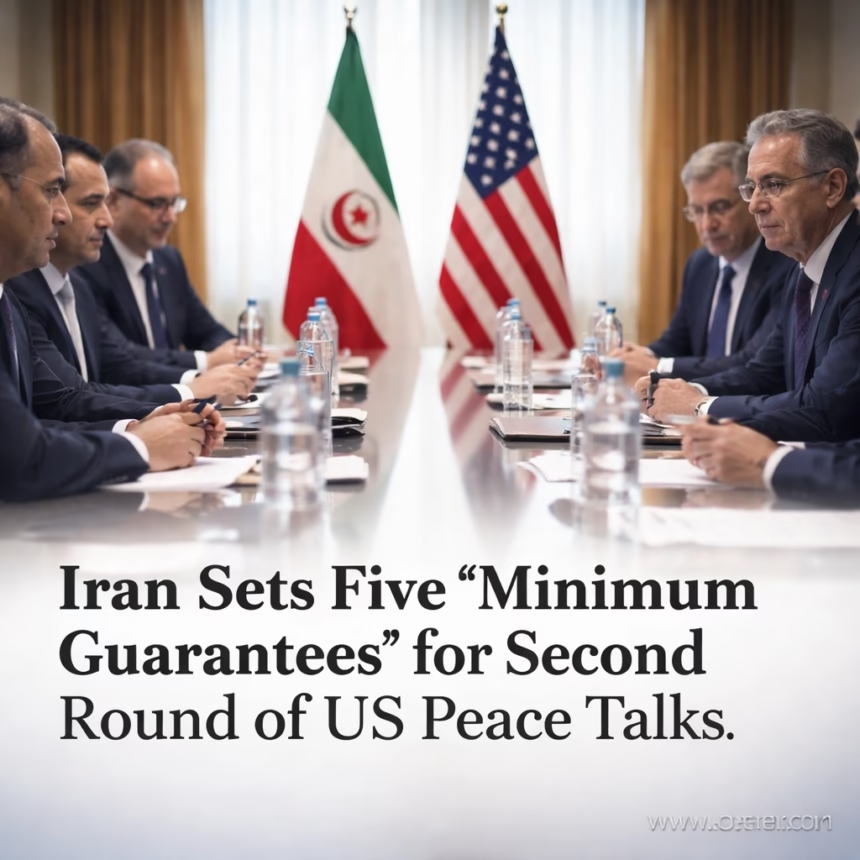
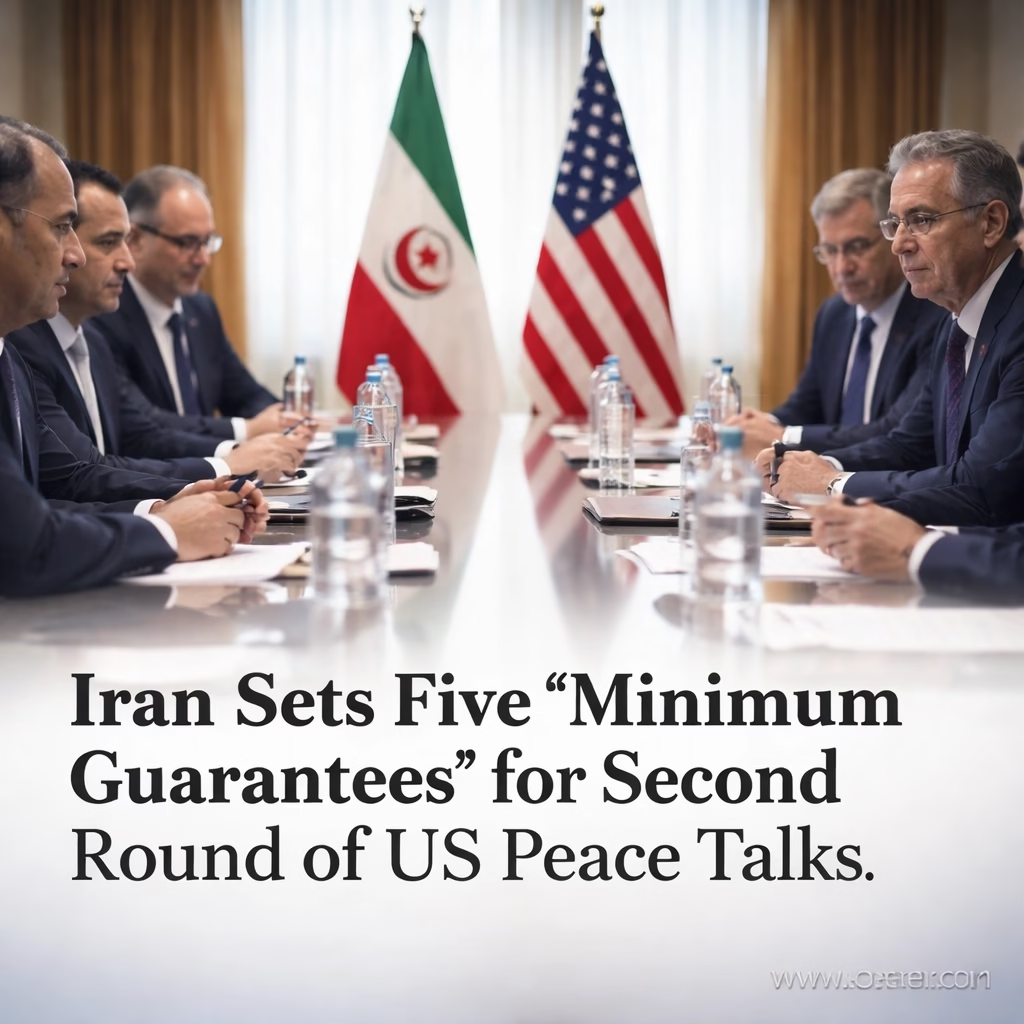
Iran has presented a set of five "minimum guarantees" it deems essential for the progression of a second round of peace talks with the United States. These conditions, articulated amidst ongoing diplomatic efforts, aim to solidify Tehran's position on a potential return to the 2015 nuclear agreement, officially known as the Joint Comprehensive Plan of Action (JCPOA). The demands introduce new complexities into already delicate negotiations, raising questions about the future of the landmark accord.
Background: A Decade of Nuclear Diplomacy
The JCPOA was signed in July 2015 between Iran and the P5+1 powers (China, France, Germany, Russia, the United Kingdom, and the United States, plus the European Union). Its core objective was to prevent Iran from developing nuclear weapons in exchange for relief from international sanctions. Under the agreement, Iran significantly curtailed its uranium enrichment program and allowed extensive international inspections by the International Atomic Energy Agency (IAEA).
In May 2018, then-President Donald Trump unilaterally withdrew the United States from the JCPOA, labeling it a "terrible deal." His administration subsequently re-imposed and expanded a wide array of sanctions on Iran, initiating a "maximum pressure" campaign designed to cripple Iran's economy and force it to negotiate a more comprehensive agreement. This move was widely criticized by the remaining signatories and global allies.
In response to the US withdrawal and the failure of European powers to effectively circumvent US sanctions, Iran began to progressively scale back its commitments under the JCPOA starting in 2019. This included increasing uranium enrichment purity and stockpiles beyond agreed limits, as well as restricting IAEA access to certain nuclear facilities.
Upon taking office in January 2021, President Joe Biden signaled a willingness to return to the JCPOA, provided Iran also returned to full compliance. Indirect negotiations between Iran and the US, facilitated by European diplomats, commenced in Vienna in April 2021. These talks, which have seen multiple rounds and prolonged pauses, aim to restore the agreement. However, progress has been slow, often hampered by disagreements over the scope of sanctions relief and guarantees against future US withdrawals. The current phase of negotiations follows a period of heightened tensions and a perceived lack of breakthroughs.
More Read

Key Developments: Iran’s Five Demands
Iranian officials, without fully publicizing the specific details, have communicated these five "minimum guarantees" through intermediaries, primarily the European Union's foreign policy chief, Josep Borrell. These conditions represent Tehran's non-negotiable prerequisites for moving forward with a second, more substantive round of discussions and ultimately, a potential reinstatement of the JCPOA.
1. Robust Economic Assurances
One primary demand centers on ironclad economic guarantees. Iran seeks assurances that international companies and investors will not face penalties or fear future US sanctions if they engage in business with Iran. This addresses the "chilling effect" of past US actions, which saw many firms reluctant to invest even when sanctions were theoretically lifted. Tehran wants a mechanism to ensure the economic benefits of sanctions relief are tangible and sustainable.
2. Comprehensive Sanctions Removal
Iran insists on the removal of all sanctions imposed since 2018, not just those directly related to the nuclear program. This includes sanctions designated under terrorism, human rights, or ballistic missile pretexts, which Tehran views as designed to circumvent the spirit of the original nuclear deal. The breadth of sanctions relief remains a significant point of contention for Western powers, who argue some sanctions are unrelated to the nuclear issue.
More Read
3. Verifiable Sanctions Lifting
A crucial guarantee for Iran involves robust and verifiable mechanisms to confirm the lifting of sanctions. Tehran demands proof that sanctions have indeed been removed and that its oil and banking sectors can freely operate in international markets. This often involves specific financial transactions, oil sales figures, and the ability of Iranian banks to connect to the global SWIFT system.
4. Guarantee Against Future US Withdrawal
Perhaps the most challenging demand for the US involves a guarantee against future unilateral withdrawals by an American administration. While the Biden administration cannot legally bind future presidents, Iran seeks political assurances or a framework that makes a repeat of the 2018 scenario less likely. This could involve congressional commitments or international legal mechanisms, though the feasibility and constitutionality of such measures are highly debated in Washington.
5. Resolution of IAEA Safeguards Issues
Iran also seeks a resolution to the ongoing investigations by the International Atomic Energy Agency (IAEA) into traces of uranium found at undeclared sites. Tehran argues these probes are politically motivated and must be closed for a new deal to proceed. Western powers, however, maintain that these are legitimate technical questions that must be addressed for the integrity of the non-proliferation regime and cannot be politically negotiated away.
The European Union, particularly through its coordinator Borrell and his deputy Enrique Mora, has been instrumental in bridging the gaps between Washington and Tehran. Their shuttle diplomacy involves carrying messages and proposals back and forth, attempting to find common ground amidst deeply entrenched positions.
Impact: Ripple Effects Across Geopolitics
A successful return to the JCPOA would offer a lifeline to Iran's sanctions-battered economy, potentially boosting oil exports, foreign investment, and improving living standards. Politically, it could strengthen moderate factions, though hardliners remain wary of concessions. Failure, conversely, would deepen economic hardship and could further entrench anti-Western sentiment.
For the United States, a restored JCPOA is seen as the most effective path to prevent Iran from developing nuclear weapons and to ensure regional stability. A collapse of talks could lead to an unchecked Iranian nuclear program, forcing the US to consider more aggressive containment strategies.

Middle Eastern nations, particularly Israel and Saudi Arabia, closely monitor the negotiations. Israel views Iran's nuclear program as an existential threat and has expressed deep skepticism about the JCPOA, advocating for a tougher stance. Saudi Arabia and other Gulf states are concerned about Iran's regional influence and ballistic missile program, which are not covered by the nuclear deal. A revived deal could ease some tensions but might also fuel concerns about Iran's freed-up resources.
The JCPOA is considered a cornerstone of the global non-proliferation architecture. Its success or failure has implications for future efforts to manage nuclear proliferation risks worldwide. A lasting agreement would reinforce the principle of diplomacy over confrontation. The potential return of Iranian oil to global markets could significantly impact crude prices, especially in the context of current geopolitical events affecting supply. A deal could ease inflationary pressures in energy, while a failure might exacerbate them.
What Next: High Stakes and Uncertain Paths
The immediate next step involves a formal response from the United States and the E3 (France, Germany, and the United Kingdom) to Iran's five guarantees. This response will indicate the extent to which Western powers are willing to accommodate Tehran's demands, particularly the contentious issues of future guarantees and comprehensive sanctions removal.
Regardless of the initial response, intensified diplomatic efforts are expected. EU coordinator Josep Borrell and his team will likely continue their shuttle diplomacy, seeking to bridge remaining differences. The process is inherently complex, requiring delicate negotiations and often compromises from all sides.
There remains a significant risk of the talks reaching an impasse. If Iran's demands are deemed unacceptable by the US, or if the US counter-proposals are rejected by Tehran, the negotiations could collapse entirely. Such a scenario would likely lead to heightened tensions, further Iranian nuclear advancements, and increased regional instability.
In the event of a complete breakdown, the international community would face difficult choices. Options could range from continued "maximum pressure" and sanctions, potentially leading to further Iranian nuclear escalation, to more assertive diplomatic or even military containment strategies, though these carry significant risks.
Time is a critical factor. Experts from the IAEA and intelligence agencies warn that Iran's nuclear program continues to advance, shortening the "breakout time"—the period it would take Iran to produce enough fissile material for a nuclear weapon. This diminishing window adds urgency to the diplomatic efforts, making a swift resolution more imperative. Future discussions will need to navigate the intricate balance between technical compliance requirements, political guarantees, and the broader geopolitical context. The success of the next phase hinges on the willingness of both Washington and Tehran to make difficult concessions for the sake of a mutually acceptable outcome.