Tehran's High-Stakes Diplomacy: Can Regional Powers Broker a US-Iran Breakthrough?
Tehran has become the epicenter of intense, indirect diplomacy as high-level delegations from Pakistan and Qatar recently convened in the Iranian capital, fueling speculation that a long-elusive agreement between the United States and Iran is inching closer. These separate but reportedly coordinated visits underscore a concerted push by regional intermediaries to de-escalate tensions and potentially revive elements of a nuclear accord.
Background: A Decade of Distrust and Diplomacy
The relationship between the United States and Iran has been fraught with tension for decades, punctuated by periods of intense confrontation and fleeting diplomatic overtures. A significant milestone was the 2015 Joint Comprehensive Plan of Action (JCPOA), a multilateral agreement that saw Iran limit its nuclear program in exchange for sanctions relief.
However, this landmark deal began to unravel in May 2018 when the Trump administration unilaterally withdrew the U.S. and reimposed crippling sanctions on Iran. This "maximum pressure" campaign aimed to force Iran back to the negotiating table for a more comprehensive deal, but instead led to a dangerous cycle of escalation, including attacks on oil tankers, drone incidents, and proxy conflicts across the Middle East.
Iran, in response, gradually scaled back its commitments under the JCPOA, increasing uranium enrichment levels and limiting international inspections. Efforts by European signatories to salvage the deal proved largely unsuccessful, leaving a diplomatic vacuum that regional powers have increasingly sought to fill.
More Read

Qatar and Oman, in particular, have long served as discreet channels for communication between Washington and Tehran, leveraging their neutrality and established diplomatic ties. Pakistan, a significant Muslim-majority nation with strategic relations with both the U.S. and Iran, has also historically played a role in regional de-escalation, often offering its good offices during times of heightened crisis.
The regional landscape has also seen shifts, with Saudi Arabia and Iran recently agreeing to restore diplomatic ties through Chinese mediation, signaling a broader appetite for de-escalation among Gulf states. This changing dynamic provides a more conducive environment for the current diplomatic push.
Key Developments: A Flurry of Activity
Recent weeks have witnessed a significant uptick in diplomatic engagements, pointing towards a concerted effort to bridge the divide between Washington and Tehran. The visits by Pakistani and Qatari officials to Tehran are central to this renewed push.
More Read

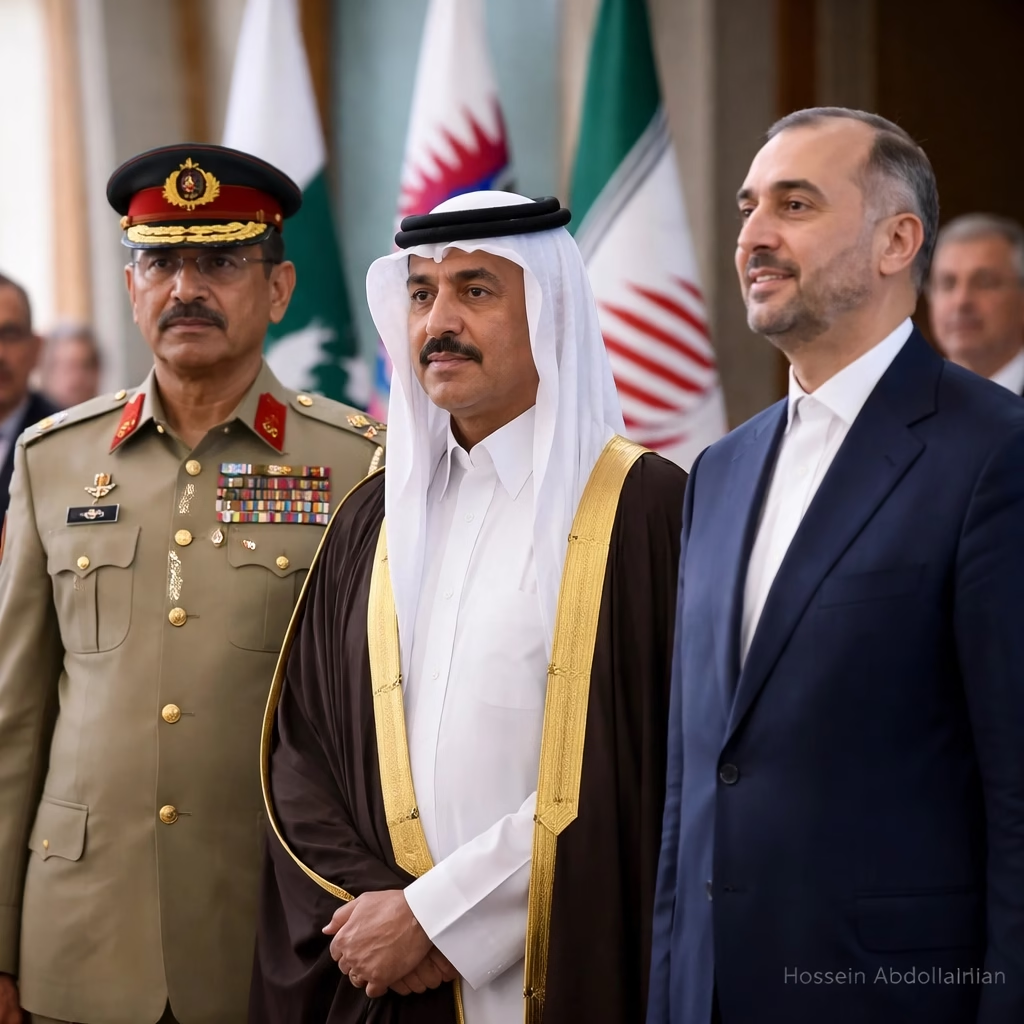
Pakistan’s Strategic Outreach
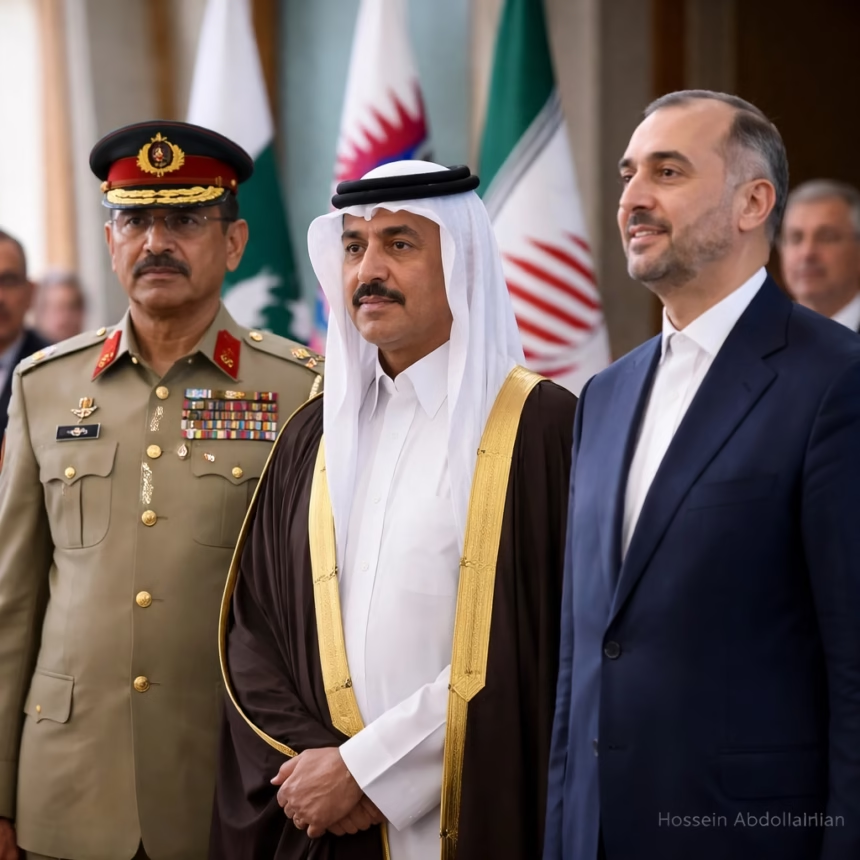
General Asim Munir, Pakistan's Chief of Army Staff, undertook a high-profile visit to Tehran, where he met with key Iranian political and military leaders, including President Ebrahim Raisi and Chief of General Staff of the Armed Forces Major General Mohammad Bagheri. While official statements emphasized discussions on bilateral defense cooperation, regional security, and border management, diplomatic observers widely believe General Munir also carried messages related to the potential U.S.-Iran understanding.
Pakistan's unique position, maintaining robust military and diplomatic ties with both the U.S. and Iran, makes it a credible intermediary. Its interest lies in regional stability, which directly impacts its own security and economic prospects, particularly given its shared border with Iran and its role in the broader Islamic world.
Qatar’s Persistent Mediation
Concurrently, a Qatari delegation, reportedly led by senior national security officials, also visited Tehran. Qatar has consistently played a crucial role in facilitating indirect talks between Washington and Tehran, often hosting secret meetings and relaying proposals. Doha's efforts have been instrumental in previous prisoner exchanges and are believed to be central to the current discussions about unfreezing Iranian assets.
Qatari officials have publicly acknowledged their mediation role, with statements often expressing cautious optimism about progress. Their current mission reportedly involves finalizing the details of a potential interim agreement, focusing on specific confidence-building measures and a pathway for de-escalation.
Contours of a Potential Interim Deal
While details remain officially unconfirmed, reports from multiple diplomatic sources suggest that the emerging understanding is not a full revival of the JCPOA. Instead, it appears to be an "interim" or "de-escalation-for-sanctions-relief" agreement. Key elements reportedly include:

Unfreezing of Iranian Assets: Approximately $6 billion in Iranian oil revenues, currently held in South Korean banks due to U.S. sanctions, are expected to be transferred to Qatar. These funds would reportedly be accessible to Iran for humanitarian purposes, such as purchasing food and medicine.
Prisoner Exchange: The release of five American citizens currently detained in Iran in exchange for several Iranians held in the U.S., along with the potential unblocking of Iranian funds, has been a recurring component of these talks.
Nuclear De-escalation: Iran would reportedly commit to capping uranium enrichment at 60% purity, refrain from further escalating its nuclear activities, and increase cooperation with the International Atomic Energy Agency (IAEA) on monitoring and verification.
Regional Restraint: While less explicit, an understanding for Iran to exercise greater restraint in its regional proxy activities is also believed to be a quiet expectation from Washington.
Both the U.S. and Iran have publicly downplayed the imminence of a comprehensive deal, yet their actions and the tenor of diplomatic statements suggest a mutual desire to prevent further escalation and manage the nuclear file. The Biden administration has stated its preference for diplomacy but maintains that all options remain on the table.
Impact: Far-Reaching Implications
Should this indirect diplomacy culminate in even a limited agreement, its impact would reverberate across multiple spheres, affecting regional stability, global markets, and the domestic situations of both the U.S. and Iran.
Regional Stability and Security
A de-escalation agreement could significantly reduce tensions in the volatile Middle East. It could pave the way for reduced proxy conflicts in Yemen, Syria, and Iraq, fostering a more stable environment for Gulf nations, including Saudi Arabia and the UAE, who have recently engaged in their own rapprochement with Tehran. However, Israel remains deeply concerned about any deal that does not fully dismantle Iran's nuclear program, viewing it as a potential threat to its security.
Global Energy Markets
While the current agreement doesn't envision a full return of Iranian oil to global markets, any step towards de-escalation could signal future possibilities. Even the unfreezing of assets, by alleviating some economic pressure on Iran, could indirectly influence market sentiment. A more comprehensive deal in the future could see a significant increase in Iranian oil exports, potentially impacting global prices.
Iranian Economy and Society
For Iran, the unfreezing of billions in assets, even if earmarked for humanitarian goods, would provide a crucial lifeline to its struggling economy, which has been severely impacted by years of sanctions. It could help alleviate inflation, stabilize the national currency, and improve access to essential goods for ordinary Iranians. This economic relief could also ease some domestic discontent, though systemic challenges would persist.
U.S. Foreign Policy Objectives
For the Biden administration, an interim agreement would represent a diplomatic achievement, demonstrating the efficacy of engagement over pure confrontation. It would allow the U.S. to manage a critical foreign policy challenge, potentially freeing up resources and attention for other strategic priorities, such as competition with China and support for Ukraine. It would also demonstrate a commitment to preventing Iran from acquiring nuclear weapons through diplomatic means.
Mediators’ Enhanced Stature
For Qatar and Pakistan, successful mediation efforts would significantly enhance their diplomatic standing and influence on the regional and international stage. It reinforces Qatar's image as a neutral and indispensable facilitator and showcases Pakistan's potential as a bridge-builder in complex geopolitical scenarios.
What Next: Navigating the Path Forward
The current diplomatic momentum, while promising, faces numerous hurdles. The path to a more comprehensive and durable agreement remains fraught with challenges, requiring careful navigation by all parties.
Indirect Talks and Verification
Further rounds of indirect talks, likely hosted in neutral venues like Doha or Muscat, are expected to iron out the finer details of any understanding. A critical element will be the establishment of robust verification mechanisms to ensure Iran's compliance with any nuclear commitments. The IAEA's role will be paramount in this regard, requiring enhanced access and monitoring capabilities.
Political Hurdles and Spoilers
Both in Washington and Tehran, hardline factions could seek to undermine any agreement. In the U.S., Congressional opposition, particularly from Republicans, could complicate the implementation of sanctions relief. In Iran, conservative elements within the establishment might view concessions as a sign of weakness. Regional actors, particularly Israel, will continue to voice their concerns and potentially lobby against the deal.
Towards a Broader Understanding
If the interim agreement proves successful, it could build trust and create a foundation for future, more comprehensive negotiations. The ultimate goal for many remains a full return to the JCPOA or a successor agreement that permanently addresses the nuclear issue and potentially regional security concerns. However, such an outcome would require significant political will and compromise from all sides.
The current diplomatic flurry in Tehran represents a crucial moment in the long-running U.S.-Iran standoff. While a definitive breakthrough is not guaranteed, the active engagement of regional powers like Pakistan and Qatar signals a renewed, pragmatic push to de-escalate tensions and perhaps, finally, chart a more stable course for the Middle East.