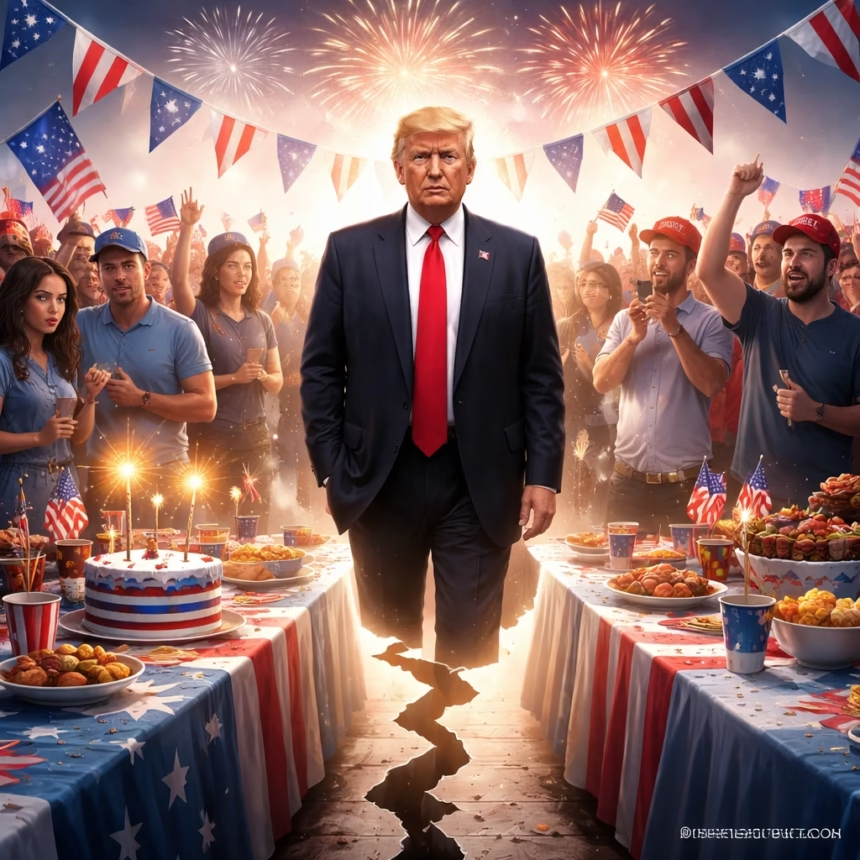
The Fourth of July, traditionally a day of parades, picnics, and fireworks celebrating national unity, underwent a significant transformation during the Trump administration. This shift, particularly evident in Washington D.C., injected a new layer of political spectacle into America's annual birthday party, sparking debates about patriotism, executive power, and the very nature of national celebration.
Background: A Century of Civic Celebration
For generations, Independence Day celebrations across the United States largely followed a familiar pattern. Communities organized local parades featuring marching bands, civic groups, and local dignitaries. Families gathered for backyard barbecues, and the day culminated in firework displays illuminating the night sky. These events, while diverse in scale, consistently emphasized shared civic pride and a common appreciation for the nation's founding principles, often transcending partisan lines.
Traditional D.C. Festivities
In the nation's capital, the Fourth of July traditionally centered on a grand concert on the West Lawn of the U.S. Capitol, followed by a spectacular fireworks show launched from the Lincoln Memorial Reflecting Pool area, visible across the National Mall. Presidents typically observed these events from the White House or Camp David, occasionally making brief, non-partisan remarks. The focus remained on the collective experience of citizens gathering in a historic space.
The Shift in 2019: “A Salute to America”
The most significant departure from this tradition occurred on July 4, 2019, when President Donald Trump orchestrated "A Salute to America." This event dramatically altered the landscape of the D.C. celebration. Instead of the usual concert-and-fireworks format, the celebration featured a presidential address from the steps of the Lincoln Memorial, a display of military hardware including M1 Abrams tanks parked on the National Mall, and a multi-branch military flyover featuring B-2 stealth bombers, F-35 fighter jets, and Marine One helicopters.
This event was a direct fulfillment of an idea Trump had after observing France's Bastille Day parade in 2017, which featured military vehicles and personnel. He expressed a desire to replicate such a display of military might in the U.S., particularly in Washington D.C.
More Read

Key Developments: The Politicization of a Holiday
The 2019 "A Salute to America" became the focal point of a national discussion, setting a precedent that continued to reverberate even after Trump left office.
Presidential Presence and Messaging
The decision for the sitting president to deliver a lengthy, televised address from the Lincoln Memorial, a site traditionally reserved for speeches of profound national significance like Martin Luther King Jr.'s "I Have a Dream" speech, immediately drew criticism for politicizing a non-partisan holiday. Critics argued it transformed a national celebration into a de facto campaign rally, using federal resources and military assets for partisan purposes. Supporters, however, lauded it as a patriotic display that honored the military and the nation's strength.
Military Display and Costs
The inclusion of heavy military vehicles and extensive aerial flyovers raised concerns about logistics, cost, and the appropriate use of military assets. The Pentagon diverted resources, including personnel and aircraft, for the event. Estimates for the total cost, which included security, transportation of equipment, and operational expenses, ranged into the millions of dollars, drawing scrutiny from congressional oversight committees and watchdog groups. The presence of tanks on the streets of Washington D.C. was particularly unusual and sparked debate about militarizing public spaces.
More Read

Access and Public Space
To accommodate the event, significant sections of the National Mall and surrounding areas were subject to restricted access. While presidential events always entail security measures, the scale of the 2019 event, including the erection of VIP viewing areas, led to complaints that public access to a public holiday celebration was curtailed in favor of a more controlled, ticketed experience for political appointees and donors.
Impact: Fractured Perceptions of Patriotism
The changes introduced during the Trump years had a profound impact on how Americans, particularly in Washington D.C., viewed and participated in Independence Day.
Deepening Partisan Divides
The politicization of the Fourth of July mirrored and, arguably, deepened the existing partisan divides in the country. For many Trump supporters, the "Salute to America" was a powerful, unapologetically patriotic display that instilled pride. For many critics, it represented an authoritarian-leaning spectacle that distorted the holiday's true meaning of democratic unity and civic celebration, making them feel alienated from the national event.
The Military’s Role in Civilian Events
The extensive use of military hardware and personnel sparked a renewed debate about the appropriate role of the armed forces in civilian, non-military events. Military leaders generally prefer to remain apolitical, and the deployment of assets for a presidential-centric event raised questions about maintaining that neutrality. The military's public image became intertwined with a politically charged celebration.
Erosion of Shared Symbols
Iconic national symbols and spaces, like the Lincoln Memorial and the National Mall, traditionally revered as common ground for all Americans, became contested spaces. The use of the Lincoln Memorial as a backdrop for a partisan speech, rather than a neutral stage for reflection, altered its perception for some, contributing to a sense that even shared national heritage was being claimed by one political faction.
Local vs. National Celebrations
While local Fourth of July traditions largely continued undisturbed across the country, the national spectacle in D.C. often overshadowed these grassroots efforts in media coverage. This created a tension between the intimate, community-focused celebrations and the grand, federally orchestrated events, raising questions about what truly constitutes a national celebration.

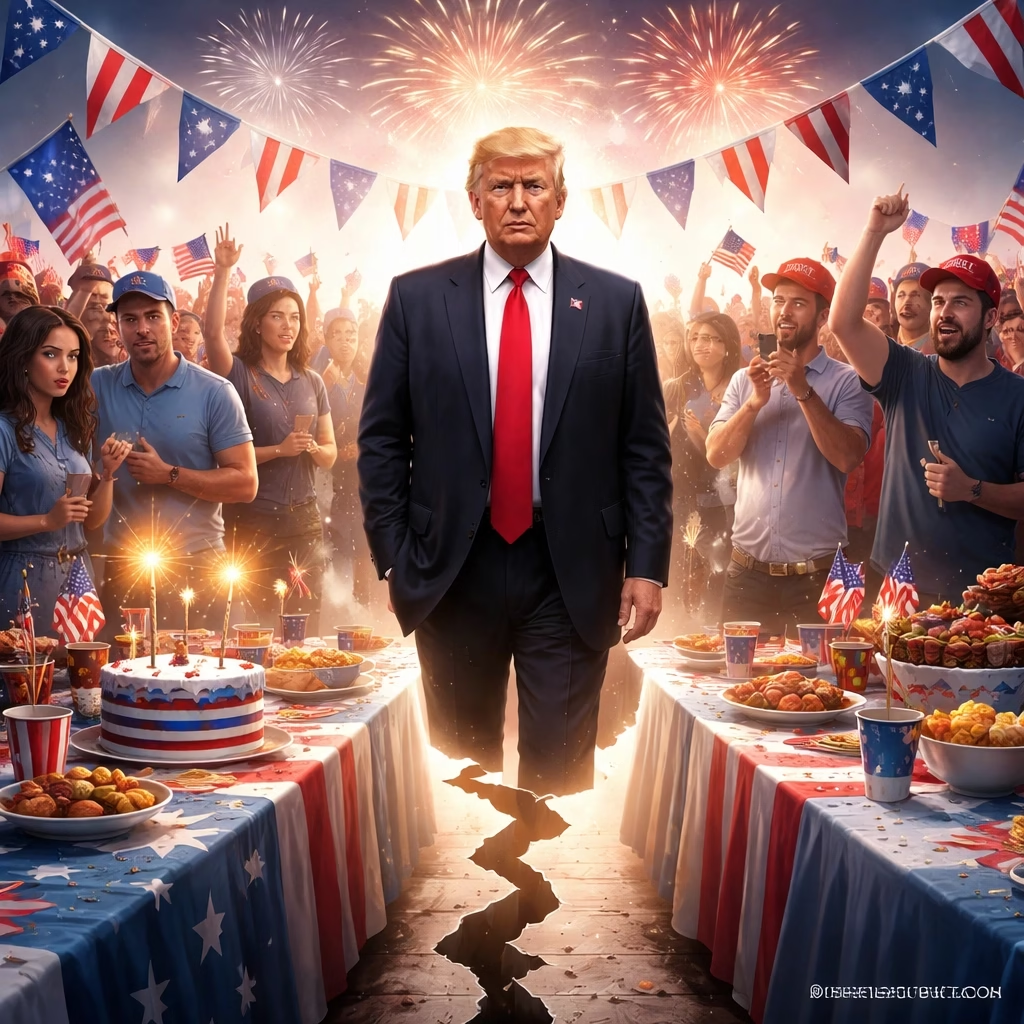
What Next: Reconciling Tradition with Precedent
The legacy of the Trump administration's Fourth of July celebrations presents a challenge for future administrations and for the nation as a whole.
The Biden Administration’s Approach
Following the Trump presidency, the Biden administration has largely reverted to a more traditional Fourth of July celebration in Washington D.C. The 2021 and 2022 events, for instance, featured the customary concert on the Capitol lawn and fireworks over the National Mall, without the extensive military displays or a presidential address from the Lincoln Memorial. President Biden typically hosts an event for military families and essential workers at the White House, making brief remarks there, aligning more with previous presidential traditions.
Lingering Expectations and Debates
Despite the return to tradition, the precedent set by "A Salute to America" has not entirely faded. The debate about the appropriate scale and nature of national holiday celebrations continues. Some still advocate for grander, military-focused displays, viewing them as essential expressions of national strength and patriotism. Others remain vigilant against any perceived politicization of national holidays, emphasizing the need for unity and inclusivity.
The Search for Common Ground
The future of America's birthday party likely lies in finding a balance that honors both tradition and evolving national identity. The challenge for leaders and citizens alike will be to foster celebrations that genuinely unite diverse communities, rather than inadvertently highlighting or deepening political divisions. Reclaiming the Fourth of July as a truly shared national experience, free from overt partisan messaging, remains a crucial task in a fractured political landscape.