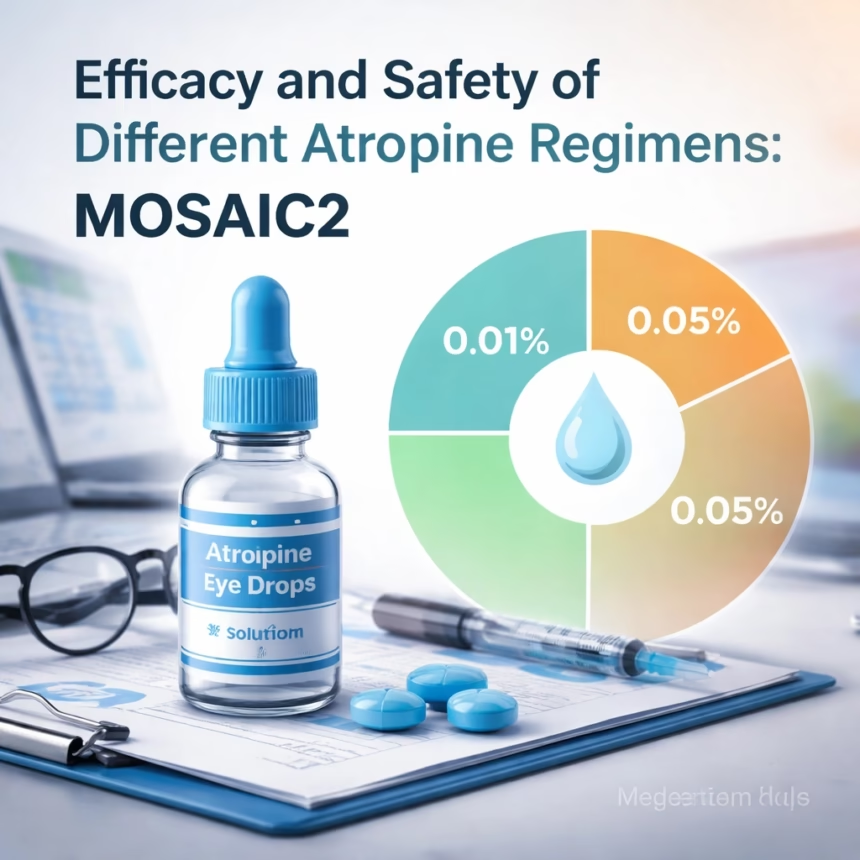
The highly anticipated MOSAIC2 study has recently unveiled groundbreaking insights into the efficacy and safety of various atropine regimens for progressive myopia management. Presented at the American Academy of Ophthalmology's annual meeting in San Francisco this past November, these findings promise to reshape pediatric eye care globally. Researchers meticulously evaluated different concentrations and dosing schedules, providing critical data to optimize treatment strategies for millions of children worldwide.
Background: The Growing Myopia Challenge
Myopia, or nearsightedness, is a common vision condition where close objects are seen clearly, but distant objects appear blurred. Its prevalence has surged globally, reaching epidemic proportions in many regions, particularly East Asia. Projections indicate that by 2050, half of the world's population, approximately five billion people, will be myopic, with one billion experiencing high myopia. This escalating trend is driven by a combination of genetic predispositions and environmental factors, including increased near-work activities and reduced outdoor time.
The Global Myopia Epidemic
Progressive myopia is more than just an inconvenience requiring stronger glasses. High myopia significantly increases the risk of serious eye conditions later in life, such as retinal detachment, glaucoma, cataracts, and myopic maculopathy, all of which can lead to permanent vision loss. Consequently, managing myopia progression, especially in childhood and adolescence, has become a paramount public health concern.
Atropine’s Role in Myopia Control
Atropine, a non-selective muscarinic antagonist, has been used in ophthalmology for decades, primarily as a cycloplegic agent to dilate pupils and paralyze accommodation. Its potential for myopia control was first observed serendipitously and later confirmed through numerous studies. Historically, higher concentrations (e.g., 0.5% or 1%) were used, demonstrating significant efficacy but often accompanied by bothersome side effects like photophobia (light sensitivity) and blurred near vision, leading to poor patient compliance.
The past two decades have seen a paradigm shift towards investigating lower-dose atropine formulations, specifically 0.01%, 0.025%, and 0.05%. These lower concentrations aim to strike a balance between efficacy in slowing myopia progression and minimizing adverse effects, thereby improving the overall patient experience and adherence to treatment. The MOSAIC (Myopia Outcomes Study of Atropine In Children) series of studies, including MOSAIC2, represents a concerted effort to rigorously evaluate these nuanced approaches.
More Read

Key Developments: Unpacking MOSAIC2’s Revelations
The MOSAIC2 study was a multi-center, randomized, double-masked clinical trial designed to compare the efficacy and safety of various low-dose atropine regimens over an extended period. The study enrolled thousands of children, typically aged 6 to 12 years at baseline, across multiple international sites. Participants were randomly assigned to different treatment arms, receiving varying concentrations of atropine ophthalmic solution or a placebo, administered nightly. The primary endpoints included changes in spherical equivalent refraction (SER) and axial length (AL) over a 24-month period.
Unpacking Efficacy Data
The core findings from MOSAIC2 illuminate a clear dose-response relationship between atropine concentration and its ability to slow myopia progression. The 0.05% atropine regimen emerged as the most effective among the tested low doses, demonstrating a statistically significant reduction in both SER progression and axial elongation compared to placebo. Children receiving 0.05% atropine showed, on average, a 0.75 diopter (D) less progression in SER and 0.30 mm less axial elongation over two years compared to the control group.
The 0.025% concentration also exhibited substantial efficacy, though slightly less than the 0.05% dose, achieving approximately 0.50 D less progression and 0.20 mm less axial elongation. The 0.01% concentration, while still superior to placebo, showed the least effect among the active treatment arms, with around 0.30 D less progression and 0.10 mm less axial elongation. These results provide ophthalmologists with a clearer understanding of the relative benefits of each low-dose option.

Safety Profile: A Closer Look
Crucially, MOSAIC2 also provided comprehensive data on the safety and tolerability of these regimens. The study confirmed that all low-dose atropine concentrations were generally well-tolerated, with a low incidence of severe adverse events. The most commonly reported side effects were mild and transient, including photophobia, blurred near vision, and allergic conjunctivitis.
As expected, a higher concentration of atropine correlated with a slightly higher incidence of these side effects. For instance, while photophobia and blurred vision were more common in the 0.05% group compared to the 0.01% group, these symptoms were typically manageable and rarely led to treatment discontinuation. The study also monitored for potential rebound effects upon cessation of treatment, finding no significant concerns with the low-dose regimens. This robust safety profile reinforces the viability of these treatments for long-term use in pediatric populations.
Optimal Dosing Strategies
The MOSAIC2 findings suggest that 0.05% atropine offers the best balance of efficacy and acceptable tolerability for many children with progressive myopia. However, the study also highlights the importance of individualized treatment. For children with rapid progression, 0.05% might be the preferred initial choice. For those with slower progression or who experience mild intolerance to 0.05%, 0.025% could be a suitable alternative. The 0.01% concentration may still be valuable for very young children or those with minimal progression where even minor side effects are a concern.
Impact: Reshaping Pediatric Eye Care
The implications of the MOSAIC2 study are far-reaching, poised to significantly impact patients, practitioners, and the broader healthcare landscape. The clear evidence on optimal dosing strategies will empower clinicians to make more informed decisions, leading to more effective and personalized myopia management.
Transforming Pediatric Eye Care
For children and adolescents with progressive myopia, MOSAIC2 offers renewed hope. By providing clearer guidelines on which atropine concentration to use, clinicians can more confidently prescribe treatments that effectively slow myopia progression, potentially reducing the risk of high myopia and its associated complications. This translates to better long-term visual health and an improved quality of life for millions of young individuals. Parents, often anxious about their child's worsening vision, will benefit from evidence-based recommendations that offer a tangible solution.
More Read

Guidance for Ophthalmologists and Optometrists
The study's detailed efficacy and safety data will be instrumental in updating clinical practice guidelines worldwide. Ophthalmologists and optometrists will gain a more precise understanding of the dose-response curve for low-dose atropine, enabling them to tailor treatment plans based on a child's age, rate of progression, and individual tolerance to side effects. This precision medicine approach will elevate the standard of care for myopia management, moving away from a one-size-fits-all model.
Economic and Public Health Implications
From a public health perspective, the widespread adoption of effective low-dose atropine regimens could lead to a substantial reduction in the global burden of high myopia. Fewer cases of high myopia mean fewer individuals developing severe vision-threatening complications, thereby reducing the demand for complex and costly interventions like retinal surgery or glaucoma management in adulthood. This could result in significant long-term healthcare cost savings for systems globally. Pharmaceutical companies may also focus on developing more standardized and accessible formulations of these optimal atropine concentrations.
What Next: Milestones on the Horizon
The presentation of MOSAIC2's initial findings is merely the beginning. Several key milestones are anticipated in the coming months and years, further solidifying the study's impact and guiding future research.
Guideline Revisions on the Horizon
One of the immediate next steps will be the formal publication of the comprehensive MOSAIC2 data in peer-reviewed medical journals. This will allow the scientific community to scrutinize the methodology and findings in detail. Following publication, major professional organizations, such as the American Academy of Ophthalmology, the American Academy of Optometry, and international bodies, are expected to revise their clinical practice guidelines for myopia management. These updated guidelines will incorporate the MOSAIC2 recommendations, providing a standardized framework for clinicians globally.
Long-Term Follow-up and Combination Therapies
Researchers will continue to monitor the participants from MOSAIC2 for longer durations, typically 36 months and beyond. This extended follow-up will provide invaluable data on the long-term efficacy, safety, and potential for sustained effects or late-onset side effects of the different atropine regimens. Furthermore, future research will likely explore the efficacy and safety of combining low-dose atropine with other myopia control interventions, such as multifocal contact lenses or orthokeratology. These combination therapies hold the promise of achieving even greater myopia control for children with very rapid progression.
Education and Accessibility
Finally, there will be a strong emphasis on educating healthcare providers about the MOSAIC2 findings through conferences, workshops, and online resources. Ensuring that clinicians are well-informed about the optimal use of low-dose atropine is crucial for its successful implementation. Efforts will also focus on improving the accessibility and affordability of these treatments, particularly in underserved regions, to ensure that all children at risk of progressive myopia can benefit from these advancements. The insights from MOSAIC2 represent a significant leap forward in the global fight against the myopia epidemic, paving the way for healthier vision for future generations.