
India's Dengue Defense Revolutionized: Takeda Vaccine Approved for All, Regardless of Past Exposure!
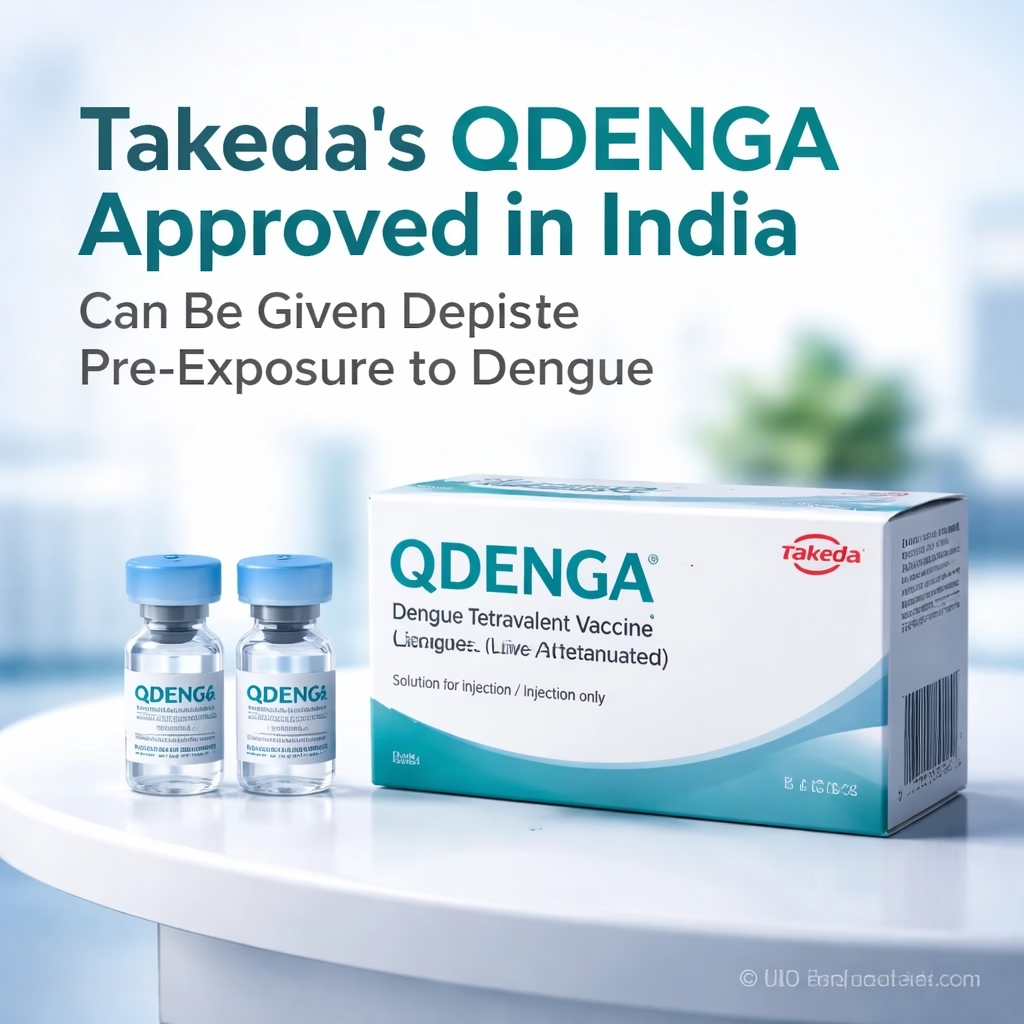
Takeda Pharmaceutical Company Limited's innovative dengue vaccine, QDENGA (TAK-003), has received a landmark approval from India's Central Drugs Standard Control Organization (CDSCO). This significant regulatory clearance paves the way for the vaccine's use in individuals aged four years and older, irrespective of their prior dengue infection status, marking a pivotal moment in public health efforts across the nation.
The approval positions India as one of the first countries in South and Southeast Asia to offer this advanced two-dose vaccine, promising a new era in the fight against a disease that annually afflicts millions across the subcontinent.
Background: The Enduring Challenge of Dengue in India
Dengue fever, a mosquito-borne viral infection, poses a severe public health threat in India, with all four serotypes (DENV-1, DENV-2, DENV-3, and DENV-4) circulating endemicity. The disease manifests in a spectrum from mild febrile illness to severe and potentially fatal forms, including dengue hemorrhagic fever and dengue shock syndrome.
Annually, India reports hundreds of thousands of dengue cases, though the actual burden is estimated to be significantly higher due to underreporting and challenges in diagnosis. The economic strain on the healthcare system, coupled with lost productivity, is substantial, making effective prevention a critical national priority.
Historically, dengue prevention has largely relied on vector control measures, such as eliminating mosquito breeding sites and using insecticides. While these methods are crucial, their effectiveness is often limited by environmental factors, public compliance, and the sheer scale of the problem across diverse urban and rural landscapes.

The development of a safe and effective vaccine has long been a global scientific pursuit. Previous vaccine candidates faced limitations, most notably the requirement for pre-screening individuals for prior dengue exposure, which complicated rollout and raised safety concerns for seronegative individuals receiving the vaccine.
Takeda's QDENGA emerged from extensive research and development, culminating in the global TIDES (Tetravalent Immunization against Dengue Efficacy Study) clinical trial program. This program, involving tens of thousands of participants across dengue-endemic regions, aimed to develop a vaccine offering broad and durable protection against all four dengue serotypes, addressing the complexities of the virus's epidemiology.
Key Developments: A New Paradigm in Dengue Vaccination
The CDSCO's approval of QDENGA for India is based on a comprehensive review of clinical data, primarily from the pivotal Phase 3 TIDES trial. This trial demonstrated the vaccine's efficacy and safety profile across a diverse population, including those with and without prior dengue exposure.
More Read

A crucial differentiator for QDENGA is its indication for use regardless of previous dengue infection. This eliminates the need for pre-vaccination serological testing, simplifying the administration process and making it a more practical and accessible public health tool. This marks a significant departure from previous dengue vaccine strategies, which were often constrained by this requirement.
Clinical Trial Highlights
The TIDES trial, a randomized, placebo-controlled, observer-blinded study, enrolled over 20,000 healthy children and adolescents aged 4-16 years in dengue-endemic areas. The primary endpoint was overall vaccine efficacy (VE) against virologically confirmed symptomatic dengue disease.
Key results from the TIDES trial showed an overall VE of 80.2% against symptomatic dengue disease at 12 months after the second dose. The vaccine also demonstrated efficacy against hospitalization due to dengue and against severe dengue, offering protection across all four serotypes, albeit with varying efficacy rates against individual serotypes.
Importantly, the trial’s long-term follow-up, extending over 4.5 years, further supported the sustained efficacy and safety of QDENGA. The vaccine maintained its protective effect, preventing 84% of hospitalized dengue cases and 61% of severe dengue cases, regardless of baseline serostatus.
The dosing regimen for QDENGA involves two subcutaneous injections administered three months apart. This schedule is designed to induce a robust and durable immune response, providing sustained protection against future dengue infections.
The regulatory pathway in India involved rigorous evaluation by the CDSCO and its Subject Expert Committee (SEC). The SEC’s recommendation, based on global clinical data and local epidemiological context, was instrumental in securing the final approval from the Drugs Controller General of India (DCGI).

Impact: Reshaping Public Health and Individual Protection
The approval of QDENGA in India is poised to have a transformative impact on public health. By offering a broad-spectrum, accessible vaccine, it provides a powerful new weapon against a disease that has long burdened communities and healthcare systems.
Public Health Implications
The vaccine’s ability to be administered without prior serostatus testing significantly streamlines mass vaccination campaigns, making it easier for health authorities to implement widespread immunization programs. This could lead to a substantial reduction in the incidence of dengue cases, alleviating pressure on hospitals and reducing outbreaks.
A decrease in dengue cases would also translate into significant economic benefits, reducing healthcare expenditures, minimizing lost wages due to illness, and improving overall productivity. Furthermore, reducing the burden of dengue allows healthcare resources to be reallocated to other critical public health challenges.
Individual Protection and Accessibility
For individuals, QDENGA offers a proactive measure against a debilitating and sometimes fatal disease. The vaccine provides protection across a wide age range (4 years and above), encompassing both children and adults who are frequently exposed to the risk of dengue infection.
The ease of administration, free from the complexity of pre-screening, means that more people can readily access protection. This is particularly crucial in areas with high dengue endemicity where rapid and efficient vaccination is vital.
Healthcare providers will benefit from a simpler vaccination protocol, enabling them to integrate QDENGA more seamlessly into routine immunization schedules or targeted campaigns. This simplification reduces the logistical burden and potential for errors associated with serostatus testing.
The availability of QDENGA also represents a significant step forward in India's commitment to achieving its health goals, aligning with global efforts to control and eliminate vaccine-preventable diseases.
What Next: Rollout, Access, and Future Milestones
Following the CDSCO approval, Takeda will now focus on the crucial next steps of making QDENGA available across India. This involves a multi-faceted approach encompassing manufacturing, distribution, pricing, and public awareness campaigns.
Market Introduction and Accessibility
Takeda is expected to work closely with government bodies, private healthcare providers, and public health organizations to ensure equitable access to the vaccine. Discussions around pricing and potential procurement by state or central governments for public health programs will be critical in determining the vaccine’s reach.
The company will likely establish robust supply chains to ensure timely and efficient distribution across the vast and diverse geography of India. This includes managing cold chain requirements to maintain vaccine integrity from manufacturing sites to vaccination points.
Public Awareness and Education
Effective rollout will necessitate comprehensive public awareness campaigns to educate communities about the importance of dengue vaccination and the benefits of QDENGA. Addressing potential vaccine hesitancy and disseminating accurate information will be paramount to achieving high vaccination coverage rates.
Healthcare professionals will also require training and resources to effectively counsel patients, administer the vaccine, and monitor for any post-vaccination events.
Ongoing Surveillance and Research
Post-marketing surveillance will be an ongoing effort to continuously monitor the vaccine’s safety and effectiveness in real-world settings. This data will be crucial for reinforcing public confidence and informing future public health strategies.
Further research may explore the vaccine’s long-term efficacy, potential for booster doses, and its impact on specific high-risk populations. The success of QDENGA in India could also serve as a model for other dengue-endemic nations seeking to implement similar vaccination strategies.
The approval of QDENGA represents not just a new vaccine but a paradigm shift in how India can combat dengue, offering a beacon of hope for a future with significantly reduced disease burden.