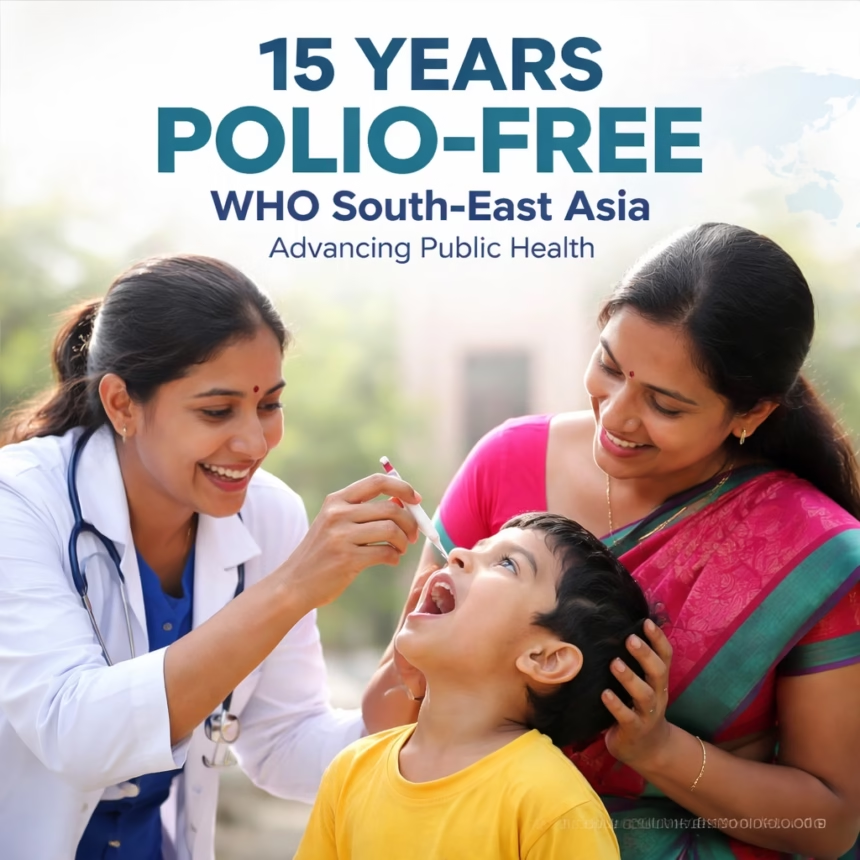
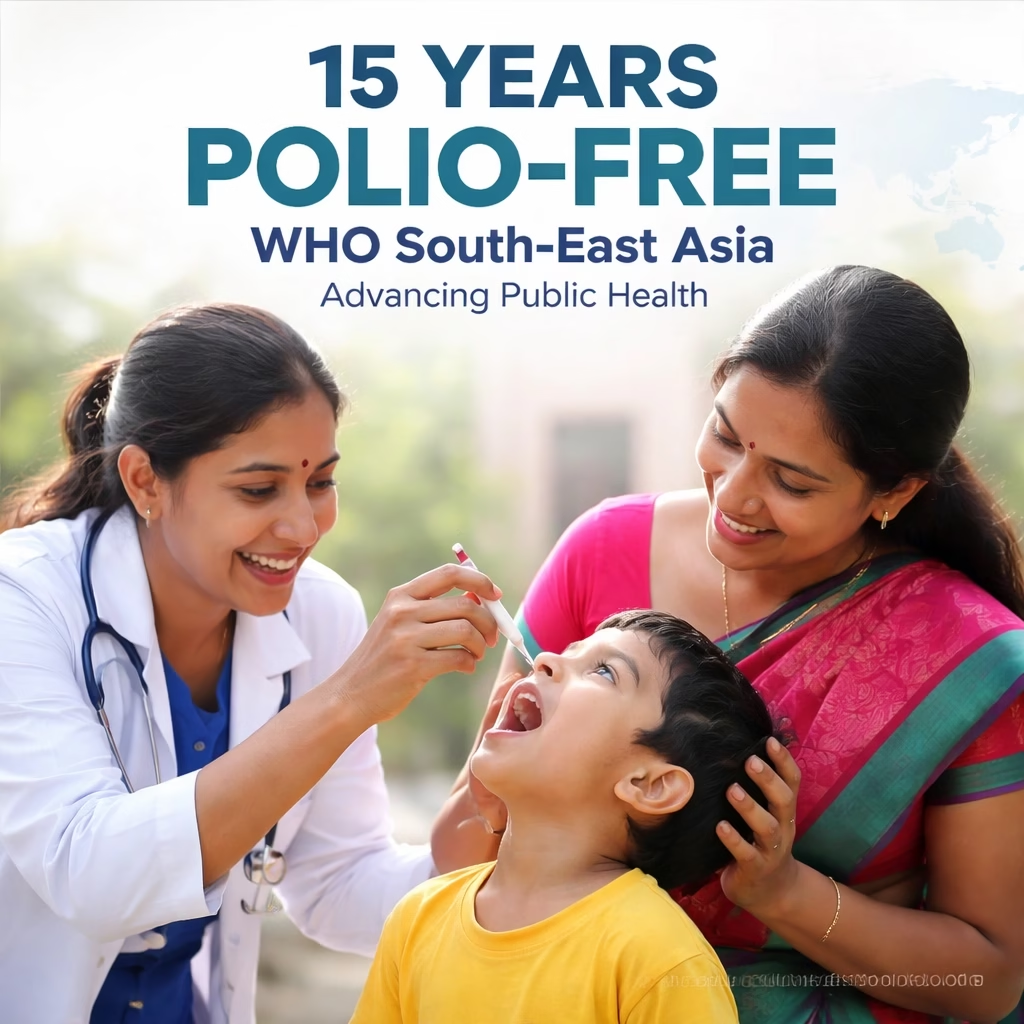
The World Health Organization (WHO) South-East Asia Region is commemorating a remarkable milestone: 15 years since its last recorded case of wild poliovirus. This pivotal achievement, observed on January 13, 2024, not only signifies a victory against a debilitating disease but also underscores the enduring legacy of the polio eradication effort, which continues to drive broader public health advancements across the region.
A Region’s Battle Against a Global Scourge
For decades, polio cast a long shadow over global health, causing paralysis and death, particularly among young children. The South-East Asia Region, home to over a quarter of the world's population, presented unique challenges for disease eradication due to its vast, diverse geography, high population density, and varying levels of infrastructure. India, in particular, was considered one of the most challenging polio-endemic countries, accounting for a significant proportion of global cases.
The fight against polio gained significant momentum with the launch of the Global Polio Eradication Initiative (GPEI) in 1988, bringing together WHO, UNICEF, Rotary International, the U.S. Centers for Disease Control and Prevention (CDC), and later the Bill & Melinda Gates Foundation. This global commitment provided the framework and resources for countries in the South-East Asia Region to intensify their efforts. Mass vaccination campaigns, robust surveillance, and extensive social mobilization became hallmarks of the strategy. Health workers navigated difficult terrains, from remote villages to bustling urban slums, often in challenging weather conditions, to reach every child.
The turning point for the region arrived on January 13, 2009, when the last case of wild poliovirus was detected in a two-year-old girl in West Bengal, India. This solitary case marked the culmination of immense, coordinated efforts across 11 countries: Bangladesh, Bhutan, Democratic People’s Republic of Korea, India, Indonesia, Maldives, Myanmar, Nepal, Sri Lanka, Thailand, and Timor-Leste. Following three years of stringent surveillance demonstrating no further wild poliovirus transmission, the WHO South-East Asia Region was officially certified polio-free on March 27, 2014, a monumental achievement that reverberated globally.
The Enduring Legacy: Polio Infrastructure Powers New Health Gains
The infrastructure and expertise developed during the arduous polio eradication campaign have not faded into history; instead, they have become a foundational pillar for broader public health initiatives. This "polio legacy" is a testament to strategic investment and foresight, transforming a disease-specific program into a multi-purpose health asset.
More Read

Strengthened Surveillance and Laboratory Networks
The sophisticated surveillance systems established to detect every polio case, including environmental surveillance for poliovirus, are now integral to monitoring other infectious diseases. The robust laboratory networks, once primarily focused on poliovirus isolation and identification, have expanded their capabilities to diagnose a wide array of pathogens, from measles and rubella to dengue and influenza. This enhanced capacity significantly improves early detection and rapid response to outbreaks.
Enhanced Immunization Programs and Cold Chains
The massive logistical undertaking of vaccinating hundreds of millions of children against polio necessitated the development of efficient cold chain management systems and extensive outreach programs. These systems now support routine immunization for other vaccine-preventable diseases, ensuring that vaccines for measles, diphtheria, tetanus, and pertussis reach even the most remote communities. The skilled vaccinators and community health workers, initially trained for polio, continue to be the backbone of national immunization programs.
Emergency Preparedness and Response
The rapid response mechanisms, communication networks, and emergency operations centers honed during polio outbreaks proved invaluable during subsequent health crises. Notably, this infrastructure played a critical role in the region's response to the COVID-19 pandemic, facilitating contact tracing, vaccine distribution, and public health messaging. The experience gained in emergency coordination and community mobilization from the polio campaign provided a vital blueprint for managing large-scale health emergencies.
More Read

Impact: A Healthier Future for Millions
The eradication of wild poliovirus has had a profound and multifaceted impact across the South-East Asia Region, affecting individuals, communities, and health systems alike.
Protection for Children
The most direct impact is the protection of millions of children from lifelong paralysis and potential death caused by poliovirus. This achievement means that generations born in the region since 2009 have grown up free from the threat of wild polio, leading healthier and more productive lives.
Empowered Health Systems
The polio program significantly strengthened primary healthcare systems. It fostered stronger partnerships between governments, international organizations, and local communities. The training of thousands of health workers, from doctors and nurses to community volunteers, has built a more skilled and resilient health workforce capable of addressing diverse health challenges.
Community Engagement and Health Literacy
Extensive community engagement campaigns for polio not only boosted vaccination rates but also improved overall health literacy. Communities became more aware of the importance of immunization, hygiene, and seeking healthcare, fostering a culture of proactive health-seeking behavior.
A Blueprint for Global Health
The success in the South-East Asia Region serves as a powerful testament to what can be achieved through sustained political will, international collaboration, and community participation. It offers a critical blueprint and renewed optimism for the eradication of other diseases and for strengthening health systems globally.

What Next: Sustaining Gains and Global Eradication
While the South-East Asia Region celebrates its 15-year milestone, the global fight against polio is not yet over. The journey continues with several critical objectives.
Global Polio Eradication
The ultimate goal remains the worldwide eradication of all polioviruses. Currently, wild poliovirus transmission is limited to just two countries: Afghanistan and Pakistan. Sustained efforts and resources are crucial to reach every last child in these remaining endemic areas and achieve a polio-free world.
Containment of Vaccine-Derived Polioviruses
The region, like others, must remain vigilant against circulating vaccine-derived polioviruses (cVDPV), which can emerge in areas with low routine immunization coverage. Strengthening routine immunization programs to ensure high population immunity is paramount to preventing such outbreaks. The phased global switch from trivalent oral polio vaccine (tOPV) to bivalent oral polio vaccine (bOPV) and the increased use of inactivated polio vaccine (IPV) are part of the global Polio Endgame Strategy to mitigate this risk.
Sustaining the Polio Legacy
A key priority is to ensure that the invaluable assets, expertise, and infrastructure developed through the polio program are fully integrated into national health systems and continue to benefit other public health priorities. This requires ongoing political commitment, financial investment, and strategic planning to transition polio assets effectively. The region is actively leveraging this infrastructure to address emerging infectious diseases, strengthen surveillance for other vaccine-preventable diseases, and enhance overall health security.
The 15-year mark since the last wild poliovirus case in the WHO South-East Asia Region is more than just a historical achievement; it is a living testament to human ingenuity, collaboration, and perseverance. It stands as a powerful reminder that with collective effort, even the most formidable public health challenges can be overcome, paving the way for a healthier, more resilient future for all.