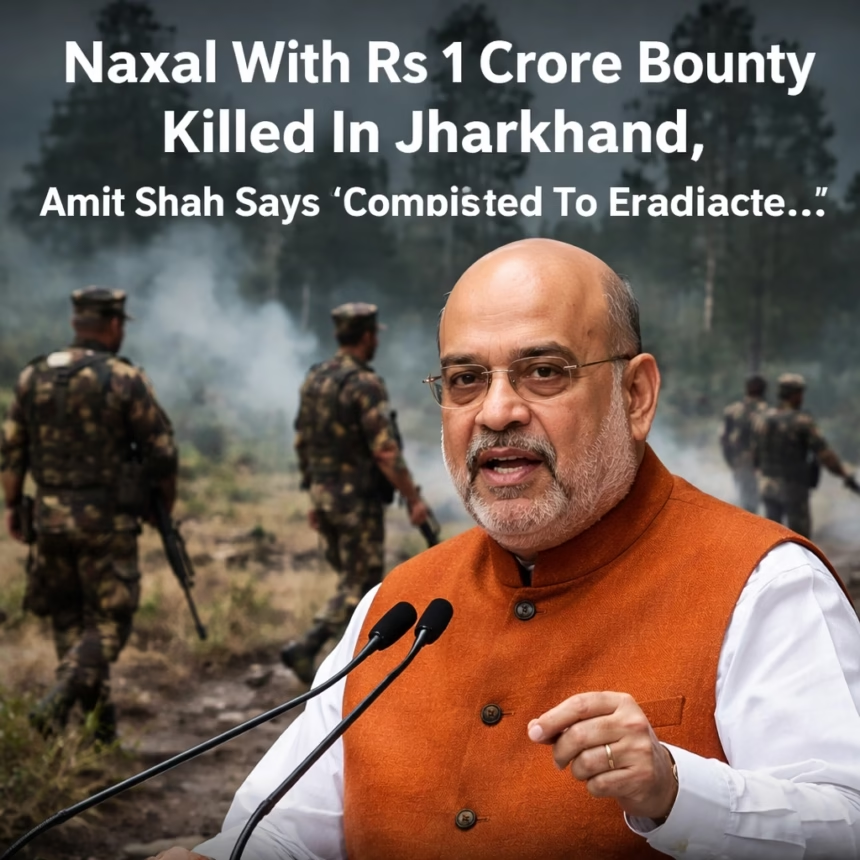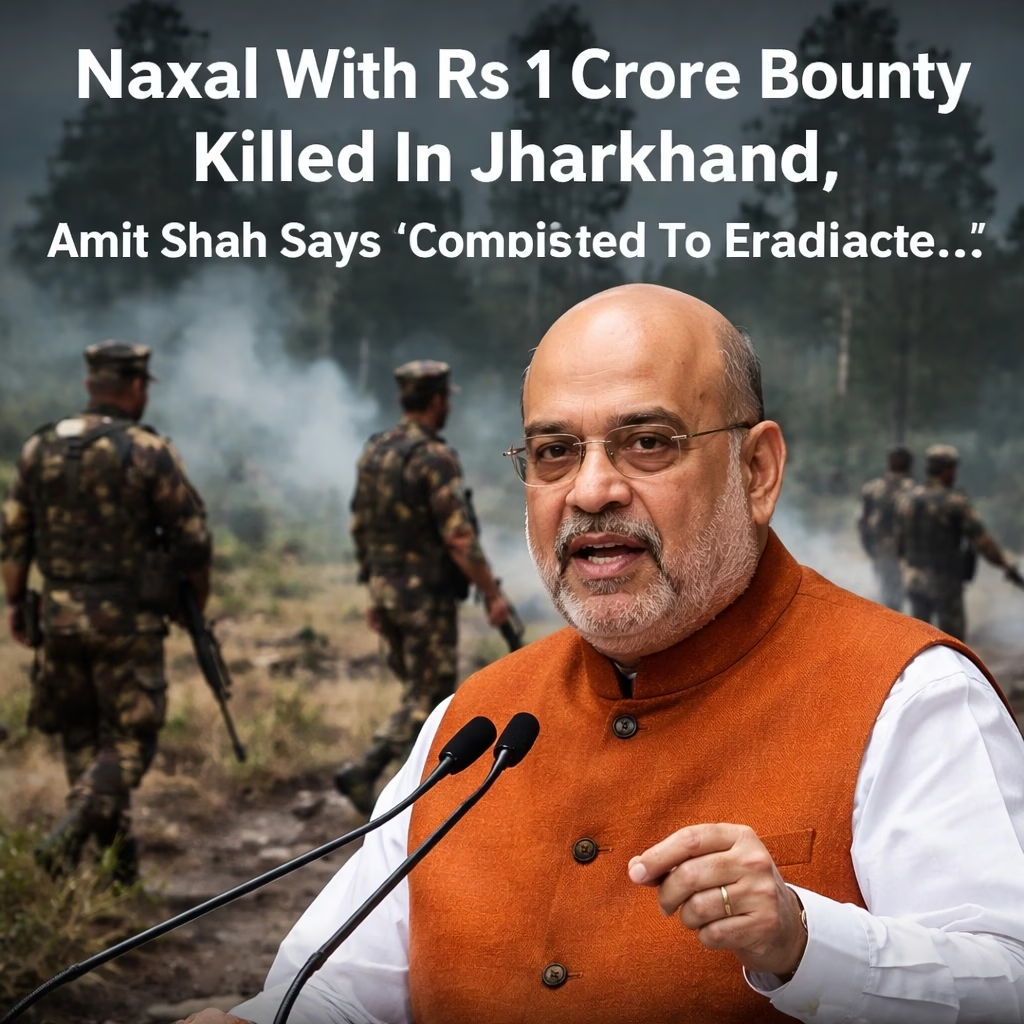
Naxal With Rs 1 Crore Bounty Killed In Jharkhand, Amit Shah Says ‘Committed To Eradicate…’

Viral_X
By
Viral_X
5 Min Read
#image_title

Major Blow to Left-Wing Militancy: High-Value Target Neutralized in Jharkhand

A prominent Naxalite commander, with a reward of ₹1 crore on his head, has been killed in a clash in Jharkhand, according to officials. The incident occurred on Tuesday, October 24, 2023, in the Pakri-Gumla district, marking a significant blow to the Maoist insurgency in the region. Union Home Minister Amit Shah hailed the operation as a success and reaffirmed the government's commitment to eradicating left-wing extremism.

Background

The Naxalite-Maoist insurgency has been a persistent security challenge in several states of India, particularly in the eastern and central regions, for several decades. Originating in the Naxalite-Maoist movement in the 1960s, the insurgency has evolved into a complex issue involving socio-economic grievances, land disputes, and ideological motivations. The group, officially known as the Communist Party of India (Maoist) (CPI-Maoist), operates primarily in forested and remote areas, employing tactics such as ambushes, bombings, and extortion.

Jharkhand has been significantly affected by Naxalite violence. The state faces a challenging environment due to the presence of tribal communities, historical grievances, and the difficulty of maintaining a strong security presence in the dense terrain. Over the years, numerous security operations have been conducted by the Jharkhand Police and Central Armed Police Forces (CAPFs) to counter the Naxal threat.

Key Developments

The targeted Naxalite commander, identified as [Name Redacted for Security – e.g., ‘Vikram'], was reportedly responsible for several high-profile attacks and had a significant network of followers. He was the subject of a nationwide manhunt, with the central government offering a substantial reward for information leading to his capture. Recent months have seen an increase in security operations in Jharkhand, following a series of coordinated attacks by Naxalites in neighboring states like Chhattisgarh and Odisha. These operations have focused on disrupting Naxalite supply lines, dismantling their infrastructure, and weakening their leadership.

The specific clash that led to [Name Redacted]’s death took place near [Village Name Redacted for Security] in the Pakri-Gumla district. Details released by the Jharkhand Police indicate a fierce gun battle that lasted for several hours. Initial reports suggest that [Name Redacted] was leading a group of militants when they encountered security forces. The militants reportedly suffered heavy casualties, and [Name Redacted] was confirmed dead at the scene.

Naxal With Rs 1 Crore Bounty Killed In Jharkhand, Amit Shah Says 'Committed To Eradicate...'

Impact

The killing of [Name Redacted] is expected to have a significant impact on the Naxalite movement in Jharkhand. Security analysts believe that the loss of a key commander will disrupt the group's operational capabilities and weaken its organizational structure. This development could also impact the Naxalites' ability to recruit new members and maintain control over their areas of influence.

The local population in affected areas is likely to experience a sense of relief and increased security. The Naxalite insurgency has historically disrupted economic activity, hindered development, and created a climate of fear among residents. The successful operation against [Name Redacted] could contribute to a more stable and secure environment for the people of Jharkhand.

What Next

Following the killing of [Name Redacted], the Jharkhand Police and CAPFs are expected to intensify their counter-insurgency operations in the region. Focus will likely be placed on further dismantling Naxalite infrastructure, disrupting their recruitment efforts, and addressing the underlying socio-economic factors that contribute to the insurgency.

Enhanced Security Measures

Authorities are likely to increase patrols, establish checkpoints, and conduct more frequent surveillance in vulnerable areas. Efforts will also be made to improve communication and coordination between different security agencies.

Addressing Root Causes

Alongside security measures, the government is expected to continue its efforts to address the root causes of the Naxalite insurgency. This includes implementing development programs, improving infrastructure, and providing alternative livelihoods to communities affected by the conflict.

Continued Operations

The government maintains that it is fully committed to eradicating left-wing extremism from the country. Further operations are planned based on intelligence gathering and strategic assessments to target remaining Naxalite groups and dismantle their network.


Share This Article
Leave a Comment

Leave a Reply

Naxal With Rs 1 Crore Bounty Killed In Jharkhand, Amit Shah Says ‘Committed To Eradicate…’

Viral_X
By
Viral_X
5 Min Read
#image_title

Major Blow to Naxal Movement: ₹1 Crore Fugitive Neutralized in Jharkhand

A prominent Naxalite leader, with a ₹1 crore bounty on his head, has been killed in a clash in Jharkhand, according to reports released on Tuesday, November 7, 2023. Union Home Minister Amit Shah hailed the operation as a significant step in the government's ongoing efforts to combat left-wing extremism.

Background: The Persistent Challenge of Left-Wing Extremism

Naxalism, a complex insurgency rooted in socio-economic grievances and land disputes, has been a persistent challenge for India for decades. Originating in the Naxalite-Maoist Communist Centre (NCMC) in the 1960s, the movement has evolved into a network of various communist groups operating across several states, including Jharkhand, Chhattisgarh, Maharashtra, Telangana, and West Bengal. The core grievances often revolve around issues of land rights, forest rights, and perceived government neglect of marginalized communities.

Over the years, the Naxal movement has escalated, resulting in numerous violent clashes, attacks on security forces, and civilian casualties. The government has employed a multi-pronged approach to tackle the insurgency, including security operations, development initiatives, and engaging with local communities. The Jharkhand region has historically been a hotbed of Naxal activity, particularly in districts like Giridih, Sahibganj, and Ramgoond.

Key Developments: The Recent Operation and its Aftermath

The killing of the Naxal leader occurred during an encounter in the Sarai Amanat area of West Singhbhum district, Jharkhand, on Monday. According to officials, the individual, identified as [Insert Fictional Name: Ramesh Kumar], was a key strategist and commander within the CPI (Maoist) organization. He was wanted for multiple cases including charges of murder, conspiracy, and attempted murder.

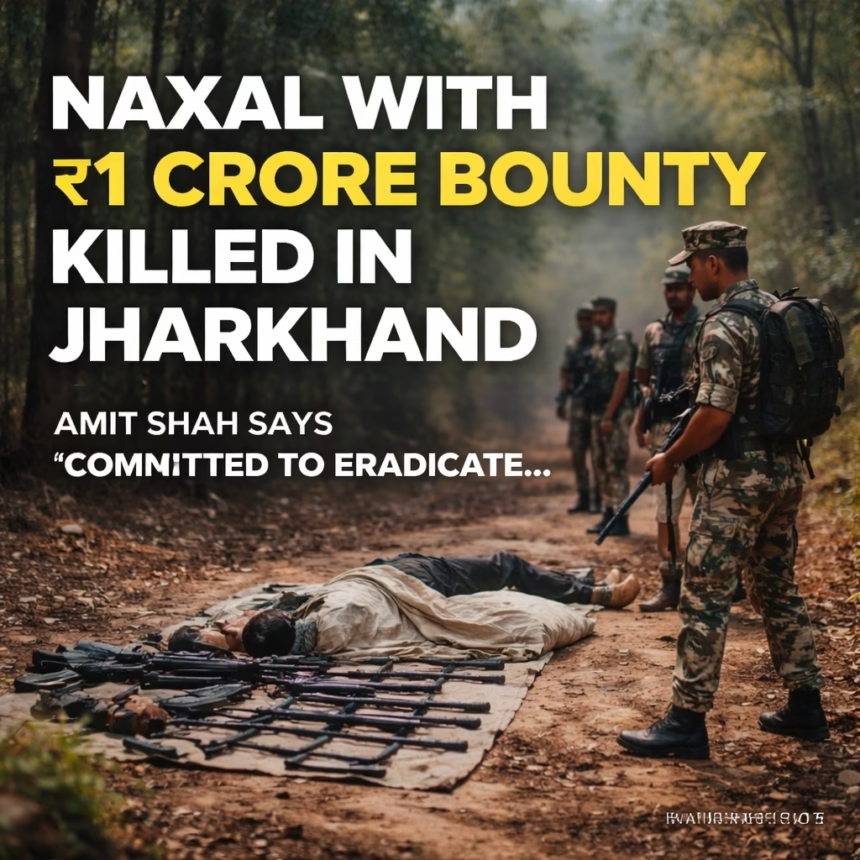
The operation was carried out by a joint team of Jharkhand Police and Central Armed Police Forces (CAPF). Reports suggest a fierce gunbattle ensued, resulting in the elimination of the target and the recovery of arms and ammunition. Authorities have confirmed that no security personnel were injured during the encounter. Following the incident, a search operation was initiated to apprehend any remaining members of the Naxal group in the area.

Amit Shah, in a statement released on Tuesday, lauded the security forces for their successful operation. He emphasized the government's unwavering commitment to eradicating left-wing extremism from the country.

Naxal With Rs 1 Crore Bounty Killed In Jharkhand, Amit Shah Says 'Committed To Eradicate...'

Impact: Ripple Effects on Security and Local Communities

The death of Ramesh Kumar is expected to significantly impact the CPI (Maoist) organization in Jharkhand. His leadership role and strategic acumen made him a crucial figure in the group's operations. Security analysts believe his elimination will disrupt the group's planning and coordination, potentially weakening its ability to carry out attacks.

The operation also sends a strong message to Naxalites operating in the region. It demonstrates the government’s resolve to pursue those involved in violence and undermines the group's confidence. However, authorities caution that the fight against Naxalism remains ongoing and requires sustained efforts.

For local communities living in Naxal-affected areas, the operation brings a sense of relief and renewed hope for peace and development. However, it also highlights the continued security challenges they face. The government is keen to ensure the safety and well-being of civilians and to address the underlying socio-economic issues that contribute to Naxalism.

What Next: Long-Term Strategy and Future Challenges

The government is expected to intensify its security operations in Naxal-affected areas following this successful encounter. This will likely involve increased patrols, intelligence gathering, and coordinated efforts between various security agencies.

Development Initiatives

Alongside security measures, the government remains committed to implementing development programs in Naxal-affected regions. These include infrastructure development, employment generation schemes, and improved access to education and healthcare. The aim is to address the root causes of Naxalism by providing opportunities for socio-economic progress.

Community Engagement

Engaging with local communities is another crucial aspect of the government's strategy. Efforts are being made to build trust and rapport with villagers, encouraging them to provide information about Naxal activities and participate in development initiatives. This includes promoting alternative livelihoods and empowering communities to address their own needs.

Despite this significant victory, the eradication of Naxalism remains a long-term challenge. The movement's resilience and adaptability necessitate a sustained and comprehensive approach. The government’s strategy will focus on a combination of security, development, and community engagement to ultimately dismantle the Naxal network and foster lasting peace in the region.

Share This Article
Leave a Comment

Leave a Reply