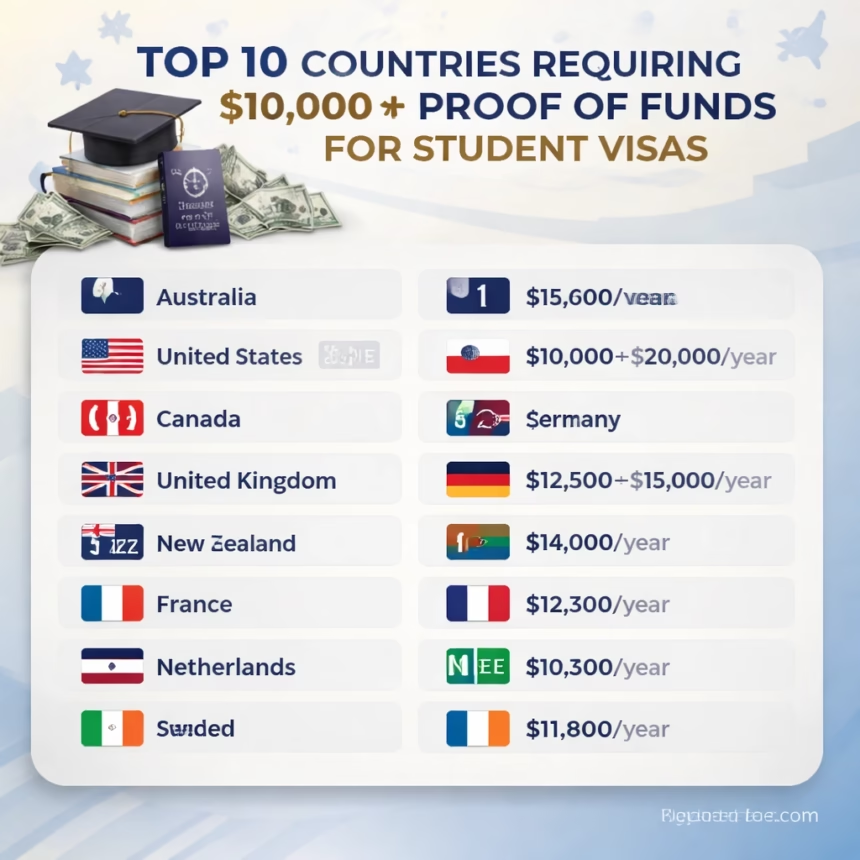
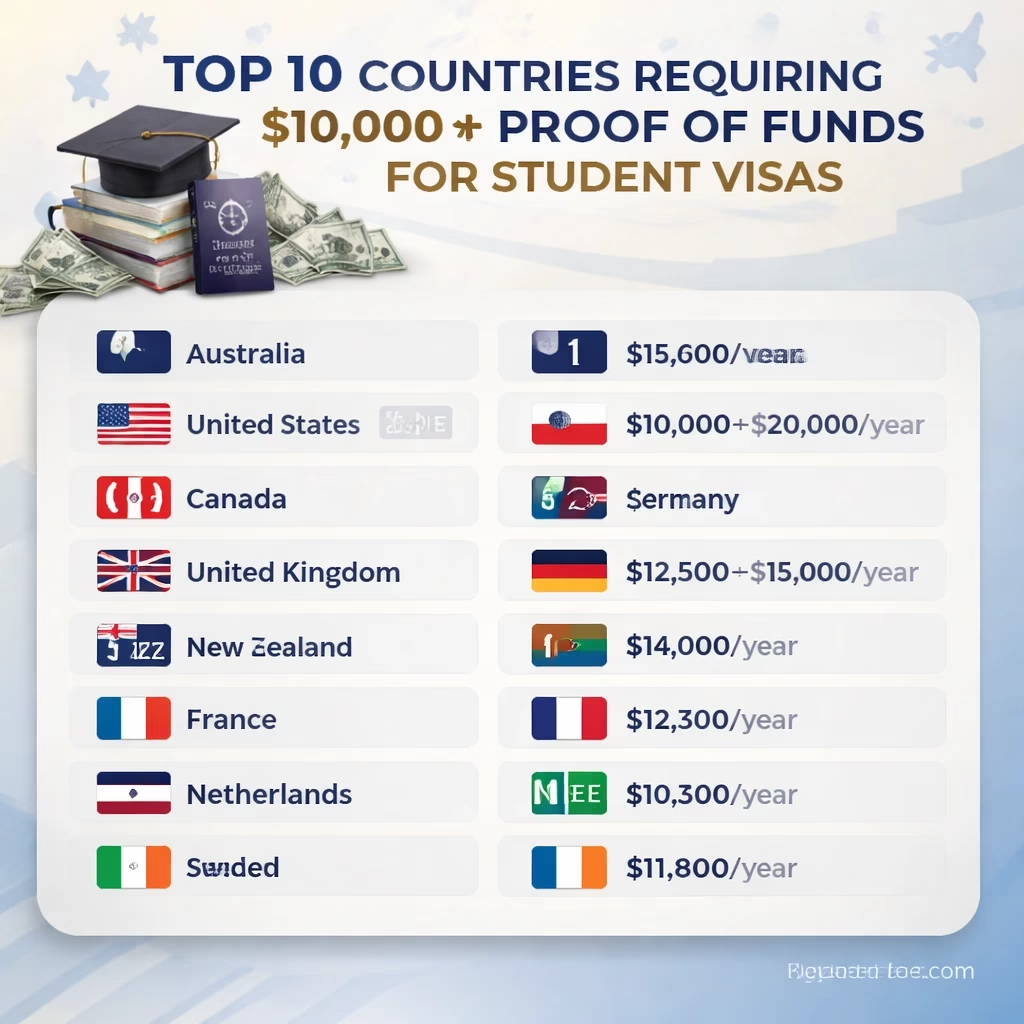
Aspiring international students worldwide face a significant financial hurdle when applying for study visas: demonstrating substantial proof of funds. A recent analysis reveals that at least ten major study destinations now mandate applicants show access to over $10,000 USD in liquid assets, separate from tuition fees, to cover living expenses for their initial year. This requirement, often revised annually, impacts thousands seeking higher education opportunities across North America, Europe, and Oceania.
Background: The Rationale Behind Financial Capacity
The concept of "proof of funds," or demonstrating financial capacity, is a cornerstone of international student visa policies across numerous nations. Its primary purpose is to ensure that students can support themselves financially throughout their academic tenure without relying on public funds or engaging in unauthorized employment.
Historically, these requirements have been a standard feature of immigration frameworks, designed to mitigate risks associated with destitution, visa overstays, and to ensure students are genuinely focused on their academic pursuits. While not a new phenomenon, the specific amounts demanded have seen significant upward revisions over the past decade, reflecting global economic shifts, inflation, and rising living costs in popular study destinations.
For instance, countries like Canada and the United Kingdom have long maintained proof of funds requirements, with their benchmarks evolving over time to match the economic realities faced by residents. This consistent upward trend underscores a global effort by host nations to ensure the financial self-sufficiency of their international student populations.
Key Developments: Recent Hikes and Updated Requirements
The past year has witnessed several significant adjustments to proof of funds requirements, with some nations implementing dramatic increases. These changes are largely driven by escalating inflation, housing crises, and broader government initiatives to manage immigration levels and ensure the integrity of their student visa programs.

Canada: A Substantial Increase
Effective January 1, 2024, Immigration, Refugees and Citizenship Canada (IRCC) more than doubled its cost-of-living financial requirement for study permit applicants. A single applicant must now demonstrate access to CAD $20,635 (approximately $15,000 USD), in addition to tuition fees and travel costs. This significant jump from the previous CAD $10,000 reflects an overdue adjustment to account for the actual cost of living in Canada, particularly housing.
Australia: Adjusting to Economic Realities
In October 2023, Australia’s Department of Home Affairs also raised its financial capacity benchmark for student visas. Applicants are now required to show evidence of access to AUD $24,505 (approximately $16,000 USD), an increase from AUD $21,041. This adjustment, alongside stricter English language proficiency requirements, aims to ensure students are adequately prepared for the financial demands of living in Australia.
United Kingdom: Consistent Upward Trend
While not a sudden spike, the UK’s financial requirements for the Student visa (formerly Tier 4) have consistently risen. As of early 2024, students must demonstrate funds of £1,334 per month for up to 9 months for courses in London (totaling £12,006 or approximately $15,000 USD), or £1,023 per month for up to 9 months for courses outside London (totaling £9,207 or approximately $11,500 USD). These figures are subject to regular governmental review.

United States: University-Specific Demands
The U.S. government does not set a universal minimum for student visas (F-1). Instead, individual universities determine the required proof of funds for the I-20 form, which is essential for visa application. With tuition and living costs escalating, these figures routinely exceed $30,000-$50,000 annually, with the living expense component alone often surpassing $15,000-$20,000, depending on the institution and location.
Germany: The Blocked Account Standard
For most non-EU students, a blocked account is a mandatory component of the visa application process. For 2024, the minimum amount required for this account was increased to €11,208 (approximately $12,000 USD), up from €10,332 in 2023. This ensures students have approximately €934 per month available for living costs.
Netherlands: University Recommendations
While specific government-mandated figures can vary, Dutch universities typically require international students to demonstrate access to between €13,000 and €15,000 (approximately $14,000 – $16,000 USD) per year to cover living expenses, health insurance, and other incidentals. This is often a condition for obtaining a Certificate of Admission, which is vital for the visa.
Ireland: A Clear Minimum
Ireland explicitly requires non-EEA students to demonstrate access to at least €10,000 (approximately $11,000 USD) for their first year of study, in addition to tuition fees. This amount is designated to cover accommodation, food, and other living expenses.
New Zealand: Ensuring Self-Sufficiency
Immigration New Zealand mandates that international students show evidence of sufficient funds to cover their living costs. For a full year of study, this amount is set at NZD $20,000 (approximately $12,000 USD), with proportional amounts for shorter study periods.
More Read

Denmark: Monthly Budget Requirement
Danish immigration authorities require international students to prove they have access to DKK 6,720 per month for the duration of their stay. For a 12-month period, this totals DKK 80,640 (approximately $11,700 USD), ensuring students can manage their living expenses in one of Europe’s higher cost-of-living countries.
Sweden: Support for the Study Period
The Swedish Migration Agency requires students to show proof of SEK 9,450 per month for the period they are applying to study. For a typical academic year of 10 months, this amounts to SEK 94,500 (approximately $9,000 USD). However, for a 12-month visa, the requirement extends to SEK 113,400 (approximately $10,800 USD), placing it firmly within the $10,000+ bracket.
Impact: Who Is Affected and How
The rising financial thresholds for student visas have far-reaching implications, extending beyond individual applicants to educational institutions and national economies.
Barriers to Access for Aspiring Students
The most direct impact falls on prospective international students, particularly those from low and middle-income countries. The elevated financial bar can transform study abroad dreams into an unattainable luxury, exacerbating existing inequalities in global education access. Many talented students may be deterred, regardless of their academic merit, simply due to financial constraints.
Shifting Destination Preferences
Students facing these increased demands may be compelled to pivot their focus towards countries with comparatively lower financial requirements, more generous scholarship opportunities, or more accessible post-study work options. This could lead to a redistribution of international student flows, potentially benefiting emerging study destinations in Asia or parts of Europe that maintain more modest financial benchmarks.
Challenges for Universities
Educational institutions in countries with significantly increased requirements could experience a noticeable decline in international applications and enrollments. This affects the diversity of campus populations and can impact the financial models of universities that increasingly rely on international student tuition fees to fund operations and research. Recruitment efforts become more challenging and costly.
Economic Repercussions for Host Nations
International students contribute billions to host economies annually through tuition fees, accommodation, living expenses, and local spending. A reduction in student numbers due to higher financial barriers could lead to a measurable economic impact, affecting sectors from retail and hospitality to housing markets and local services.
Increased Financial Stress and Debt
For those students who manage to meet the heightened requirements, the pressure to secure and maintain such significant funds can lead to immense financial stress. Many are compelled to take on substantial loans, adding to their post-graduation debt burden and potentially influencing their career choices and post-study migration plans.
What Next: Future Outlook and Expected Milestones
The trend of increasing proof of funds requirements is unlikely to reverse in the immediate future, with several factors pointing towards continued adjustments and evolving policies.
Continued Upward Adjustments
Given persistent global inflation, rising cost-of-living indices, and ongoing housing affordability challenges in major urban centers, further upward adjustments to proof of funds requirements are highly probable across various countries. Governments will likely continue to review these figures annually or biennially to ensure they accurately reflect current economic realities.
Policy Scrutiny and Immigration Management
These financial adjustments are often part of broader immigration policy shifts, as governments seek to manage population growth, ease housing pressures, and uphold the integrity of their immigration systems. Future policy reviews may explore more nuanced approaches to balancing these objectives with the undeniable benefits that international education brings.
University Adaptations and Advocacy
Educational institutions are expected to adapt by enhancing their scholarship offerings and developing more robust financial aid programs specifically for international students. Universities and international education bodies will also likely intensify their advocacy efforts with governments for more supportive policies, potentially proposing alternative methods of demonstrating financial capacity or increased flexibility in work permit regulations.
Diversification of Global Education Landscape
The trend might accelerate the diversification of popular study destinations. More students may explore high-quality education options in countries that offer lower overall costs or more lenient financial entry barriers. This could also spur further growth in online, blended learning models, and transnational education programs, providing alternative pathways for students unable to meet the steep financial requirements for traditional on-campus study abroad.