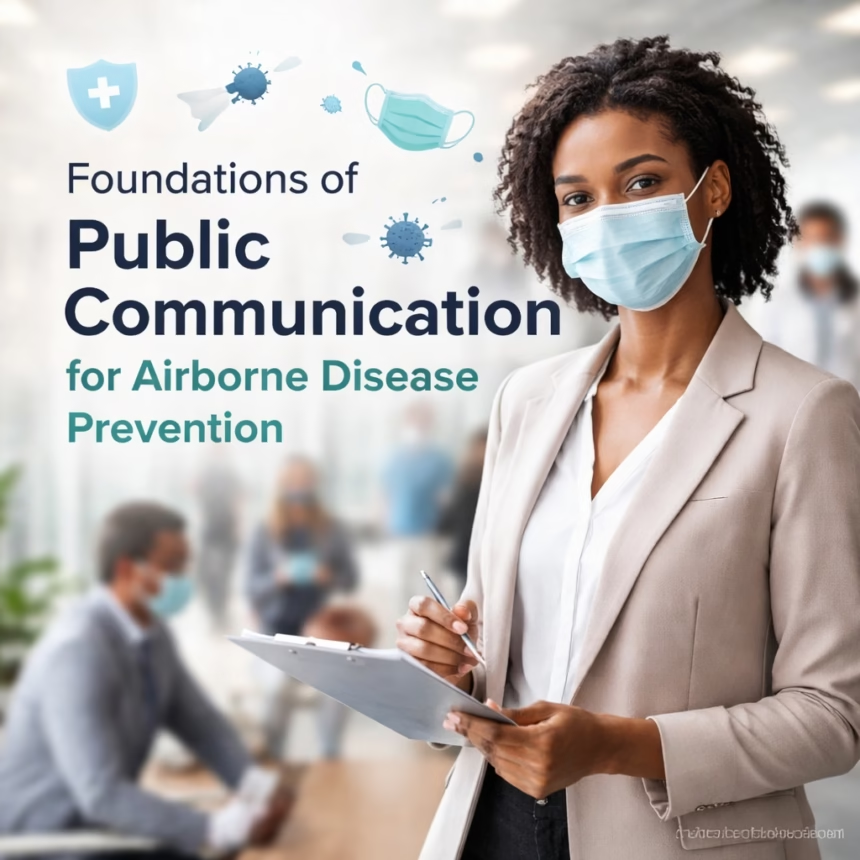
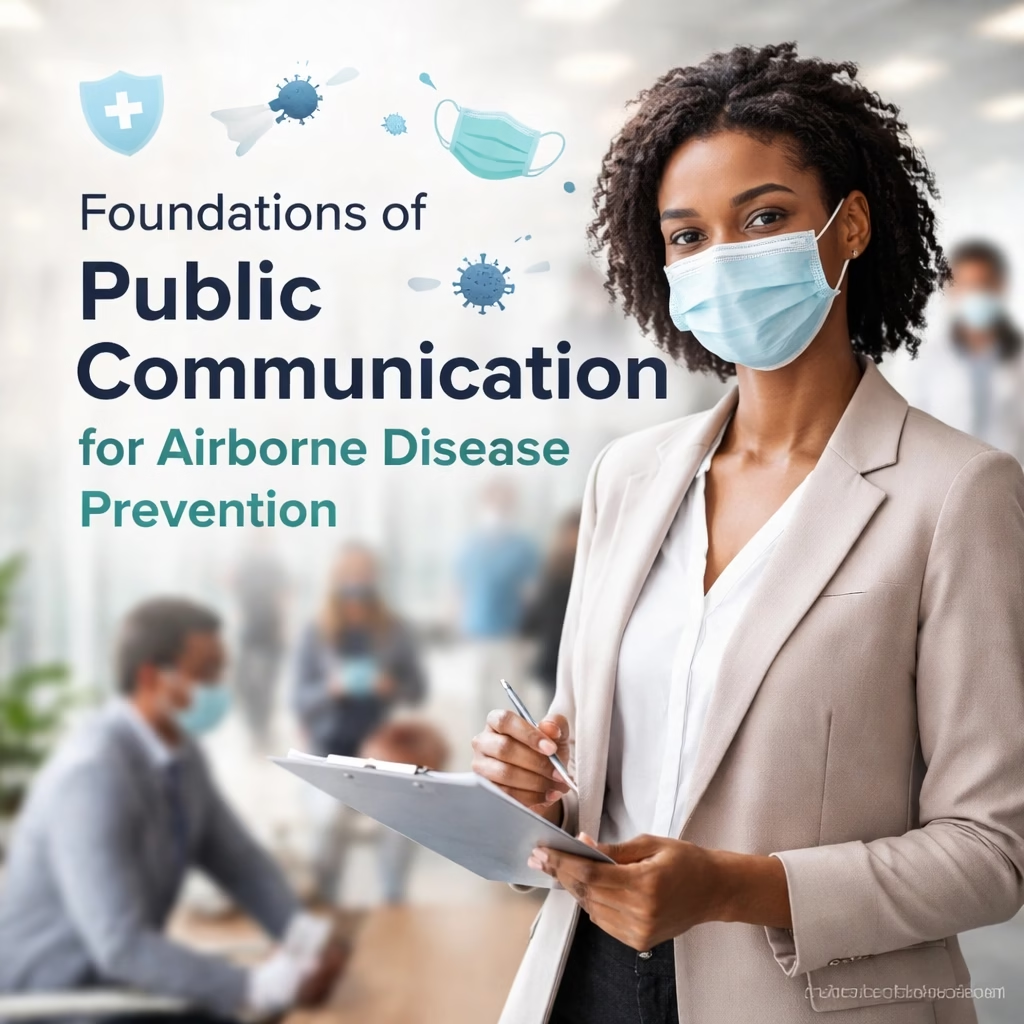
A significant international effort is underway to fundamentally redefine how public health organizations communicate about airborne disease prevention. This initiative, spearheaded by global bodies and national agencies, aims to establish clearer, more consistent messaging to empower individuals and communities worldwide, with new frameworks emerging in late 2023 and early 2024.
Background: The Evolving Understanding of Airborne Risk
Before 2020, public health communication largely focused on preventing infectious diseases through droplet transmission and contact hygiene. Agencies like the World Health Organization (WHO) and the U.S. Centers for Disease Control and Prevention (CDC) emphasized handwashing and covering coughs, with less attention paid to the nuances of aerosol spread. Diseases such as SARS (2002-2004) and MERS (2012) saw public advisories that often conflated droplet and airborne routes, leading to an imprecise understanding of risk in shared airspaces.
The Pre-Pandemic Paradigm
For decades, the prevailing communication model centered on visible actions: washing hands, sanitizing surfaces, and maintaining “safe” distances for droplet dispersal. This approach, while effective for many pathogens, inadvertently created a gap in public understanding regarding diseases that could linger in the air for extended periods. The scientific community had long recognized airborne transmission for certain diseases like tuberculosis and measles, but this understanding rarely translated into broad public health campaigns for acute respiratory infections.
COVID-19’s Communication Crucible
The onset of the COVID-19 pandemic in early 2020 exposed critical shortcomings in this communication paradigm. Initial guidance from the WHO and national bodies, including the CDC, primarily focused on large droplet transmission, recommending distances like six feet. However, a growing body of scientific evidence soon highlighted the significant role of aerosol transmission for SARS-CoV-2. This scientific evolution, often occurring in public view, led to confusion as official advice shifted on mask efficacy, ventilation, and the nature of indoor risk. Public trust eroded in some areas due to perceived inconsistencies, while misinformation flourished, underscoring the urgent need for a more robust and adaptable communication strategy.
More Read

Key Developments: A New Era of Clarity
In response to these challenges, a concerted global effort has catalyzed several key developments aimed at standardizing and improving public communication on airborne pathogens. These initiatives represent a paradigm shift towards proactive, evidence-based messaging.
Standardizing Terminology and Frameworks
The World Health Organization (WHO) has been at the forefront, drafting a comprehensive “Airborne Pathogen Communication Framework,” expected for official release in mid-2024. This framework aims to establish clear, universally understood terminology for airborne transmission, risk levels, and mitigation strategies. It emphasizes tiered risk communication, allowing messages to be tailored to specific contexts and pathogen severity. Similarly, the U.S. CDC has revised its “Community Transmission Levels” in early 2024, integrating metrics beyond just case counts to include indicators of airborne risk and indoor air quality, providing a more holistic view for guiding public action. The European Centre for Disease Prevention and Control (ECDC) also published detailed “Ventilation Guidelines for Public Spaces” in early 2024, accompanied by accessible infographics and actionable advice for businesses, schools, and individuals across European Union member states.
Leveraging Technology and Training
Beyond policy frameworks, technological advancements are being harnessed. Artificial intelligence (AI) and advanced social media monitoring tools are being developed and deployed to track the spread of misinformation in real-time and to tailor public health messages for maximum impact. Companies like Google are collaborating with public health bodies to provide AI-driven insights into public sentiment and information gaps. Simultaneously, new “Risk Communication Academy” initiatives, such as those at the Johns Hopkins Bloomberg School of Public Health, are training public health officials globally to translate complex scientific concepts into simple, actionable language, fostering a new generation of communicators equipped for future crises.

Impact: Empowering Individuals and Strengthening Systems
These foundational shifts in public communication are designed to have far-reaching positive impacts across various segments of society, enhancing preparedness and fostering greater public confidence.
Empowering Individuals and Communities
For the general public, the primary impact will be a clearer, more consistent understanding of airborne risks. This clarity is expected to empower individuals to make informed decisions about personal protective measures, ventilation in homes and workplaces, and participation in social gatherings. Reduced ambiguity in official guidance aims to alleviate public anxiety and foster a sense of agency in managing personal health risks. Tailored messaging will also specifically address the needs and challenges of vulnerable populations, including the elderly, immunocompromised individuals, and those in underserved communities, thereby working to reduce health inequities.
Strengthening Public Trust and Health Systems
Healthcare workers will benefit from improved communication tools for patient education and community outreach, reducing the burden often associated with public confusion during health crises. For policymakers and governments, the new frameworks offer a more robust foundation for implementing and justifying public health measures, potentially leading to faster, more effective responses in future outbreaks. Businesses and institutions will receive clearer, actionable guidelines for creating safer indoor environments, encouraging investments in improved HVAC systems and CO2 monitoring, as demonstrated by early adopters in cities like New York and Berlin. Ultimately, these changes aim to rebuild and strengthen public trust in health authorities by demonstrating transparency, adaptability, and a commitment to clear, evidence-based communication.
What Next: Global Rollout and Future Resilience
The coming months and years will focus on the comprehensive implementation and continuous refinement of these new public communication strategies for airborne disease prevention.
Global Rollout and Adaptation
Mid-2024 is slated for the official launch and global dissemination of the WHO’s new communication framework. Pilot programs are anticipated to begin in several countries, including Canada, New Zealand, and Germany, allowing for real-world testing and adaptation to diverse cultural contexts. By late 2024, the goal is to integrate these framework principles into national public health curricula and emergency preparedness plans worldwide, ensuring that future generations of health professionals are trained in these updated communication methodologies.
Building for Future Resilience
An initial global review of implementation effectiveness is scheduled for early 2025, which will identify best practices, pinpoint areas for refinement, and assess the framework’s impact on public understanding and behavior. Ongoing efforts will focus on developing multilingual resources, interactive digital tools, and robust community engagement platforms to ensure accessibility and relevance across all populations. The overarching vision is to establish a more resilient and adaptable communication infrastructure capable of navigating future pandemics and endemic airborne threats. This proactive approach aims to prevent the widespread confusion experienced during previous health crises, fostering greater public trust and enabling more effective collective action against invisible airborne dangers.