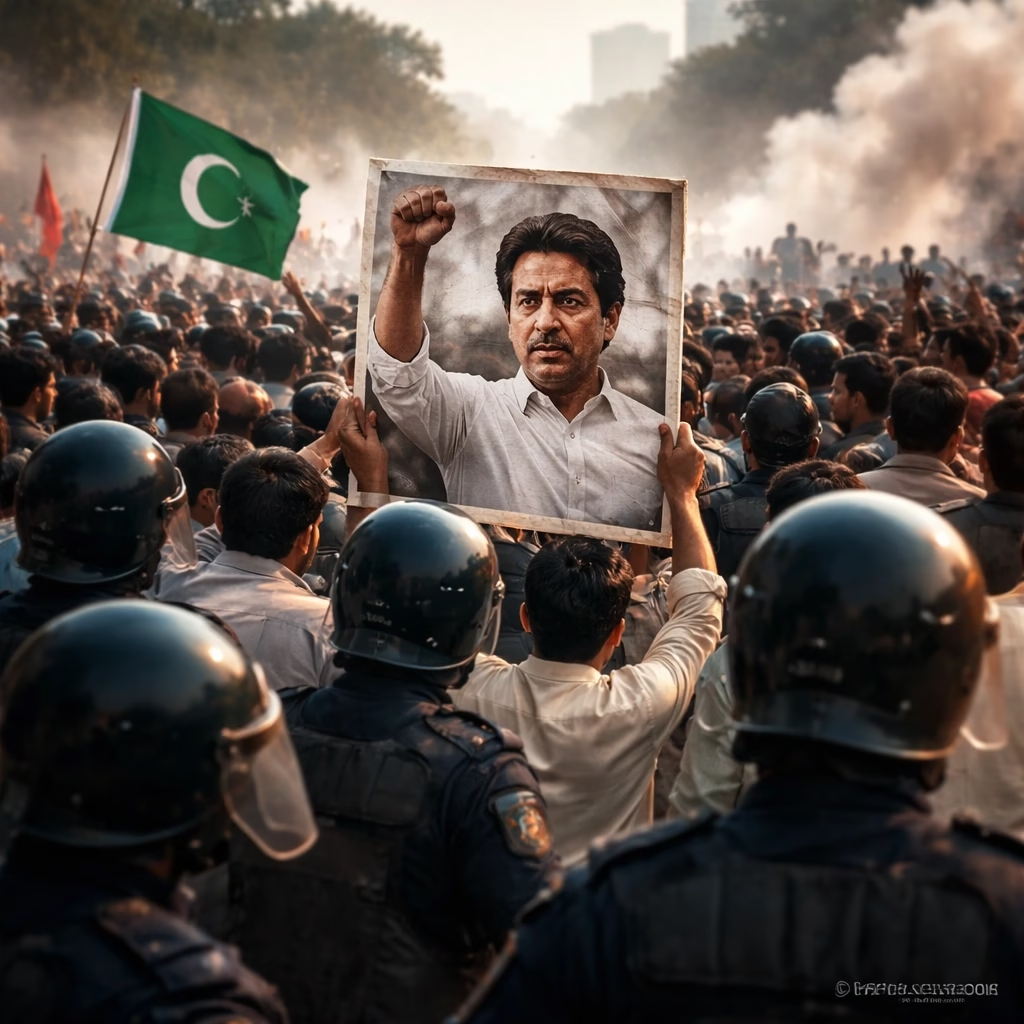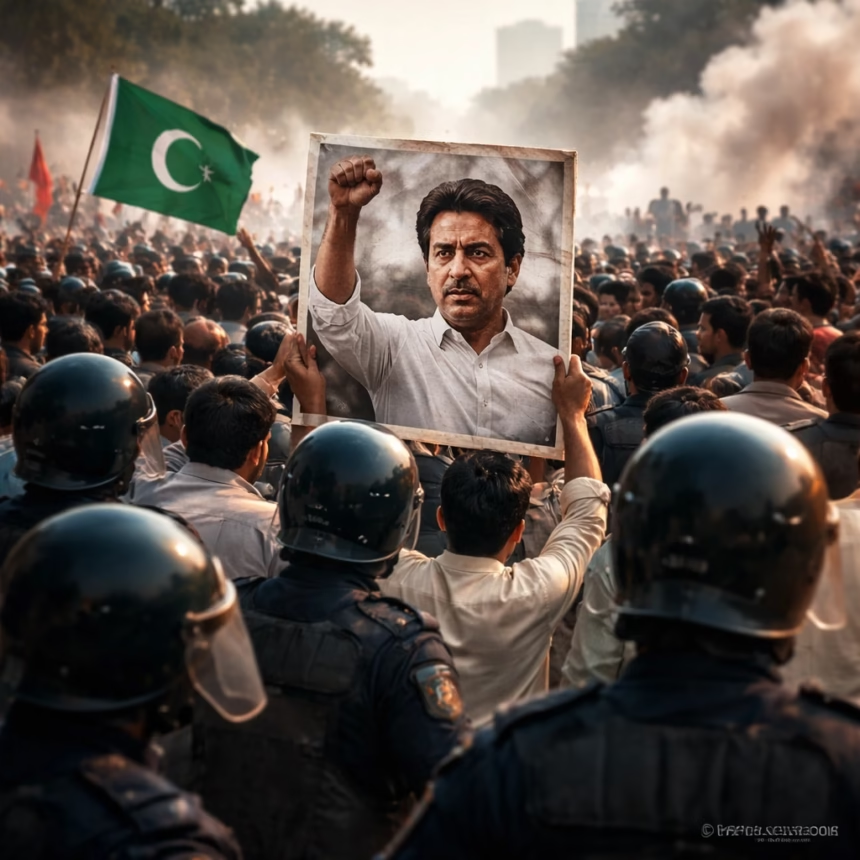
Pakistan is experiencing an intensifying crackdown on dissent, extending far beyond the political challenges posed by former Prime Minister Imran Khan. This systemic suppression of free speech and political opposition has escalated across the nation in recent months, raising significant concerns about democratic freedoms and the rule of law. The wide-ranging measures target not only political opponents but also journalists, civil society, and the broader public.
Background: A History of Influence and Recent Turmoil
Pakistan's political landscape has long been shaped by the powerful military establishment, which has historically exerted significant influence over civilian governments. Periods of direct military rule have alternated with democratic transitions often marked by instability and allegations of interference. This deep-rooted dynamic provides crucial context for the current situation.
The Rise and Fall of Imran Khan
Imran Khan, a former cricket star, rose to power in 2018 on an anti-corruption platform, heading the Pakistan Tehreek-e-Insaf (PTI) party. His tenure was marked by populist rhetoric and a complex relationship with the military. In April 2022, Khan was ousted from power through a no-confidence vote, which he claimed was part of a foreign-backed conspiracy. His removal ignited a fervent protest movement across the country, with his supporters rallying against the new coalition government led by Prime Minister Shehbaz Sharif.
The May 9th Catalyst
The turning point for the current crackdown occurred on May 9th, 2023. Following Khan's arrest on corruption charges from the Islamabad High Court premises, widespread protests erupted across Pakistan. Demonstrators, primarily PTI supporters, clashed with law enforcement, vandalized public property, and, significantly, targeted military installations, including the Corps Commander's residence in Lahore and the General Headquarters (GHQ) in Rawalpindi. The military establishment viewed these attacks as an unprecedented challenge to its authority, vowing a severe response.
Key Developments: Broadening the Scope of Suppression
Since May 9th, the Pakistani state has initiated a comprehensive campaign to curb dissent, employing legal, administrative, and coercive measures that extend beyond the PTI and its leadership.
More Read

Mass Arrests and Detentions
Following the May 9th events, authorities launched a nationwide dragnet, arresting thousands of PTI members and supporters. Estimates suggest over 10,000 individuals were detained, including senior party leaders like Shah Mahmood Qureshi, Fawad Chaudhry, and Shireen Mazari. Many were held under maintenance of public order laws, while others faced charges under anti-terrorism statutes. Human rights organizations reported instances of arbitrary arrests and lack of due process.
Trials in Military Courts
Perhaps the most contentious development has been the decision to try civilians, including alleged participants in the May 9th protests, in military courts under the Pakistan Army Act, 1952, and the Official Secrets Act, 1923. Critics, including the Supreme Court of Pakistan, have raised serious concerns about the legality and fairness of such trials, arguing they violate fundamental rights to due process and a fair trial guaranteed by the constitution. As of late 2023, the Supreme Court was still deliberating on petitions challenging the use of military courts for civilians.
Media Censorship and Restrictions
The media has faced significant pressure and restrictions. News channels perceived as sympathetic to Imran Khan or critical of the establishment have experienced disruptions, including being taken off air or having their broadcasts restricted. Social media platforms, particularly X (formerly Twitter), YouTube, and TikTok, have seen frequent outages and slowdowns, coinciding with politically sensitive events. Journalists critical of state policies have reported harassment, intimidation, and even arrests, leading to a palpable chilling effect and widespread self-censorship.
More Read
Legislative Amendments
In a move to strengthen state control, the government has enacted several controversial legislative amendments. The Official Secrets Act was amended in August 2023, expanding the definition of "enemy" and granting intelligence agencies broader powers of arrest and search without warrants, raising fears of its misuse against critics and journalists. Similarly, amendments to the Pakistan Army Act and the Prevention of Electronic Crimes Act (PECA) have been used to target online dissent and perceived anti-state activities.
Enforced Disappearances
Reports of enforced disappearances, a long-standing human rights concern in Pakistan, have also resurfaced, with activists and family members alleging that individuals critical of the state or associated with opposition movements have gone missing without official acknowledgment.
Impact: A Chilling Effect on Society
The broad crackdown has had a profound impact across various segments of Pakistani society, fostering an environment of fear and limiting democratic space.
Political Landscape
The PTI, once a formidable political force, has been severely weakened. Its leadership is largely incarcerated, in hiding, or has defected under duress. This has led to concerns about the fairness of upcoming general elections, with critics arguing that the playing field has been drastically unevened. Other opposition parties, while not directly targeted to the same extent, also operate under increased scrutiny and self-imposed restraint.
Journalists and Civil Society
Journalists face an increasingly precarious environment, balancing the need to report freely with the risk of reprisal. Many have resorted to self-censorship to avoid legal trouble or harassment. Civil society organizations, including human rights groups, find their space for advocacy shrinking, with increased surveillance and pressure on their activities.
Public Discourse and Freedoms
The general public experiences a chilling effect on open discussion and expression, particularly online. The fear of arbitrary arrest, legal action, or social ostracization has led many to self-censor their views on political and state matters. This suppression of diverse voices undermines the foundations of a healthy democratic society.

International Perception
The crackdown has drawn significant criticism from international human rights organizations such as Amnesty International and Human Rights Watch, as well as from various international bodies and democratic governments. Concerns have been raised about Pakistan's commitment to human rights, freedom of expression, and democratic principles, potentially impacting its international standing and foreign relations.
What Next: Uncertainties and Milestones
The path forward for Pakistan remains fraught with uncertainty, with several key developments anticipated in the near future.
General Elections
The most immediate milestone is the general election, expected in early 2024. The fairness and transparency of these elections will be crucial. With the PTI severely constrained, questions persist about the legitimacy of the electoral process and the potential for public unrest if results are perceived as manipulated.
Judicial Rulings
The Supreme Court's decisions on the constitutionality of military trials for civilians and other petitions challenging the crackdown will be pivotal. These rulings could either uphold fundamental rights or further legitimize the state's expansive powers.
Economic Stability
Political instability, coupled with the ongoing crackdown, could further exacerbate Pakistan's already fragile economic situation. International financial institutions, like the IMF, often link aid and loans to governance and democratic reforms, adding another layer of complexity.
Future of Dissent
Despite the intense pressure, the spirit of dissent in Pakistan has historically proven resilient. While overt protests may be suppressed, the underlying grievances and desire for democratic freedoms persist, potentially manifesting in new forms or at future junctures. The long-term impact on Pakistan's democratic trajectory will depend on whether the state chooses to open up political space or continue its path of suppression.