African Unity Takes Center Stage: Why Palestine's Participation at the 39th Summit in Addis Ababa is a Landmark Event
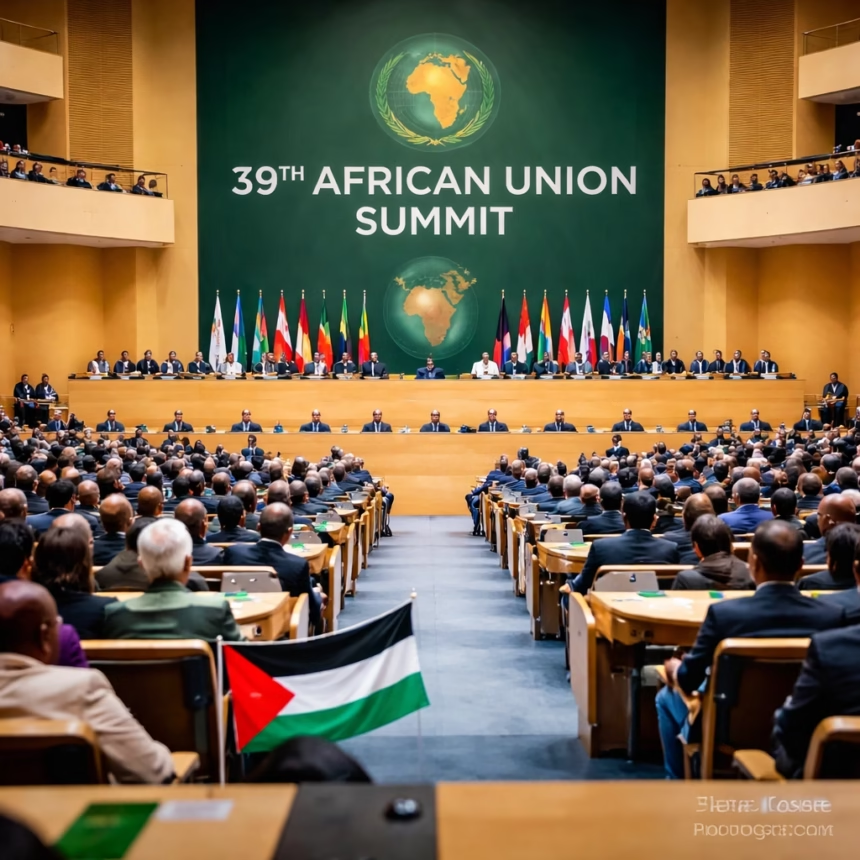
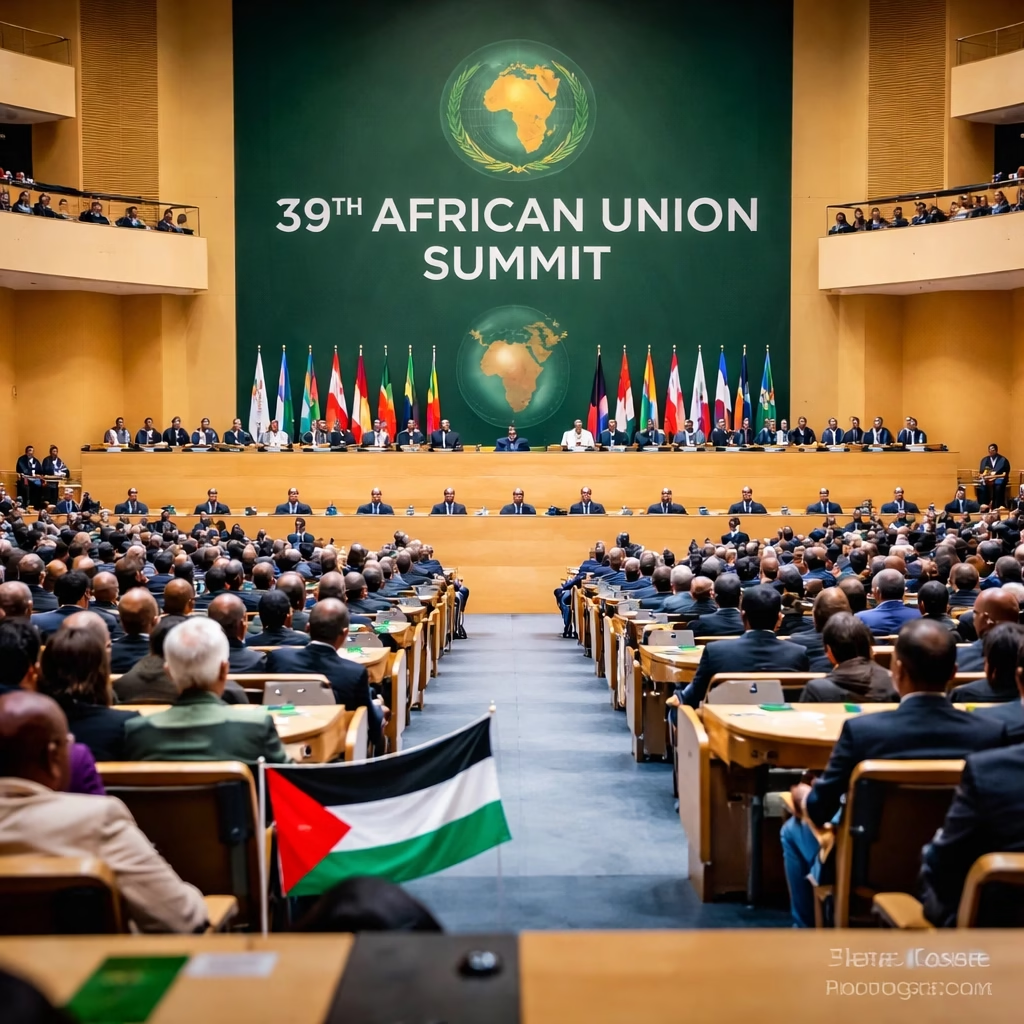
The 39th African Summit recently convened in Addis Ababa, Ethiopia, bringing together leaders and delegates from across the continent. Palestine's significant participation marks a crucial moment for diplomatic engagement and reaffirms long-standing solidarity. This high-profile gathering provides a vital platform for addressing pressing regional and international issues, with Palestine's presence adding a distinct dimension to the discussions.
Background: A Legacy of Solidarity and Self-Determination
Africa's relationship with Palestine is rooted in shared histories of struggle against colonialism and occupation. Since its inception, the Organization of African Unity (OAU), precursor to the African Union (AU), consistently championed Palestinian self-determination.
Historical Foundations of Afro-Palestinian Ties
Established in 1963, the OAU swiftly adopted a firm stance against colonialism and racial discrimination, extending support to liberation movements globally, including the Palestine Liberation Organization (PLO). This solidarity was not merely symbolic; it was enshrined in numerous resolutions condemning Israeli occupation and advocating for an independent Palestinian state. African leaders frequently drew parallels between the anti-apartheid struggle in South Africa and the Palestinian quest for statehood, fostering a powerful bond.
Throughout the 1970s and 1980s, many African nations severed diplomatic ties with Israel following the 1973 Yom Kippur War, in a collective show of support for Arab states and the Palestinian cause. While some ties were later restored, the fundamental principle of supporting Palestinian rights remained a cornerstone of African foreign policy.
More Read

Palestine’s Observer Status at the African Union
Palestine has held observer status at the African Union for many years, enabling its representatives to participate in AU summits and meetings without voting rights. This status has provided Palestine with a critical diplomatic avenue to present its case, garner support, and engage directly with African leaders. The consistent presence of Palestinian delegations underscores the enduring commitment of the AU to the Palestinian cause.
The AU’s charter and various organs have repeatedly called for an end to the Israeli occupation, the establishment of a sovereign Palestinian state with East Jerusalem as its capital, and the implementation of relevant United Nations resolutions. This institutional support forms the bedrock for current and future engagements.
Key Developments: Shifting Dynamics and Renewed Focus
The 39th African Summit convenes at a pivotal moment, characterized by evolving geopolitical landscapes and renewed attention to the Israeli-Palestinian conflict. Palestine's prominent participation in Addis Ababa reflects a broader trend of diplomatic resurgence and a reassertion of the AU's foundational principles.
More Read

High-Level Palestinian Representation
The Palestinian delegation at the summit is led by a high-ranking official, underscoring the strategic importance Palestine places on its relationship with the African continent. This representation offers an invaluable opportunity for direct engagement with heads of state and government, allowing for personal appeals and the strengthening of bilateral ties. Discussions are expected to cover the latest developments in the Palestinian territories, humanitarian concerns, and efforts to achieve a just and lasting peace.
The Controversy Surrounding Israel’s Observer Status
A significant recent development impacting the AU’s stance on Palestine is the contentious issue of Israel’s observer status. In 2021, African Union Commission Chairperson Moussa Faki Mahamat unilaterally granted Israel observer status, a decision that sparked widespread condemnation and division among member states. Many African nations viewed this move as a betrayal of the AU’s long-held principles and its solidarity with Palestine.
Following intense diplomatic pressure and protests, the AU effectively suspended Israel’s observer status in February 2022 during its 35th Ordinary Session. A committee of heads of state was tasked with studying the issue, effectively freezing the decision. This suspension was a significant victory for Palestinian diplomacy and a strong reaffirmation of the AU’s traditional position. Palestine’s enhanced role at the current summit can be seen, in part, as a consequence of this internal AU debate.
Strengthening African Consensus on Palestine
The summit provides an arena for African leaders to reiterate their collective position on the Palestinian question. Expectations are high that the summit will produce strong statements or resolutions reinforcing calls for an end to the occupation, protection of Palestinian rights, and support for a two-state solution based on international law and relevant UN resolutions. This unified stance is crucial for Palestine, lending significant weight to its advocacy on the international stage.
Impact: Far-Reaching Implications for Diplomacy and Geopolitics
Palestine's participation at the 39th African Summit and the broader discussions surrounding its cause carry significant implications for various actors, influencing diplomatic strategies, regional stability, and international solidarity.
For Palestine: Enhanced Diplomatic Leverage and Advocacy
For the Palestinian Authority, this summit represents a critical opportunity to bolster its diplomatic standing and amplify its voice on a continent that has historically been a strong ally. It allows Palestinian representatives to directly counter Israeli diplomatic efforts, articulate the plight of their people, and seek renewed commitments of support from African nations. Gaining further African solidarity translates into stronger backing in international forums like the United Nations, where African blocs often vote cohesively.

For the African Union: Upholding Principles and Internal Cohesion
The summit’s approach to the Palestinian question tests the AU’s commitment to its founding principles of anti-colonialism, self-determination, and human rights. By strongly reaffirming its support for Palestine, the AU reinforces its moral authority and demonstrates its resolve to uphold international law. The handling of the Israel observer status issue has also highlighted the importance of internal consensus within the AU, and the current summit offers a chance to solidify a unified position, strengthening the organization’s overall coherence and influence.
For Israel: Diplomatic Challenges and Reassessment of Africa Strategy
Palestine’s prominent role at the summit poses a diplomatic challenge for Israel, which has actively pursued normalization and strengthening ties with African countries. The renewed focus on Palestinian rights and the potential for strong pro-Palestinian resolutions could complicate Israel’s efforts to expand its influence on the continent. It may necessitate a reassessment of Israel’s Africa strategy, particularly concerning its engagement with the AU as an institution.
For the International Community: Shifting Dynamics of Solidarity
The unwavering support from a major continental bloc like the African Union sends a powerful message to the international community. It demonstrates that the Palestinian cause remains a priority for a significant portion of the world’s nations, countering narratives that seek to marginalize the issue. This collective voice can inspire other regions and international bodies to re-evaluate their positions and increase pressure for a just resolution to the conflict.
What Next: Anticipated Milestones and Future Directions
The conclusion of the 39th African Summit will not mark the end of discussions surrounding Palestine but rather set the stage for future engagements and potential policy shifts. Several key milestones and developments are anticipated in the aftermath of the summit.
Potential for New AU Resolutions and Declarations
It is highly probable that the summit will culminate in a formal declaration or a series of resolutions concerning the Palestinian territories. These documents are expected to reiterate calls for an end to occupation, condemnation of settlement expansion, and support for Palestinian statehood. Such resolutions would serve as a mandate for the AU Commission and member states to pursue diplomatic actions consistent with these principles in various international forums.
Continued Debate on Israel’s Observer Status
The committee established to review Israel’s observer status is expected to present its findings and recommendations in due course, possibly at a subsequent AU summit. The discussions and consensus forged at the 39th Summit will undoubtedly influence the committee’s work and the final decision. A definitive resolution on this matter will have long-term implications for the AU’s relationship with both Palestine and Israel.
Enhanced Bilateral and Multilateral Cooperation
Beyond the institutional support from the AU, the summit is likely to foster enhanced bilateral cooperation between Palestine and individual African nations. This could manifest in various forms, including increased diplomatic exchanges, economic partnerships, and cultural initiatives. Such collaborations would further solidify Palestine’s presence and influence across the continent.
African Role in International Peace Efforts
With a renewed and unified stance on the Palestinian question, the African Union may seek to play a more active and coordinated role in international peace efforts. This could involve advocating for specific initiatives at the United Nations, participating in mediation efforts, or contributing to humanitarian aid programs in the Palestinian territories. Africa’s collective diplomatic weight could be a significant factor in future peace processes.
Long-Term Implications for Africa-Middle East Relations
The ongoing engagement with Palestine and the AU’s principled stand will continue to shape the broader relationship between Africa and the Middle East. It underscores the interconnectedness of these regions and the shared aspirations for peace, justice, and self-determination. The summit’s outcomes will contribute to a nuanced and evolving geopolitical landscape that transcends immediate regional boundaries.