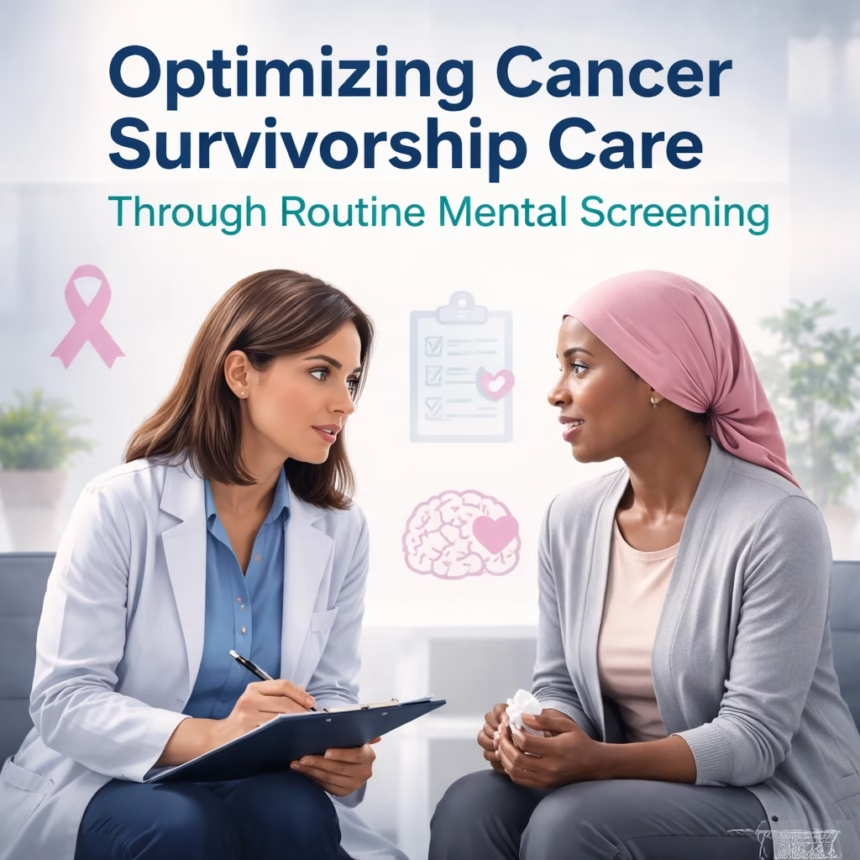
A significant shift is underway in cancer care, moving beyond mere disease eradication to encompass the holistic well-being of survivors. Across major oncology centers in the United States, routine mental health screening is being integrated into follow-up protocols, marking a pivotal moment in recognizing the profound psychological impact of a cancer diagnosis and its treatment.
Background: The Silent Epidemic Behind the Cure
For decades, the primary focus of cancer treatment has rightly been on extending life and achieving remission. However, a growing body of evidence has highlighted a persistent, often unaddressed challenge: the significant mental health burden carried by cancer survivors. This burden can manifest as anxiety, depression, post-traumatic stress disorder (PTSD), and 'scanxiety'—intense fear surrounding follow-up scans.
Studies indicate that up to one-third of cancer survivors experience clinically significant levels of depression or anxiety, a rate substantially higher than the general population. This psychological distress can profoundly impact quality of life, adherence to follow-up care, and even physical recovery. Despite these alarming statistics, mental health concerns have historically been relegated to the periphery of oncology care, often seen as secondary to physical health.
The Unrecognized Burden
The journey through cancer is fraught with emotional challenges, from the initial shock of diagnosis to the rigors of treatment and the lingering fear of recurrence. Patients often face body image issues, fertility concerns, financial strain, and existential crises. Yet, many feel pressured to present a strong front, fearing that expressing vulnerability might be perceived as a lack of gratitude for their survival.
This stoicism, coupled with a healthcare system historically segmented into physical and mental health silos, has meant that many survivors suffer in silence. Primary care physicians, while often the first point of contact post-treatment, may lack specialized training in oncology-specific mental health issues, leading to missed diagnoses and delayed interventions.
More Read

A Legacy of Silos
The traditional model of cancer care has primarily focused on the medical and surgical aspects, with mental health support often an afterthought, if available at all. Referrals to external mental health professionals were common but often came late, if at all, and faced barriers such as insurance coverage, stigma, and a lack of integration with ongoing oncology care. This fragmented approach meant that mental health issues, when identified, were often treated in isolation from the patient's broader cancer journey, failing to account for the unique stressors and complexities inherent to survivorship.
Advocacy groups, such as the Cancer Support Community and the National Coalition for Cancer Survivorship, have long championed a more integrated approach, pushing for guidelines that acknowledge mental health as a core component of comprehensive cancer care. Their persistent efforts have laid the groundwork for the current paradigm shift.
Key Developments: Integrating Mind and Body Care
The past few years have seen a concerted effort to bridge the gap between physical and mental health in oncology. Major professional organizations, recognizing the imperative for holistic care, have begun issuing updated guidelines and recommendations that explicitly call for routine mental health screening.
More Read

In January 2024, the National Comprehensive Cancer Network (NCCN) released revised guidelines for Distress Management, strongly recommending universal screening for psychological distress at key points in the cancer trajectory, including diagnosis, during treatment, and throughout survivorship. Similarly, the American Society of Clinical Oncology (ASCO) has reinforced its position on the importance of psychosocial care, advocating for integrated models within oncology practices.
Integrated Care Models
Leading institutions are piloting and implementing innovative integrated care models. For instance, the Dana-Farber Cancer Institute in Boston, Massachusetts, launched its "Survivorship Wellness Program" in Spring 2023, which includes mandatory mental health screening using validated tools like the Distress Thermometer and the PHQ-9 (Patient Health Questionnaire-9) during routine follow-up appointments. Patients identified with elevated distress levels are immediately triaged to embedded oncology social workers, psychologists, or psychiatrists for further assessment and intervention.
Similar programs are taking root at institutions like MD Anderson Cancer Center in Houston, Texas, and Memorial Sloan Kettering Cancer Center in New York City. These models often involve dedicated psychosocial oncology teams working directly within the cancer center, fostering seamless communication between oncologists and mental health specialists. This co-location and direct collaboration significantly reduce barriers to access and improve continuity of care.
Digital Tools and Telehealth
Technological advancements are playing a crucial role in facilitating this integration. Digital screening platforms allow patients to complete questionnaires discreetly and efficiently, often before their scheduled appointments. These tools can flag potential issues, allowing healthcare providers to review results in real-time and initiate conversations during the visit.
Telehealth has also emerged as a powerful enabler, particularly in post-pandemic healthcare. Virtual mental health consultations make specialized support accessible to survivors in rural areas or those with mobility limitations, ensuring that geographical distance does not impede access to vital care. Many centers now offer virtual support groups and therapy sessions, expanding reach and convenience.
More Read

Impact: A Healthier, More Resilient Survivorship
The integration of routine mental health screening is having a profound and multifaceted impact on cancer survivors, their families, and the broader healthcare system. By proactively identifying and addressing psychological distress, these programs are transforming the survivorship experience.
Enhancing Patient Well-being
For survivors, the most immediate benefit is improved quality of life. Early detection of mental health challenges allows for timely interventions, preventing escalation into chronic conditions. Patients report feeling more "seen" and validated, knowing that their emotional struggles are acknowledged as a legitimate part of their cancer journey. This validation can reduce feelings of isolation and stigma, encouraging more open communication with their care teams.
Survivors receiving integrated mental health support often demonstrate better adherence to medical follow-up appointments, healthier lifestyle choices, and a more positive outlook. This proactive approach helps them develop coping strategies, manage anxieties about recurrence, and reintegrate into their lives post-treatment with greater resilience.
Benefits for the Healthcare System
From a systemic perspective, routine screening can lead to more efficient resource allocation. By identifying distress early, healthcare providers can offer preventative interventions, potentially reducing the need for more intensive and costly treatments down the line. It can also decrease the likelihood of emergency room visits for mental health crises, as patients are connected to appropriate support services earlier.
Moreover, a holistic approach to survivorship care contributes to a more satisfied patient population and can enhance the reputation of cancer centers committed to comprehensive well-being. It aligns with the growing emphasis on patient-centered care, where the individual's overall health, not just disease status, is paramount.
Families and caregivers also benefit significantly. Often the "hidden patients" in the cancer journey, caregivers frequently experience their own distress, anxiety, and burnout. By supporting the survivor's mental health, these programs indirectly alleviate some of the burden on their support networks, fostering healthier family dynamics.
What Next: Expanding Horizons and Refining Care
The current initiatives represent a crucial first step, but the journey towards fully optimized cancer survivorship care through routine mental health screening is ongoing. Several key milestones and areas of development are anticipated in the coming years.
Expanding Reach
The immediate goal is to expand these integrated care models beyond major academic cancer centers to community oncology practices, where the majority of cancer patients receive their care. This will require significant investment in training for community oncologists and their staff, as well as the development of scalable, accessible mental health resources. Partnerships between larger institutions and smaller clinics will be vital to disseminate best practices and expertise.
By 2025, ASCO aims for 75% of accredited cancer centers to have established protocols for routine psychosocial distress screening and referral. This ambitious target underscores the commitment to widespread implementation.
The Research Frontier
Ongoing research will be critical to refine screening tools, evaluate the long-term effectiveness of various interventions, and identify specific risk factors for mental health challenges among different cancer populations. Studies are exploring the use of artificial intelligence to predict which survivors are most at risk for distress, allowing for even more personalized and preemptive support.
Cost-effectiveness studies will also be essential to demonstrate the economic value of integrated mental health care, bolstering arguments for increased funding and insurance coverage. Understanding the long-term impact on overall health outcomes, including recurrence rates and survival, remains a key research priority.
Policy and Training Advancements
Further policy changes are expected to mandate or incentivize the integration of mental health services into oncology care, potentially including changes to reimbursement models that currently favor fee-for-service physical health treatments. Advocacy efforts will continue to push for universal insurance coverage of psychosocial oncology services.
Education and training for the oncology workforce will be continuously enhanced, equipping nurses, physicians, and support staff with the skills to conduct initial screenings, engage in empathetic conversations, and make appropriate referrals. This will foster a culture where mental health is an inherent part of every patient interaction, ensuring that the unseen scars of cancer are finally given the attention they deserve.