Gaza Truce Shattered: Airstrikes Kill Dozens as Conflict Reignites
Gaza Truce Shattered: Airstrikes Kill Dozens as Conflict Reignites
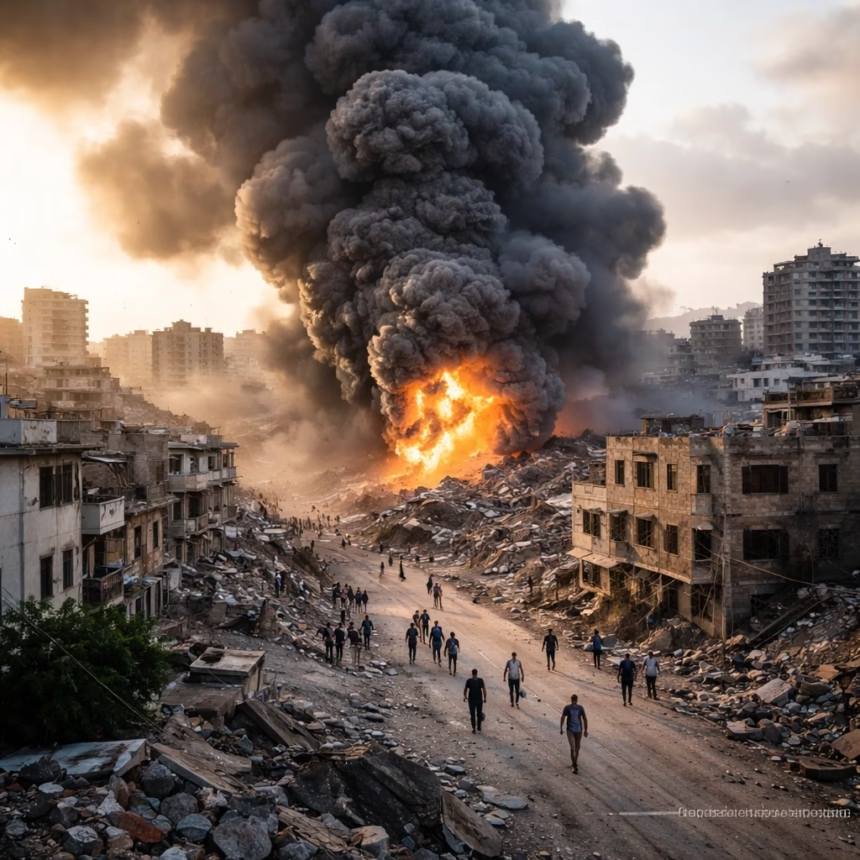
A fragile humanitarian truce in the Gaza Strip collapsed on Friday morning, December 1st, plunging the besieged Palestinian enclave back into intense conflict. Israeli airstrikes resumed with significant force, reportedly killing at least 12 Palestinians within hours, according to health officials in Gaza. Israel stated its actions followed a violation of the ceasefire by Hamas, marking a grim end to a seven-day pause in hostilities.
Background: The Road to Renewed Conflict
The current escalation began dramatically on October 7, 2023, when Hamas-led militants launched unprecedented cross-border attacks into southern Israel. The assault resulted in the deaths of approximately 1,200 people, predominantly civilians, and the abduction of around 240 individuals, including women, children, and elderly citizens, who were taken hostage into Gaza.
In response, Israel declared "Operation Swords of Iron," initiating a massive aerial bombardment campaign followed by a ground invasion of northern Gaza. The declared objectives were to dismantle Hamas's military and governance capabilities and secure the release of all hostages. This military campaign led to widespread destruction and a rapidly deteriorating humanitarian crisis within the densely populated strip.
More Read

Amidst growing international pressure and the dire humanitarian situation, a temporary humanitarian pause was brokered in late November. Mediated primarily by Qatar and Egypt, with significant involvement from the United States, the truce aimed to facilitate the exchange of Israeli hostages for Palestinian prisoners held in Israeli jails, alongside increased humanitarian aid deliveries into Gaza.
The Seven-Day Pause
Initially set for four days, the truce began on November 24 and was subsequently extended twice, ultimately lasting a total of seven days. During this period, over 100 Israeli and foreign hostages were released by Hamas, in exchange for the release of 240 Palestinian women and minors from Israeli detention. The pause also allowed for a significant, though still insufficient, influx of food, water, medicine, and fuel into Gaza, offering a brief respite to its beleaguered population.
However, the fragile agreement faced continuous challenges. Both sides accused each other of minor violations. As the final extension neared its end, negotiations for a further extension stalled, reportedly over disagreements on the list of hostages to be released and the terms of their exchange.
More Read

Key Developments: Truce Shattered, Hostilities Reignite
The humanitarian pause officially expired at 7: 00 AM local time on Friday, December 1st. Within minutes, reports emerged of renewed Israeli military activity and rocket fire from Gaza, signaling the immediate collapse of the ceasefire.
Accusations and Military Operations
Israel’s military, the IDF, stated that Hamas had violated the truce before its official expiration. The IDF claimed Hamas had fired rockets into Israeli territory and failed to present a new list of female and child hostages scheduled for release. Following these alleged violations, the IDF announced a resumption of its combat operations across the Gaza Strip, emphasizing its commitment to eliminating Hamas and ensuring the safe return of all hostages.
Within hours of the truce's end, Israeli fighter jets and artillery began striking targets across Gaza. The IDF reported hitting over 200 "terror targets" throughout the day, including what it described as Hamas command centers, militant cells, rocket launchers, and tunnel shafts. Strikes were reported in various areas, including the northern parts of Gaza that had seen heavy fighting prior to the truce, as well as central and southern regions like Khan Younis and Rafah, which had previously been designated as safer zones for displaced civilians.
Rising Casualties and Palestinian Response
Palestinian health officials in Gaza reported a rapid increase in casualties. The Ministry of Health in Gaza stated that at least 12 people were killed in the initial hours of renewed Israeli operations, a number that quickly escalated to dozens throughout Friday, including women and children. Hospitals, already struggling with overwhelming numbers and depleted resources, began receiving a new influx of injured and deceased.
Hamas, for its part, acknowledged firing rockets towards Israeli towns and cities following the resumption of Israeli airstrikes. The group stated that its actions were in response to Israeli aggression and its refusal to extend the truce under acceptable terms. Hamas leaders reiterated their demands for a comprehensive prisoner exchange and an end to the siege on Gaza.
International bodies and world leaders expressed deep regret and concern over the end of the pause. The United Nations Secretary-General António Guterres called for a lasting humanitarian ceasefire, while several countries urged both sides to de-escalate and return to negotiations.

Impact: A Humanitarian Crisis Deepens
The resumption of hostilities has immediately exacerbated an already catastrophic humanitarian situation in Gaza. The brief respite offered by the truce allowed for some aid, but it was insufficient to address the profound needs of the population, and the renewed fighting has halted most aid distribution efforts.
Civilian Toll and Displacement
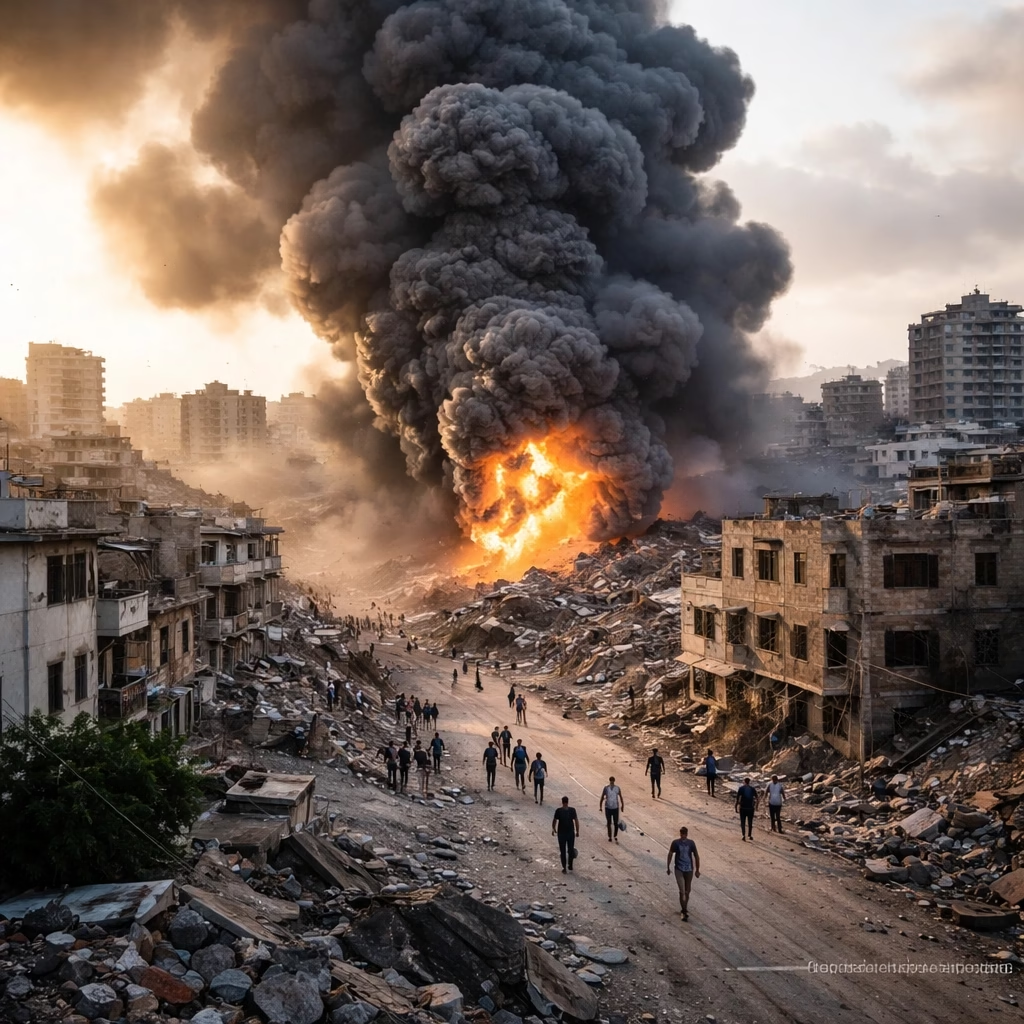
The immediate civilian casualties underscore the severe risks faced by Gaza’s 2.3 million residents. With over 1.8 million people already internally displaced, many had sought refuge in the southern areas of Khan Younis and Rafah, which are now also under attack. The renewed fighting is forcing further displacement, pushing families into even more overcrowded and unsanitary conditions, with limited access to shelter, food, and water.
Hospitals, particularly in the south, are once again overwhelmed. They face critical shortages of medical supplies, fuel for generators, and personnel, making it nearly impossible to cope with the surge of trauma cases. The psychological toll on the population, especially children who have endured weeks of bombardment, is immense and growing.
Infrastructure and Aid Challenges
Further destruction of residential buildings, roads, and vital infrastructure is anticipated, compounding the challenges of recovery and reconstruction. Water and sanitation systems, already severely damaged, face renewed threats, raising fears of disease outbreaks.
Humanitarian aid organizations, including UNRWA and the World Health Organization (WHO), have voiced alarm. They report that aid trucks are unable to enter combat zones, and distribution within Gaza has become perilously difficult. The lack of fuel remains a critical issue, crippling the operation of hospitals, water pumps, and communication networks.
What Next: Uncertainties and Diplomatic Efforts
The path forward for Gaza remains fraught with uncertainty, with both military and diplomatic fronts facing significant challenges.
Israeli Military Objectives
The Israeli military has signaled its intent to intensify operations, particularly in southern Gaza. Analysts suggest that Khan Younis, a major city in the south, could become the next significant target for ground operations, as Israel seeks to dismantle Hamas’s command structure and extensive tunnel networks believed to be concentrated there. The IDF has reiterated that its campaign will continue until its objectives of eliminating Hamas and securing the release of all hostages are met.
Hamas’s Stance and Resistance
Hamas leaders have stated their commitment to continued resistance and have called for increased international pressure on Israel. They maintain that any future truce or hostage release must be part of a broader agreement that includes a permanent ceasefire and addresses the humanitarian crisis in Gaza. The group’s ability to continue rocket fire and engage Israeli forces indicates its ongoing, though diminished, operational capacity.
Diplomatic Endeavors
Behind-the-scenes diplomatic efforts are expected to continue, albeit with increased difficulty. Qatar, Egypt, and the United States are likely to persist in their attempts to broker another humanitarian pause, recognizing the dire consequences of sustained conflict. However, the renewed fighting and hardened positions on both sides make an immediate breakthrough unlikely. International calls for a more lasting ceasefire, rather than just temporary pauses, are growing louder.
Humanitarian Response and Long-Term Outlook
Humanitarian agencies will continue to advocate for unimpeded access for aid and the establishment of safe zones, despite the challenges. The focus will be on prepositioning supplies and preparing for mass casualty events.
In the long term, the renewed conflict further complicates any prospects for a sustainable peace or a two-state solution. Discussions about the post-conflict governance of Gaza, the reconstruction of the strip, and the broader Israeli-Palestinian conflict remain highly complex and deeply uncertain as the immediate humanitarian catastrophe unfolds.