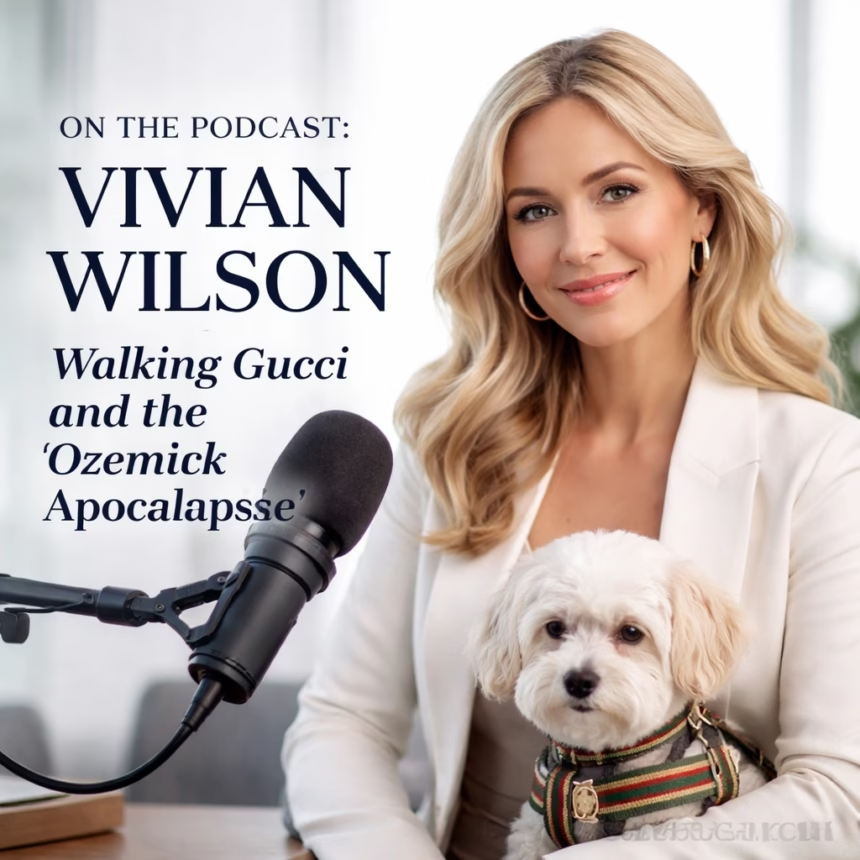
Fashion industry veteran Vivian Wilson recently offered a stark analysis of the luxury market's future, coining the term "Ozempic Apocalypse" during a compelling discussion on a prominent industry podcast. Wilson, known for her extensive experience including "Walking Gucci," delved into how the widespread adoption of GLP-1 weight-loss medications is poised to reshape consumer demand, design aesthetics, and the very economics of high fashion. Her insights highlight a brewing storm that could fundamentally alter one of the world's most exclusive sectors.
Background: A Shifting Silhouette and Industry Legacy
Vivian Wilson's perspective is forged from decades within the upper echelons of the luxury fashion world. Having served in various capacities from creative consultancy to brand strategy, and notably referencing her tenure "Walking Gucci"—a colloquialism for her deep involvement with the iconic Italian house—she possesses an insider's view of how trends are born, nurtured, and ultimately disrupt. Her career has spanned eras from the supermodel phenomenon of the 1990s to the digital transformation of the 21st century, giving her a unique lens through which to view the current upheaval.
The Rise of GLP-1 Medications
The "Ozempic Apocalypse" moniker directly references the rapid proliferation of GLP-1 receptor agonists, such as Ozempic (semaglutide) and Mounjaro (tirzepatide). Initially developed for Type 2 diabetes management, these injectable medications have gained immense popularity for their significant weight-loss benefits. Approved by regulatory bodies like the FDA, their efficacy in reducing appetite and promoting satiety has led to a surge in prescriptions, particularly in affluent Western markets. This pharmaceutical innovation is not merely a health trend; it is rapidly becoming a significant sociological and economic force, affecting everything from food consumption patterns to, as Wilson argues, the very shape of the luxury consumer.
Historically, the fashion industry has often dictated or at least heavily influenced body ideals, from the waif look of the 90s to the more recent embrace of diverse body types, including the burgeoning plus-size market. The advent of GLP-1 drugs introduces an unprecedented, medically-driven shift in average body mass and silhouette, challenging fashion's traditional response mechanisms and its long-standing relationship with consumer body image.
Key Developments: Redefining Luxury Aesthetics and Sizing
The "Ozempic Apocalypse," as Wilson articulates, is already manifesting in subtle yet significant shifts within the luxury sector. The core issue revolves around the changing physical dimensions of the luxury consumer base. As more individuals achieve significant weight loss through GLP-1s, the traditional sizing matrices, design philosophies, and even fabric choices within high fashion are being called into question.

Design and Sizing Revisions
Luxury brands, accustomed to catering to a specific demographic that historically included a range of body types, are now grappling with a potential contraction in the demand for larger sizes. Wilson suggests that designers, who often work months or even years in advance, are beginning to consider these new realities. Collections might see a greater emphasis on highly tailored garments, precise silhouettes, and fabrics that drape differently on leaner frames. The trend towards oversized, voluminous clothing, which has dominated runways for several seasons, could wane as consumers seek pieces that celebrate their newly slender figures. This shift isn't merely about smaller sizes; it's about an entirely different approach to proportion and fit. Brands like Balenciaga or Valentino, known for their distinct silhouettes, might need to re-evaluate their signature cuts to resonate with an evolving physique.
Furthermore, the operational challenge of adjusting inventory and production lines is substantial. Luxury houses pride themselves on craftsmanship and exclusivity, making rapid shifts in product development complex and costly. The entire supply chain, from pattern makers to fabric mills, would need to adapt to new demands, potentially impacting material consumption and production quantities for specific size ranges.

Impact: A Ripple Effect Across the Industry
The implications of the "Ozempic Apocalypse" extend far beyond the design studio, creating a ripple effect that touches every facet of the luxury fashion ecosystem. From brand financial performance to marketing strategies and the careers of models, no element remains untouched.
Economic Ripple Effects
For luxury brands like Hermès, Chanel, and Louis Vuitton, a shift in consumer body types directly impacts sales and profitability. If the average size of their clientele shrinks, demand for larger sizes may decrease, potentially leading to excess inventory or a need to reallocate production resources. This could influence pricing strategies, promotional activities, and ultimately, quarterly earnings. Wilson posits that brands might initially struggle to predict the exact magnitude of this shift, leading to inventory imbalances. The market for "aspirational" luxury, where individuals might save for a single high-end item, could also see changes if body image motivations are altered by widespread weight loss.
Marketing and Modeling
The visual representation of luxury fashion is intrinsically linked to body image. Wilson highlights that advertising campaigns and runway shows will likely reflect these changes. The conversation around body diversity, which has gained significant traction in recent years, could face new complexities. While inclusivity remains a crucial ethical imperative, the prevalence of leaner body types among consumers might subtly influence casting decisions for models and the overall aesthetic portrayed in high-fashion media. Brands will need to navigate this sensitive territory carefully, balancing commercial realities with their commitments to diversity and positive body image messaging. The shift could also spark new debates on what constitutes health and beauty within the fashion narrative.
What Next: Navigating the New Consumer Landscape
The "Ozempic Apocalypse" is not an immediate collapse but a gradual, transformative process that will require strategic foresight and adaptability from luxury brands. Wilson suggests that the industry's response will define its resilience and future trajectory.
Strategic Adaptations and Innovation
In the immediate future, luxury houses will likely initiate extensive market research to quantify the impact of GLP-1 drugs on their specific customer base. This data will inform crucial decisions regarding sizing adjustments, collection planning, and marketing spend. Brands may explore new fabric technologies that offer enhanced drape and fit for diverse body types, or invest in advanced tailoring techniques that allow for greater customization. Some might pivot towards bespoke services or made-to-measure options to cater to individual body transformations more effectively.
Long-term, the industry could see a re-evaluation of its fundamental design philosophies. Wilson predicts that designers might move away from generic sizing towards more nuanced approaches that accommodate a wider spectrum of body shapes, irrespective of weight. This could involve modular designs, adjustable garments, or an increased focus on accessories that transcend body size. The conversation around sustainability might also intersect here, as brands aim to produce more adaptable, long-lasting pieces that remain relevant even as consumer bodies change.
More Read

Ethical Considerations and Industry Dialogue
Beyond the commercial implications, the "Ozempic Apocalypse" will undoubtedly spark broader discussions within the fashion industry about its role in promoting health, body image, and self-acceptance. Wilson emphasizes the importance of an ethical approach, ensuring that any adaptations do not inadvertently stigmatize or exclude certain body types. The industry will need to engage in thoughtful dialogue about how to celebrate diverse forms of beauty while responding to a legitimate shift in consumer physiology. This could involve collaborations with health experts, new guidelines for advertising, and a renewed commitment to inclusive storytelling that reflects the complex realities of modern health and beauty standards. The future of luxury fashion, as Vivian Wilson keenly observes, will be shaped not just by creative vision, but by its ability to intelligently and empathetically respond to unprecedented societal shifts.