TEL Tangle: Signalling Glitch Triggers Hours-Long Commuter Chaos
TEL Tangle: Signalling Glitch Triggers Hours-Long Commuter Chaos
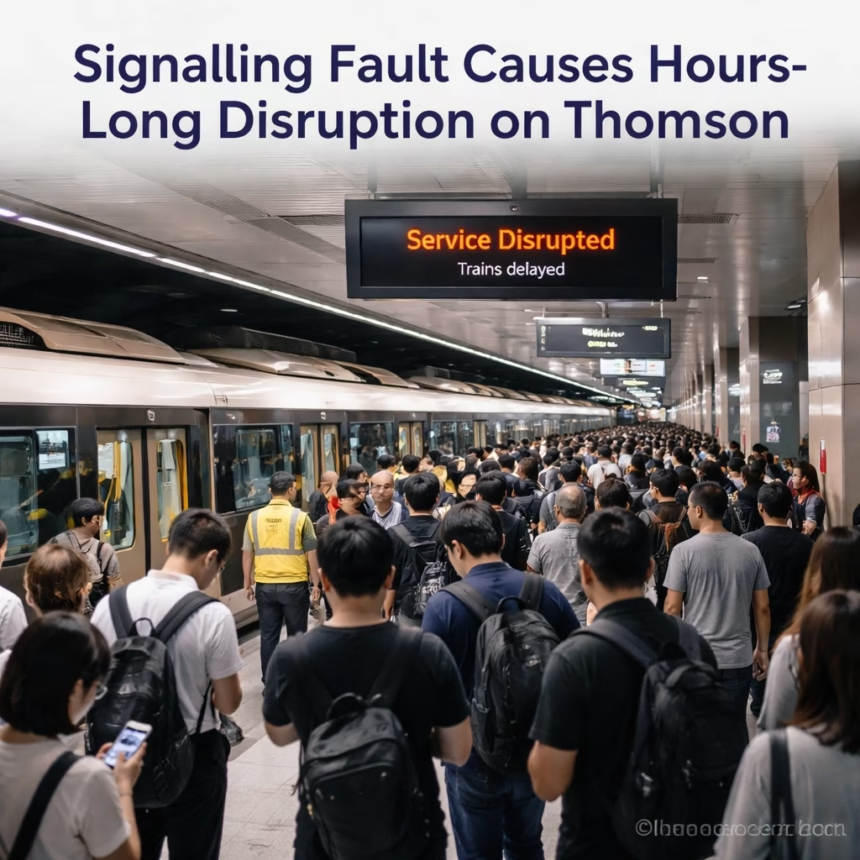
A significant signalling fault brought the Thomson-East Coast Line (TEL) to a near standstill during Wednesday morning's peak hours, causing extensive delays and disrupting thousands of commuters' journeys across Singapore. The disruption, which began shortly after 6:00 AM on Wednesday, 15th May 2024, affected multiple stations along the nascent line and persisted for over five hours before services gradually resumed.
Background: Unravelling the Morning Mayhem
The incident commenced with reports of intermittent communication loss within the TEL’s advanced signalling system, primarily affecting the stretch between Woodlands North and Gardens by the Bay stations. Commuters first noticed unusual delays and extended waiting times on platforms as early as 6:15 AM, coinciding with the start of the morning rush. SMRT, the line operator, swiftly issued advisories, initially warning of up to 30-minute delays.
Timeline of Disruption
- 6:05 AM: Signalling anomaly detected, affecting train speeds.
- 6:15 AM: SMRT issues initial advisory, citing “intermittent signalling fault” and advising expected delays.
- 6:45 AM: Delays escalate, with wait times exceeding 45 minutes. Free regular bus services activated.
- 7:15 AM: Service between Woodlands North and Caldecott stations progressively slowed.
- 7:45 AM: Free bus bridging services fully activated along the entire operational TEL.
- 8:30 AM: SMRT advises commuters to avoid the TEL due to prolonged fault.
- 9:30 AM: Engineers identify a specific segment requiring diagnostics.
- 10:30 AM: Partial recovery begins, with trains moving at reduced speeds.
- 11:30 AM: Full service gradually resumes across the TEL, with residual delays expected.
The fault led to trains moving at crawling speeds or being held at stations, frustrating thousands. SMRT personnel were deployed to assist commuters and direct them to alternative transport, including rapidly mobilised free bus bridging services.

In response, SMRT implemented speed restrictions and progressively activated free bus bridging. Announcements urged commuters to seek alternative routes. The widespread bus bridging provided a crucial lifeline, though it led to longer travel times and inconvenience.
Key Developments: A Line Under Scrutiny
The Thomson-East Coast Line, a pivotal addition to Singapore’s public transport network, has been progressively opening in stages since its debut in January 2020. This incident casts a spotlight on the reliability of its complex, state-of-the-art signalling system, designed for high-frequency, driverless operations.
The Thomson-East Coast Line: A Brief Overview
The TEL, Singapore’s sixth MRT line, connects the northern, central, and eastern parts of the island. Stages 1 to 3 (25 stations, Woodlands North to Gardens by the Bay) are operational. Stage 4 opens in H1 2024, with Stage 5 reaching Changi Airport in future. Its new infrastructure aims for seamless travel.
More Read

The Signalling System: Advanced Yet Vulnerable
The TEL operates on Alstom’s Urbalis 400 Communications-Based Train Control (CBTC) system, a sophisticated signalling technology designed to maximise line capacity and minimise train headways. This system allows for real-time, two-way communication between trains and the control centre, enabling precise train positioning and automatic operation. While robust, such complex systems can be susceptible to intermittent glitches. Regular maintenance is standard, making this fault a point of intense investigation.
Impact: Thousands Stranded, Commute Disrupted
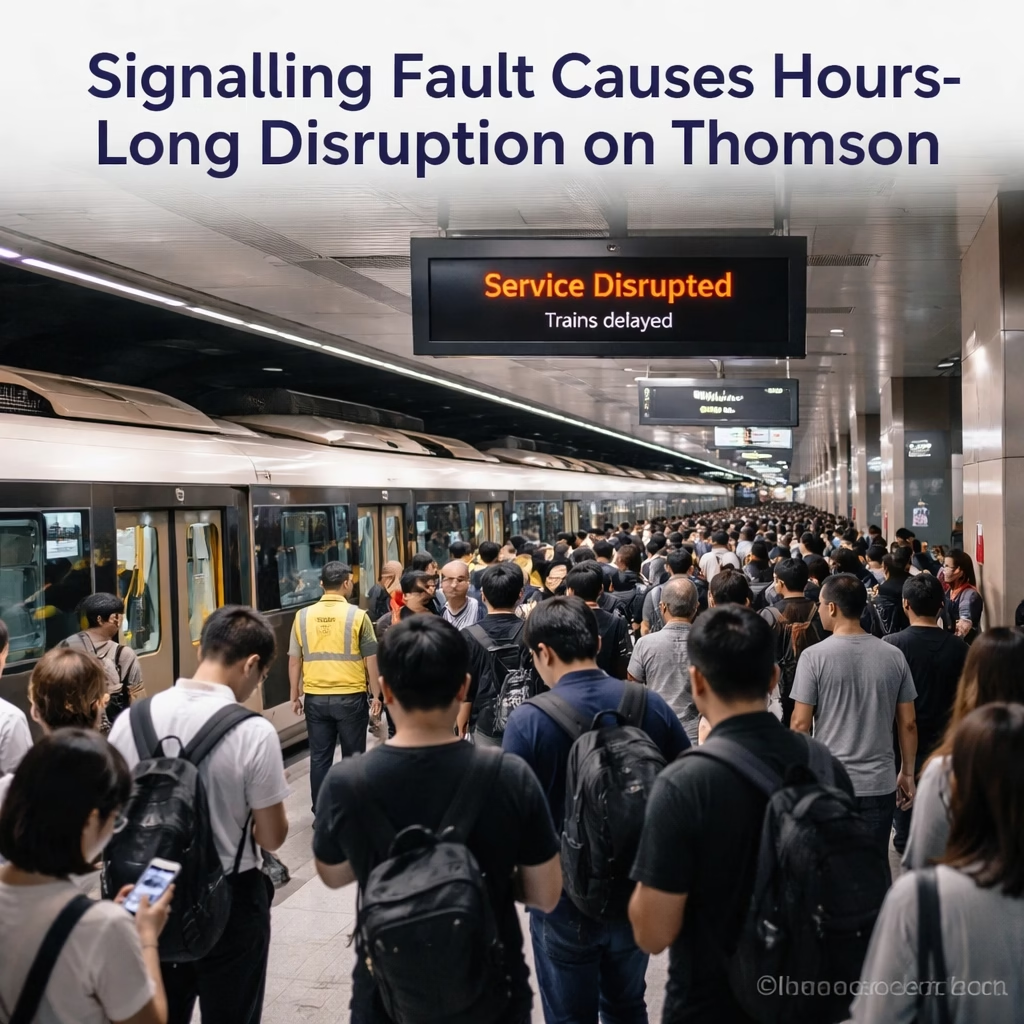
The timing of the disruption, squarely during the morning peak period, magnified its impact significantly. Thousands of commuters, many heading to work or school, found themselves caught in the unexpected snarl, leading to widespread frustration and delays.
Commuter Accounts
Commuters took to social media to express dismay, sharing photos of crowded platforms and long queues for bus bridging. Ms. Sarah Tan, 32, a marketing executive, recounted being two hours late for work. “The train was moving so slowly, then it just stopped,” she stated, highlighting the ripple effect on personal schedules.
Economic Ripple Effects
Beyond individual inconvenience, the disruption had broader economic implications. Businesses faced productivity losses. Increased strain on other public transport networks led to heavier loads and extended travel times island-wide. Such disruptions subtly erode public confidence in public transport infrastructure, particularly for a new line.
What Next: Investigation and Resilience Building
Both the Land Transport Authority (LTA) and SMRT have apologised to affected commuters and pledged a thorough investigation into the root cause of the signalling fault. The incident underscores the critical importance of system resilience and rapid recovery protocols for Singapore’s extensive public transport network.
More Read

Joint Investigation Underway
LTA and SMRT engineers have commenced an in-depth investigation to pinpoint the exact nature of the fault. This involves comprehensive diagnostics of hardware and software, analysis of event logs, and review of maintenance records. The objective is to identify systemic vulnerabilities. Preliminary findings are expected within weeks.
Enhancing System Resilience
SMRT will conduct an immediate review of its incident response protocols and system recovery procedures for the TEL. This includes evaluating fault detection speed, communication effectiveness, and alternative transport activation. Measures to enhance system resilience, such as redundant backups and enhanced monitoring, will be explored. The focus remains on ensuring TEL operates with high safety and reliability.