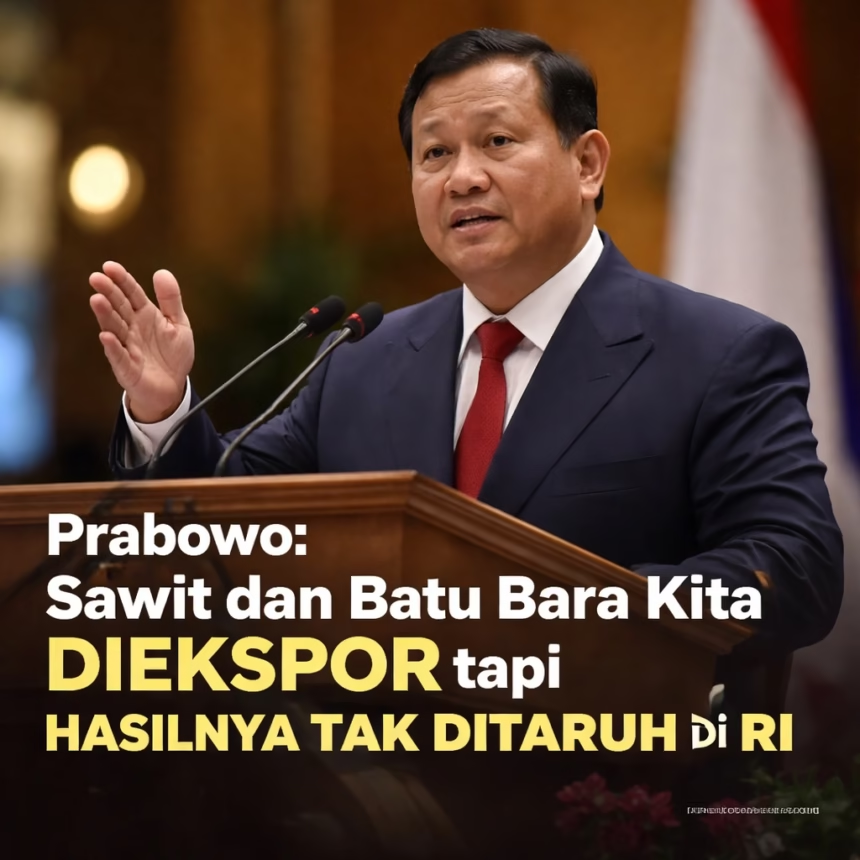
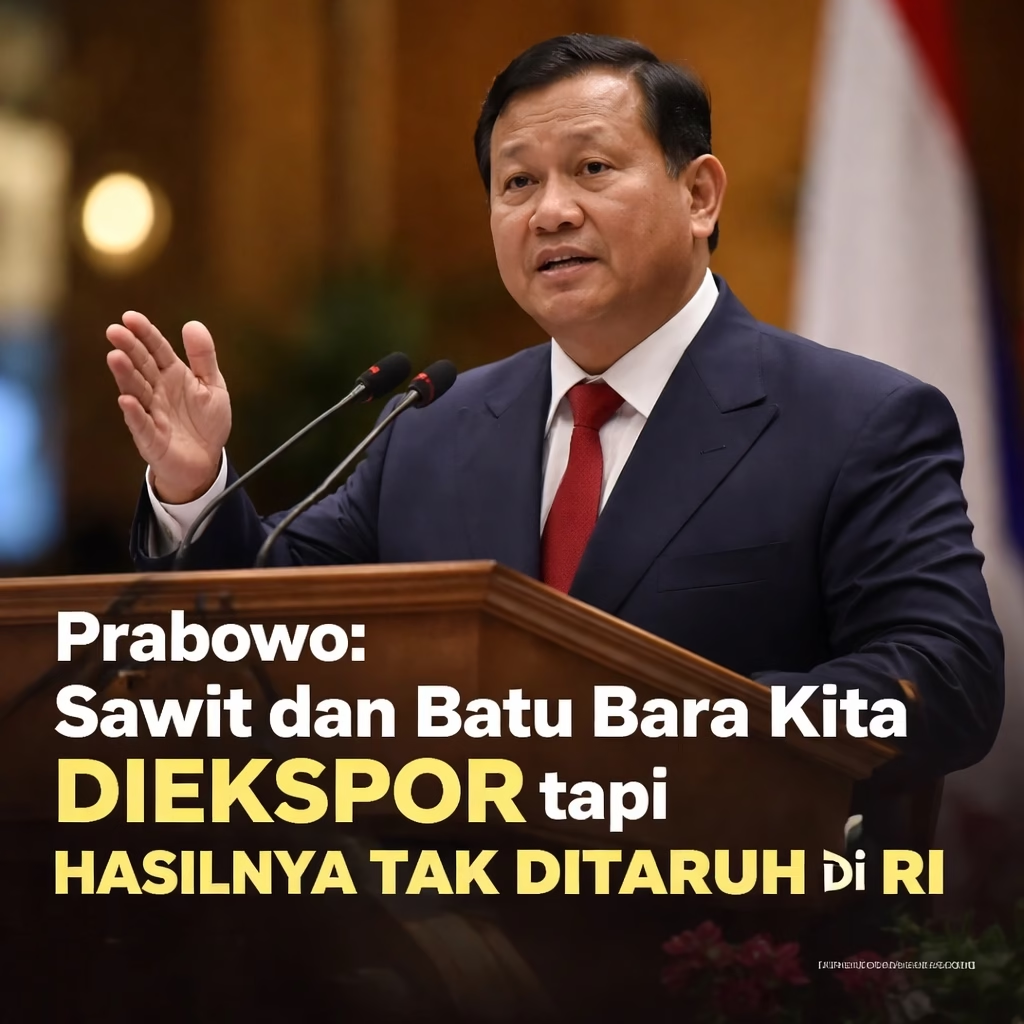
In a recent candid address, Indonesian Defense Minister and presidential candidate Prabowo Subianto highlighted a critical economic concern: the significant portion of revenues from the nation's vast palm oil and coal exports that, according to him, do not remain within Indonesia. This statement, made during a public forum in Jakarta, reignited long-standing debates about economic sovereignty and the maximization of national wealth from natural resources.
Background: Indonesia’s Resource Dominance and Economic Debates
Indonesia stands as a global powerhouse in commodity exports, particularly palm oil and coal. The archipelago nation is the world's largest producer and exporter of palm oil, a versatile commodity crucial for food, cosmetics, and biofuels. Similarly, Indonesia is a top global exporter of thermal coal, fueling power plants across Asia and beyond. These sectors are cornerstones of the national economy, contributing substantially to GDP, employment, and foreign exchange earnings.
Indonesia’s Commodity Dominance
The economic narrative of Indonesia has long been intertwined with its abundant natural resources. For decades, the extraction and export of raw materials have been primary drivers of economic growth. Palm oil plantations span millions of hectares across Sumatra and Kalimantan, while vast coal reserves underpin the energy security of numerous trading partners. This resource wealth, while a blessing, has also presented challenges in ensuring equitable distribution of benefits and sustainable development.
Historical Resource Management Debates
Discussions surrounding resource nationalism versus open market policies have been a recurring theme in Indonesian politics. Past administrations have grappled with how to balance attracting foreign investment with safeguarding national interests. Policies like the Domestic Market Obligation (DMO) for coal, aimed at ensuring sufficient supply for domestic power plants, and efforts to encourage downstream processing of minerals like nickel, reflect an ongoing governmental push to derive greater value from raw materials within the country rather than merely exporting them in their unprocessed form. Prabowo Subianto, throughout his political career, has consistently advocated for stronger economic sovereignty and greater national control over strategic resources.
Key Developments: Prabowo’s Direct Challenge to Capital Flight
Prabowo Subianto's recent remarks brought the issue of capital retention sharply into focus. Speaking to an audience of business leaders and political figures, he articulated a concern that while Indonesia's palm oil and coal are exported in massive quantities, the financial returns are not adequately reinvested or held within the national financial system.

Prabowo’s Core Argument
"We export our palm oil, we export our coal, but where does the money go?" Prabowo questioned, emphasizing that a significant portion of the profits from these exports does not cycle back into the Indonesian economy. He suggested that this outflow of capital hinders Indonesia's potential for accelerated economic development, industrialization, and job creation. His argument posits that the nation is effectively selling its raw wealth without fully capitalizing on the subsequent financial gains. He urged for mechanisms to ensure that the wealth generated from Indonesia's resources primarily benefits the Indonesian people and economy.
The Downstreaming Agenda
This statement aligns with the broader national agenda of "downstreaming" – a policy initiative championed by the current administration, particularly evident in the nickel industry. The downstreaming policy aims to process raw materials into higher-value finished or semi-finished goods within Indonesia, thereby creating more jobs, boosting exports of manufactured products, and increasing foreign exchange reserves. While nickel has been the primary focus, Prabowo's comments suggest a need to extend similar principles or at least robust capital retention strategies to other key commodities like palm oil and coal. He highlighted the disparity between Indonesia's resource abundance and the perceived lack of commensurate domestic economic benefit.
Impact: Who is Affected by Resource Revenue Outflow?
The implications of significant resource export revenues not being fully retained or reinvested domestically are far-reaching, affecting various layers of Indonesian society and the economy.
More Read

National Economic Sovereignty Concerns
At the macro level, the outflow of capital from resource exports can undermine national economic sovereignty. It potentially limits the government's ability to finance infrastructure projects, fund social programs, and stabilize the national currency. A robust accumulation of foreign exchange reserves, partly from export earnings, is crucial for economic resilience against global shocks. If these earnings are not adequately repatriated or reinvested, the nation misses opportunities to strengthen its financial standing and reduce reliance on external financing.
Local Welfare Implications
For local communities in resource-rich regions, the impact can be particularly acute. While mining and plantation activities often provide employment, the broader economic benefits might not fully materialize if profits are primarily transferred offshore. This can lead to a paradox where areas with abundant natural wealth struggle with underdevelopment, limited access to quality public services, and a lack of diversified economic opportunities beyond the primary resource sector. The promise of job creation from value-added industries and local entrepreneurship remains elusive without sufficient domestic capital.
Government Revenue and Development Goals
The government's ability to maximize state revenue through taxes and royalties is also central to this discussion. While taxes on exports and corporate profits are collected, the total economic multiplier effect is diminished if a large portion of the capital is not recirculated within the domestic economy. This directly impacts the government's capacity to achieve ambitious development goals, including poverty reduction, infrastructure development, and improvements in education and healthcare. The ongoing challenge is to create a regulatory framework that encourages investment while ensuring that the nation truly benefits from its own wealth.
What Next: Policy Revisions and Economic Patriotism
Prabowo Subianto's remarks are expected to intensify discussions on economic policy, particularly regarding resource management and capital repatriation. As Indonesia navigates its economic future, these concerns are likely to translate into potential policy revisions and a renewed focus on economic patriotism.
Policy Revisions on the Horizon
One immediate area of focus could be a review of existing regulations governing foreign exchange earnings from exports. Bank Indonesia and the Ministry of Finance might explore stricter requirements for exporters to repatriate and retain a larger percentage of their earnings within the country for a specified period. This could involve adjustments to the foreign exchange surrender requirements or incentives for reinvestment. Discussions around strengthening the Domestic Market Obligation (DMO) not just for coal, but potentially for other strategic commodities, could also gain traction to ensure domestic supply and value addition.
More Read

The Role of Financial Institutions
Financial institutions, both state-owned and private, will play a crucial role in facilitating any new policies. Mechanisms for channeling repatriated funds into productive sectors, such as manufacturing, technology, and sustainable infrastructure, would need to be robust. The government may also consider offering tax incentives or other benefits to companies that demonstrate a commitment to reinvesting a substantial portion of their export profits domestically, thereby fostering a cycle of internal growth and development.
Fostering Economic Patriotism
Beyond regulatory adjustments, Prabowo's statements also resonate with a broader call for "economic patriotism" – an ethos that prioritizes national economic interests and encourages businesses to contribute more directly to domestic prosperity. This could lead to increased public pressure on major exporters to demonstrate their commitment to Indonesia's long-term economic health. The ongoing political discourse, especially with an upcoming election cycle, will likely feature these themes prominently, pushing for greater accountability and a more equitable distribution of the nation's resource wealth. The ultimate goal remains to transform Indonesia from a mere exporter of raw materials into a global player with robust, value-added industries and a strong, self-sufficient economy.