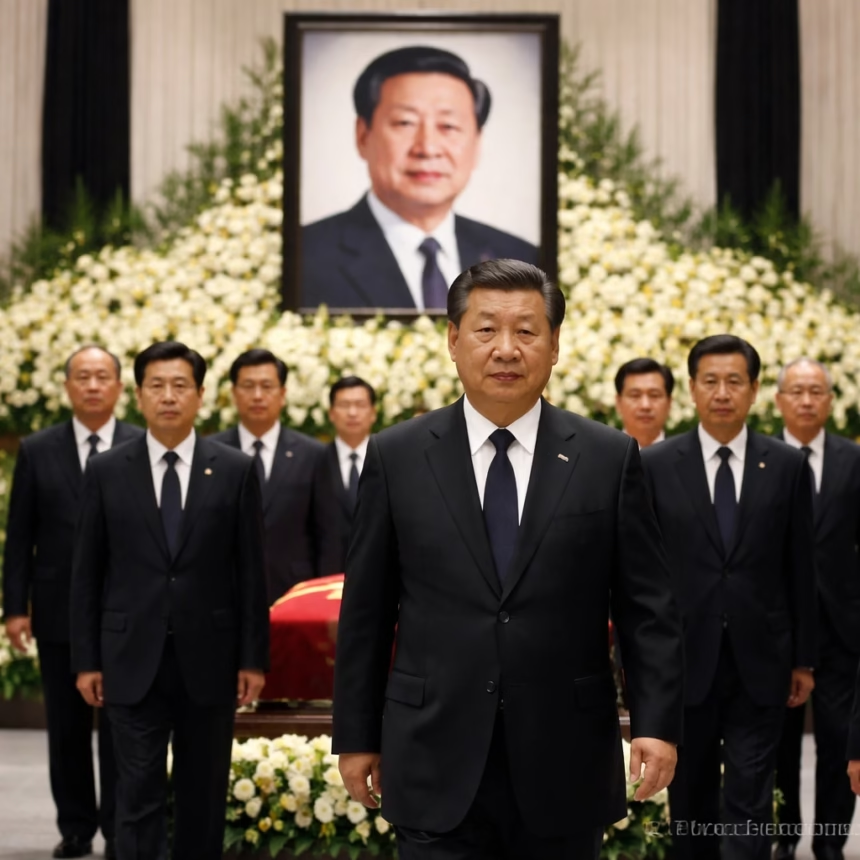
Beijing, [Hypothetical Date: November 15, 2024] – China's top leadership, led by President Xi Jinping, gathered today at the Babaoshan Revolutionary Cemetery to pay their final respects to former Premier Zhu Rongji. The solemn ceremony marked the nation's farewell to one of its most influential economic architects, whose reforms profoundly shaped modern China. Senior Communist Party officials, state leaders, and family members attended the high-profile event, underscoring Zhu's enduring legacy.
Background: The Architect of Modern China’s Economy
Zhu Rongji, born in Changsha, Hunan province, in 1928, was a towering figure in Chinese politics and economics for decades. His career spanned pivotal periods of China's development, from the early days of economic reform to its full integration into the global economy. Educated at Tsinghua University, where he studied electrical engineering, Zhu's intellectual prowess and direct management style quickly distinguished him.
He rose through the ranks, serving as Mayor of Shanghai from 1988 to 1991, a period during which he oversaw the city's initial transformation into a major financial hub. His success in Shanghai caught the attention of the central leadership, leading to his appointment as Vice Premier in 1991. In this role, he was instrumental in tackling inflation and reforming the state-owned enterprise (SOE) sector, earning him the moniker "China's economic tsar."
Zhu Rongji served as Premier of the State Council from 1998 to 2003, a tenure marked by bold and often painful reforms. He spearheaded the restructuring of thousands of inefficient state-owned enterprises, leading to widespread layoffs but also fostering a more market-oriented economy. His administration also navigated China's historic entry into the World Trade Organization (WTO) in 2001, a move that integrated China deeply into the global trading system and fueled unprecedented economic growth. He was also credited with initiating housing reforms that privatized urban housing, fundamentally altering the lives of millions of Chinese citizens.
Known for his uncompromising stance against corruption and his no-nonsense approach, Zhu Rongji was both respected and feared. His public appearances were often characterized by candid remarks and a visible passion for national development. He retired from all official positions in 2003, maintaining a low public profile in subsequent years, though his influence continued to resonate through his proteges and the enduring impact of his policies.
More Read

Key Developments: A Nation’s Farewell
The passing of Zhu Rongji was officially announced by Xinhua News Agency on [Hypothetical Date: November 10, 2024], citing natural causes at the age of 96. The news prompted an outpouring of tributes from across the nation and around the world, recognizing his immense contributions to China's economic modernization.
Official Mourning and Preparations
Following the announcement, a period of national mourning was declared, with flags flown at half-mast at government buildings and diplomatic missions abroad. State media provided extensive coverage of his life and achievements, replaying archival footage of his speeches and interviews. A special committee, chaired by a member of the Politburo Standing Committee, was formed to oversee the funeral arrangements, reflecting the high regard in which Zhu was held by the Party.

The Farewell Ceremony at Babaoshan
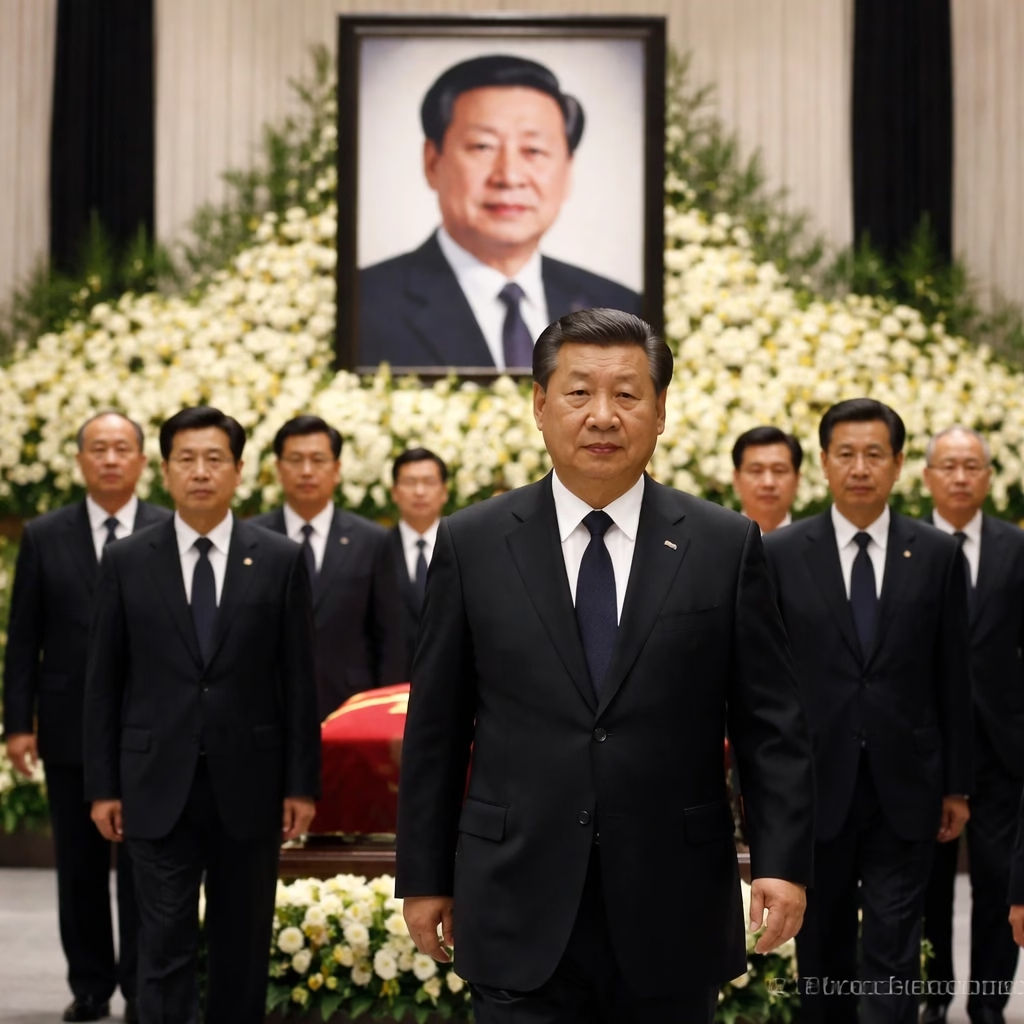
The memorial service at Babaoshan Revolutionary Cemetery, a revered site for fallen revolutionaries and high-ranking officials, was conducted with solemn dignity. President Xi Jinping, flanked by all other members of the Politburo Standing Committee, led the attendees in a moment of silence. Wreaths from various Party and state organs, as well as from international dignitaries, adorned the hall.
During the ceremony, a eulogy was delivered, recounting Zhu Rongji's illustrious career, his unwavering dedication to the Party and the people, and his pivotal role in China's economic transformation. The eulogy highlighted his courage in undertaking difficult reforms and his integrity in governance. Following the eulogy, attendees filed past Zhu's portrait, bowing three times in a traditional gesture of respect. His remains were later interred at a private family plot within the cemetery.
International Tributes
Leaders from various countries and international organizations also extended their condolences, acknowledging Zhu Rongji's global impact. Many recalled his sharp intellect and pragmatic approach in international negotiations, particularly during China's WTO accession, which reshaped global trade dynamics. Diplomatic messages praised his vision and leadership, which paved the way for China's emergence as a major global economic power.
Impact: A Legacy That Endures
Zhu Rongji's passing and the high-profile farewell underscore the enduring significance of his legacy for China. His reforms laid the groundwork for the country's economic boom in the 21st century, lifting millions out of poverty and fundamentally altering China's social and economic landscape.
Economic Transformation
His decisive actions in reforming state-owned enterprises, tackling inflation, and integrating China into the global economy through WTO entry are considered cornerstones of modern Chinese economic policy. These policies catalyzed unprecedented growth, transforming China into the world's second-largest economy and a manufacturing powerhouse. The structural changes he implemented continue to influence China's economic trajectory, even as the country grapples with new challenges.
Political Symbolism and Unity
The unified presence of the entire Politburo Standing Committee at his farewell sends a powerful message of continuity and respect for Party history. It reaffirms the leadership's appreciation for past generations of revolutionaries and reformers, even as the current administration charts its own course. Such an event serves to consolidate Party unity and project an image of stability and strength to both domestic and international audiences.
More Read
Public Memory and Integrity
Zhu Rongji is remembered by many Chinese citizens for his integrity, his directness, and his commitment to fighting corruption. His reputation as a principled leader who prioritized national interests over personal gain has resonated deeply. His passing prompts reflection on an era of rapid change and bold leadership, inspiring a renewed appreciation for his contributions among the public.
What Next: The Future of Reform and Legacy Appraisal
The farewell to Zhu Rongji closes a chapter in China's modern history, but his legacy continues to inform current policy debates and future directions. His emphasis on market mechanisms, fiscal discipline, and opening up remains relevant as China navigates complex economic headwinds and seeks sustainable growth.
Continued Economic Evolution
China faces new challenges, including an aging population, environmental concerns, and the need for innovation-driven growth. The principles of reform and opening up championed by Zhu Rongji will likely continue to be invoked as the current leadership seeks to deepen reforms and maintain economic vitality. His vision for a strong, modern, and globally integrated China remains a guiding aspiration.
Historical Appraisal
Zhu Rongji's place in history will undoubtedly be further cemented. Historians and economists will continue to analyze the long-term effects of his policies, weighing their successes against their social costs. His era will be studied as a critical juncture when China transformed from a centrally planned economy to a more market-oriented system, laying the foundation for its global prominence. The solemn farewell serves as a powerful reminder of the profound impact one individual can have on the destiny of a nation.