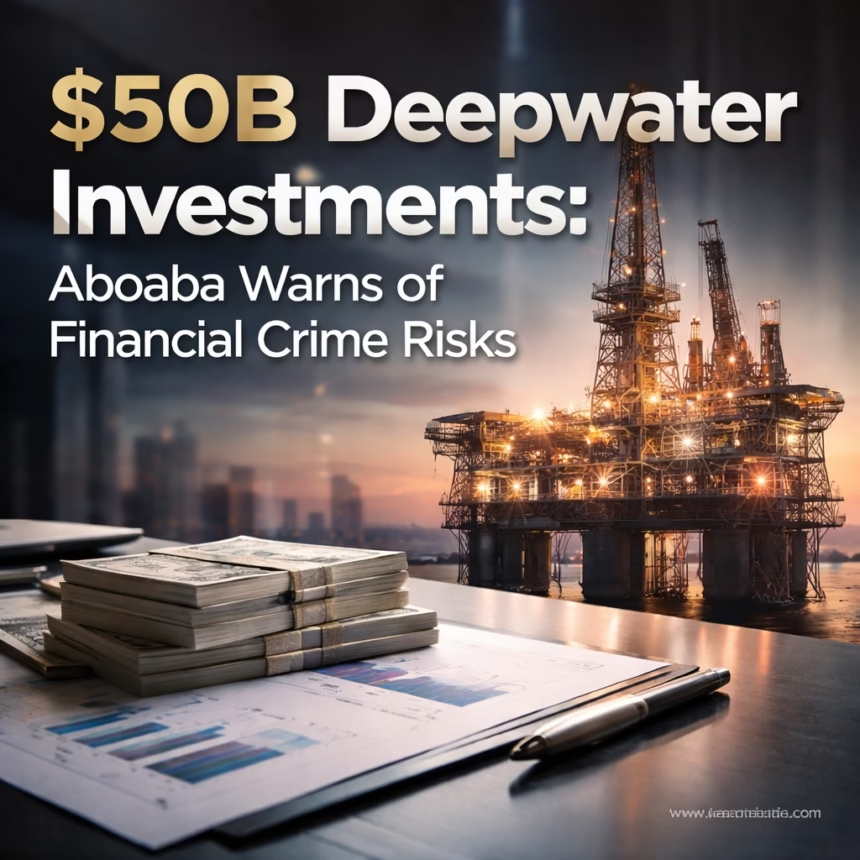
A prominent financial transparency advocate, Mr. Oladele Aboaba, has issued a stark warning regarding the escalating risks of financial crime associated with over $50 billion in projected deepwater oil and gas investments globally. The caution, delivered in a recent address, highlights the potential for widespread corruption, fraud, and illicit financial flows within these capital-intensive projects.
Background: The Deepwater Investment Surge
Deepwater exploration and production represent some of the most complex and expensive undertakings in the energy sector. These projects involve drilling thousands of meters beneath the ocean surface, often in remote and challenging environments. Over the next decade, global deepwater investments are anticipated to exceed $50 billion, driven by persistent energy demand, technological advancements, and new discoveries in regions like the Gulf of Mexico, Brazil, Guyana, and West Africa.
Historically, the deepwater sector has been characterized by high capital expenditure, long lead times, and intricate supply chains involving numerous international companies. The sheer scale of these operations, coupled with their technical complexity, creates inherent vulnerabilities. Contracts for drilling, subsea infrastructure, specialized vessels, and personnel often run into billions of dollars, making them attractive targets for illicit activities. Past incidents of bribery and procurement fraud in major energy projects underscore these systemic risks.
Key Developments: Heightened Vulnerabilities
Mr. Aboaba's warning comes amidst several converging factors that amplify the financial crime risks in the deepwater arena. The rapid pace of investment, often fueled by urgent energy transition demands or geopolitical considerations, can sometimes outstrip regulatory oversight capacity in host nations. Emerging deepwater frontiers, particularly in developing countries, may lack robust governance frameworks and enforcement mechanisms, creating fertile ground for corruption.
Complex Contractual Structures
The intricate web of joint ventures, consortia, and subcontracting arrangements common in deepwater projects can obscure beneficial ownership and facilitate money laundering. Aboaba specifically pointed to the opaque nature of many procurement processes, where inflated costs or non-existent services can be disguised within multi-billion-dollar contracts. The use of shell companies and offshore accounts further complicates efforts to trace illicit funds.
More Read

Technological and Regulatory Gaps
While technology drives deepwater innovation, it also presents new avenues for financial crime, such as cyber fraud targeting payment systems or data manipulation. Simultaneously, regulatory frameworks designed for traditional onshore or shallow-water operations often struggle to keep pace with the unique challenges and scale of deepwater projects. This creates gaps that criminals can exploit, particularly across international jurisdictions where cooperation on financial crime enforcement can be slow.
Impact: Far-Reaching Consequences
The consequences of unmitigated financial crime in deepwater investments are profound and far-reaching, affecting multiple stakeholders.
Economic and Fiscal Drain
Host nations stand to lose substantial revenue through diverted funds, tax evasion, and illicit financial flows, undermining their ability to fund public services and drive economic development. Investors, including pension funds and institutional investors, face reduced returns and increased project risks due to corruption-related inefficiencies and cost overruns. The $50 billion investment could yield significantly less actual value if a substantial portion is siphoned off.
More Read

Reputational Damage and Instability
Companies implicated in financial crimes suffer severe reputational damage, leading to loss of public trust, investor flight, and potential legal sanctions. Furthermore, pervasive corruption can destabilize nascent democracies, fuel social unrest, and erode the rule of law, particularly in resource-rich nations where deepwater projects are often located.
Environmental and Social Risks
Financial crime can also compromise environmental and safety standards. Projects driven by illicit motives may cut corners on critical safety measures or environmental impact assessments, increasing the risk of accidents, spills, and long-term ecological damage. Local communities, often marginalized, bear the brunt of these negative externalities, while promised benefits from resource exploitation fail to materialize.
What Next: Calls for Enhanced Vigilance and Action
Mr. Aboaba's warning serves as a critical call to action for governments, industry players, and international bodies to collectively address these looming threats. He outlined several urgent steps required to safeguard the integrity of these massive investments.
Strengthened Governance and Transparency
There is an immediate need for host nations to bolster their anti-corruption frameworks, including stricter enforcement of procurement laws, beneficial ownership registries, and independent oversight bodies. International collaboration is essential to trace illicit funds across borders and prosecute offenders effectively. Aboaba advocates for mandatory transparency in all deepwater contracts, making key terms and financial flows publicly accessible.
Industry Accountability and Due Diligence
Oil and gas companies, along with their financial partners, must implement more rigorous due diligence processes across their entire supply chains. This includes thorough vetting of contractors, sub-contractors, and joint venture partners, with a zero-tolerance policy for corruption. Whistleblower protection mechanisms and internal compliance programs need significant strengthening to encourage reporting of suspicious activities.

Technological Solutions and Capacity Building
Leveraging technology like blockchain for contract management and payment tracking could enhance transparency and reduce opportunities for fraud. Furthermore, investing in capacity building for regulatory agencies in emerging deepwater regions is crucial, equipping them with the expertise and tools to monitor and investigate complex financial crimes.
Ignoring these warnings risks not only the $50 billion deepwater investment portfolio but also the sustainable development of resource-rich nations and the global energy future. The coming years will test the resolve of all stakeholders to prioritize integrity over illicit gain in the pursuit of deepwater resources.