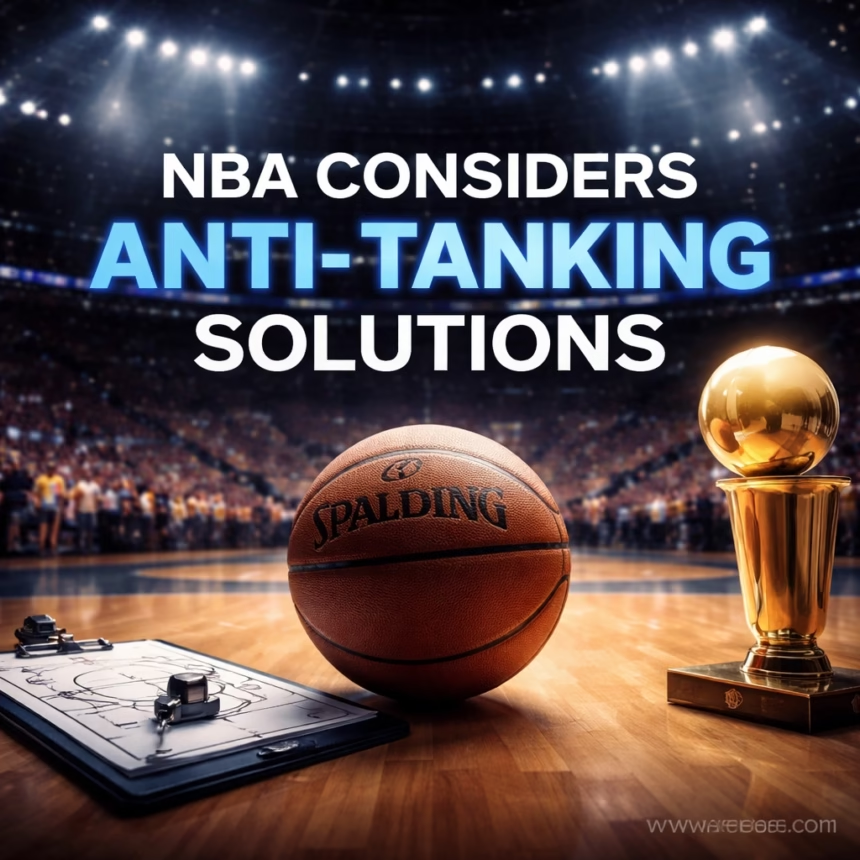
The National Basketball Association (NBA) has reportedly presented three innovative anti-tanking proposals to its team owners, signaling a renewed commitment to fostering competitive integrity across all 30 franchises. These concepts, discussed during recent league meetings, aim to re-engage teams currently outside the traditional playoff and play-in picture, extending the competitive window for a greater number of organizations throughout the 82-game regular season.
Background: The Enduring Challenge of Tanking
The practice of "tanking"—deliberately losing games to improve draft lottery odds—has been a persistent concern for the NBA for decades. While often a strategic maneuver for struggling franchises to rebuild through top collegiate talent, it raises significant questions about the league's competitive balance and the value of regular season contests, particularly in the latter stages of a season. Fans often express frustration when teams overtly sideline healthy veteran players or prioritize development over winning, leading to diminished product quality.
The league has previously implemented measures to combat tanking. In 2019, the draft lottery odds were flattened, reducing the incentive for teams to finish with the absolute worst record. Under the current system, the three teams with the worst records each have a 14% chance of securing the No. 1 overall pick, a significant reduction from previous iterations where the worst team had a much higher probability. This change aimed to discourage a race to the bottom by making the reward for extreme losing less certain.
Further, the introduction and subsequent expansion of the Play-In Tournament, which began in 2020 and was fully implemented in 2021, provided an additional layer of competition. This tournament allows teams finishing 7th through 10th in each conference to compete for the final two playoff spots, creating a meaningful incentive for teams to fight for a top-10 finish rather than settling for an early draft pick. The Play-In has successfully kept more teams engaged deeper into the season, tightening the race for the middle seeds.
Despite these efforts, the issue persists, particularly for teams that fall outside the Play-In range (e.g., 11th through 15th seeds). These teams, once mathematically eliminated from postseason contention or too far removed from the Play-In race, often shift focus entirely to draft positioning, leading to a noticeable drop in competitive intensity. The new proposals directly target this segment of the league.
More Read

Key Developments: Three Concepts for Competitive Re-Engagement
While specific details of the three proposals remain confidential, reports indicate they share a common goal: to provide meaningful incentives for winning, even for teams not bound for the traditional playoffs. This represents a strategic shift from merely penalizing losing to actively rewarding competitive effort.
Concept 1: Expanded Post-Season Reward System
One proposal reportedly explores an expanded post-season reward system that extends beyond the current Play-In Tournament. This could involve creating a new mini-tournament or a series of high-stakes games for teams finishing just outside the Play-In, perhaps the 11th and 12th seeds in each conference. The winners of this secondary competition might not earn a direct playoff berth but could be awarded a significant benefit, such as an improved draft lottery position, a financial bonus, or even a specialized development opportunity for their young players. The aim is to give these teams something tangible to play for in the final weeks of the season, maintaining fan interest and competitive drive.
More Read
Concept 2: Performance-Based Lottery Adjustments
Another concept reportedly focuses on refining the draft lottery itself. Instead of purely relying on inverse standings, this proposal could introduce performance-based metrics to influence lottery odds. For instance, teams that finish in the bottom tier but demonstrate a strong finish to the season (e.g., a winning record after the All-Star break, or outperforming their projected win total) could receive a slight boost in their lottery odds. Conversely, teams that overtly underperform or "shut down" healthy players without legitimate injury concerns could see their odds slightly diminished, even if they finish with a poor record. This would create a dynamic where intentional losing could be counterproductive to a team's long-term goals.
Concept 3: Leveraging the In-Season Tournament
The third concept reportedly explores integrating the recently established In-Season Tournament (now known as the NBA Cup) into the anti-tanking framework. While the In-Season Tournament already offers financial incentives for players and a trophy, this proposal could extend its impact to draft positioning or other competitive advantages. For example, teams that do not make the playoffs but perform exceptionally well in the In-Season Tournament (e.g., reaching the semifinals or finals) could be granted a bonus lottery pick, a higher-percentage chance at a top pick, or a unique developmental opportunity. This would elevate the stakes of the In-Season Tournament for all teams, providing a mid-season competitive peak that could have long-term benefits beyond just prize money.
Impact: Who is Affected?
These proposed changes, if implemented, would have far-reaching implications across the league:
Bottom-Tier Teams: These teams are the primary target. They would face increased pressure and incentive to compete for all 82 games, potentially altering roster management strategies and reducing instances of star players being sidelined for non-injury reasons.
* Mid-Tier Teams (Play-In Contenders): The competition for the 7-10 seeds could intensify further, as teams previously out of the Play-In race might now have other significant incentives to win, making the overall conference standings more unpredictable.
* Top-Tier Teams: While less directly affected by anti-tanking measures, top teams could benefit from a more consistently competitive league, facing fewer "easy" games against overtly tanking opponents, which could better prepare them for the rigors of the playoffs.
* Players: The proposals could lead to more meaningful games for players on all teams, potentially enhancing individual performance metrics and overall engagement. It could also reduce the perceived need for "load management" on struggling teams if winning remains a priority.
* Fans: The ultimate beneficiaries would be the fans, who could expect a more compelling product throughout the entire season, with fewer instances of lopsided games due to strategic forfeitures and more teams actively pursuing victory.
* Front Offices: Team management would need to adapt their long-term planning, balancing player development with the newly introduced competitive incentives. The draft strategy could become more nuanced, requiring a deeper understanding of the new lottery mechanisms.
What Next: Expected Milestones
The presentation of these concepts to team owners marks an initial step in a potentially lengthy process. Several milestones are expected:
Further Owner Discussions: The initial presentation will likely lead to extensive internal discussions among owners, who will weigh the potential benefits against any logistical or financial complexities.
* League Office Refinement: The NBA league office, led by Commissioner Adam Silver, will continue to refine the proposals, conducting detailed modeling and analysis of their potential impact on competitive balance, revenue, and player well-being.
* NBPA Consultation: Any changes affecting player contracts, competitive opportunities, or the collective bargaining agreement will necessitate discussions and potential negotiations with the National Basketball Players Association (NBPA). Player buy-in will be crucial for successful implementation.
* Board of Governors Vote: If a consensus emerges, the proposals would ultimately be put to a vote before the NBA Board of Governors. A significant majority (typically 2/3rds or 3/4ths, depending on the nature of the change) would be required for approval.
* Implementation Timeline: Should any of these concepts be approved, implementation would likely not occur immediately. The league would require time to establish clear rules, educate teams, and allow franchises to adjust their strategies, suggesting a potential rollout for the 2025-2026 season or later.

Commissioner Adam Silver has consistently voiced his desire to eliminate tanking, emphasizing the importance of competitive integrity for the league's long-term health and global appeal. These new proposals represent the NBA's latest, and perhaps most ambitious, attempt to ensure every game carries significant weight for every team.