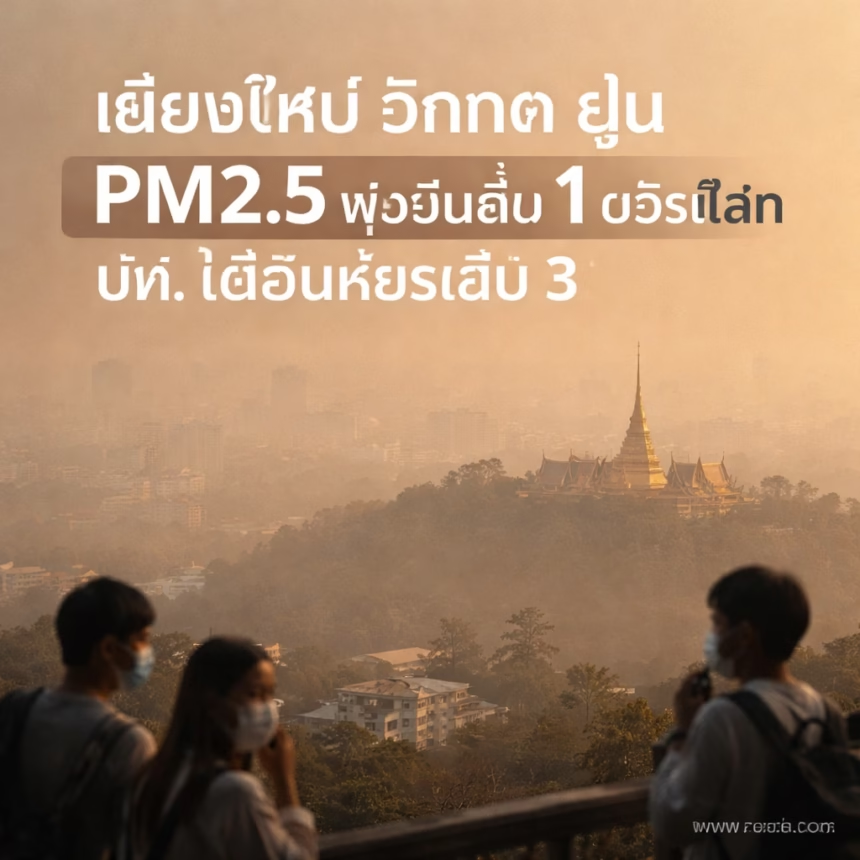
Chiang Mai's Invisible Siege: City Battling World's Worst Air, Level 3 Emergency Declared
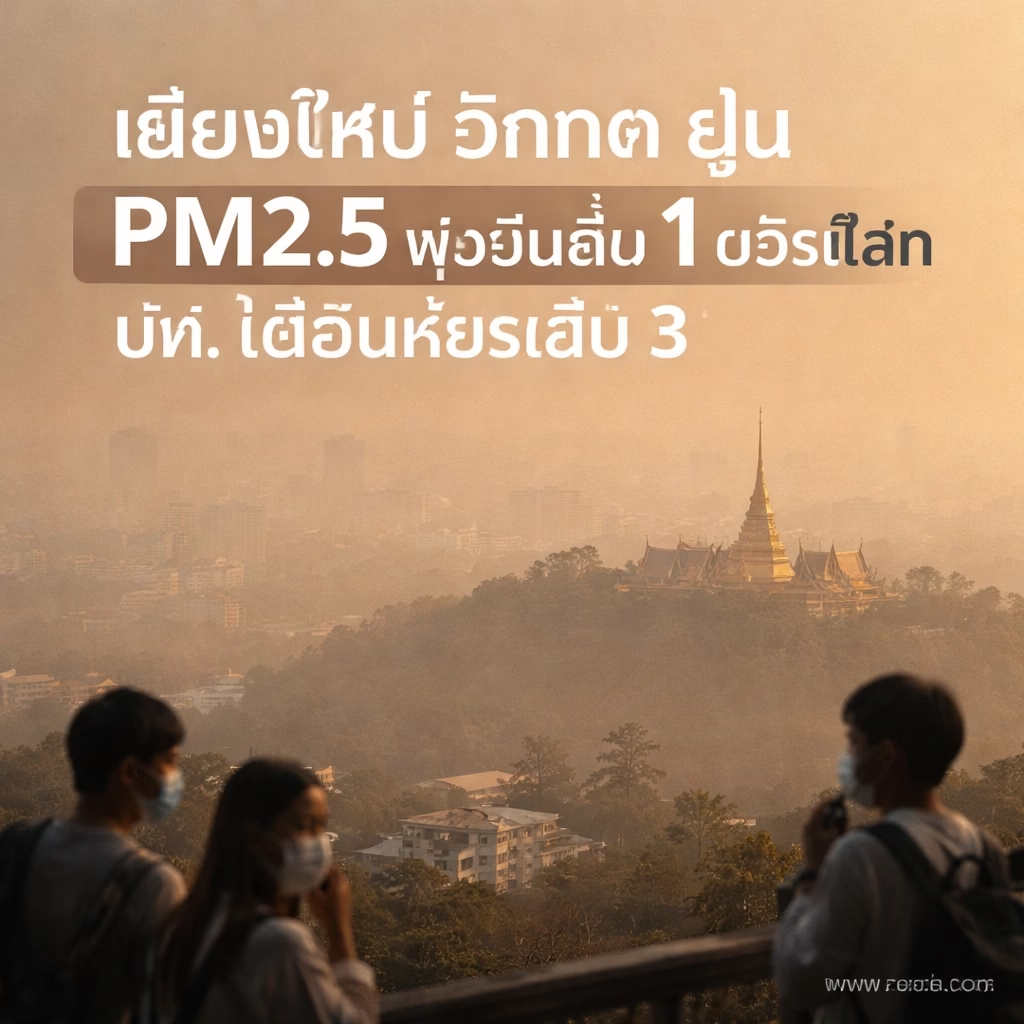
Chiang Mai, the cultural heart of Northern Thailand, is grappling with an unprecedented environmental crisis as its air quality plummets to hazardous levels, consistently ranking among the worst in the world. The Department of Disaster Prevention and Mitigation (DDPM) has issued a Level 3 warning, signaling a severe public health emergency that demands immediate and widespread action across the province.
Background: A Recurring Nightmare Intensifies
Northern Thailand faces annual air quality challenges during the dry season (December to April), a period often termed the "burning season" due to increased PM2.5 particulate matter. This phenomenon stems from a confluence of factors. Agricultural practices, primarily the burning of crop stubble to clear land, are a major domestic contributor, often chosen for cost-effectiveness despite prohibitions.
Widespread forest fires, exacerbated by dry conditions and human activity, also contribute substantially to the haze. Vehicle emissions from growing urban populations and industrial activities add to the atmospheric burden. Furthermore, transboundary haze originating from neighboring countries where similar burning practices are prevalent frequently drifts into Thai airspace, compounding the local problem.
PM2.5, microscopic particulate matter 2.5 micrometers or less in diameter, is particularly dangerous as it penetrates deep into the lungs and bloodstream, posing severe health risks. The World Health Organization (WHO) recommends an annual average PM2.5 concentration of no more than 5 µg/m³, with a 24-hour average not exceeding 15 µg/m³. Chiang Mai's recent readings have often soared into the hundreds, frequently categorizing the air as "hazardous" on the Air Quality Index (AQI).
While previous years saw intermittent spikes, the current crisis is unprecedented in its prolonged severity and globally unparalleled levels. Past government interventions, including localized burning bans and public awareness campaigns, have yielded mixed results. This year, the scale of the problem has pushed authorities to declare a more stringent alert, reflecting the escalating danger to residents and the environment.
Key Developments: Unprecedented Pollution and Emergency Response
In recent weeks, Chiang Mai has consistently topped global air quality monitoring charts, registering AQI values well into the "very unhealthy" and "hazardous" categories. Districts like Mae Chaem, Hot, and Samoeng have reported PM2.5 levels frequently exceeding 200 µg/m³, occasionally peaking above 400 µg/m³ during late February and early March.
More Read
The Department of Disaster Prevention and Mitigation (DDPM) declared a Level 3 disaster warning for Chiang Mai, a critical escalation signifying severe public health impact. This empowers provincial authorities to implement stringent measures, including stricter burning prohibitions and resource deployment. This alert demands comprehensive government intervention and heightened public vigilance.
A multi-pronged strategy has been initiated in response. Cloud seeding operations have been intensified, with the Royal Rainmaking Department deploying aircraft to induce rainfall. Local municipalities mobilize water trucks to spray fine mists over urban areas, particularly high-traffic zones, to suppress airborne dust and particulate matter.
Enforcement of the burning ban has also been stepped up. Local administrative organizations and law enforcement agencies conduct patrols and impose penalties on those found illegally burning agricultural waste or starting forest fires. Several arrests have been made, underscoring the seriousness of the regulations. The Ministry of Natural Resources and Environment, in conjunction with the Ministry of Public Health and provincial governors, coordinates these inter-agency efforts.
Compounding the issue are prevailing meteorological conditions. Stagnant air masses, often associated with high-pressure systems, have trapped pollutants close to the ground, preventing dispersion. A lack of significant rainfall and minimal wind speeds have further exacerbated the situation, creating a persistent dome of haze over the Northern region.
Impact: Health, Economy, and Daily Life Under Siege
Public Health Crisis
The most immediate and concerning impact of the severe PM2.5 levels is on public health. Hospitals report a significant surge in respiratory ailments, including acute bronchitis, asthma attacks, and chronic obstructive pulmonary disease (COPD) exacerbations. Vulnerable groups—children, the elderly, and pregnant women—experience symptoms ranging from irritated eyes and sore throats to severe breathing difficulties requiring emergency medical attention.
Doctors advise N95 masks outdoors, limited strenuous activity, and staying indoors as much as possible. Prolonged exposure to such high levels of PM2.5 carries long-term risks, including increased susceptibility to cardiovascular diseases, strokes, and certain types of cancer, posing a silent but profound threat to the population’s well-being.
More Read

Economic Downturn and Tourism Woes
Chiang Mai, a global tourism hotspot, is experiencing a significant economic blow. The pervasive haze deters tourists, causing cancellations for hotels and tour operators. Iconic outdoor attractions are quieter, their scenic views obscured by a thick, grey blanket. Local businesses, from restaurants to souvenir shops, report a noticeable decline in patronage, threatening livelihoods and the region’s economic stability.
The agricultural sector, a paradoxically a contributor to the problem, also faces challenges. While farmers seek to clear land efficiently, overall environmental degradation can affect crop quality and yield. The broader economic ripple effect extends to reduced productivity as people fall ill or are forced to stay home, impacting various industries.
Disruption to Education and Daily Life
The severe air quality has forced educational institutions to take drastic measures. Many schools have closed or shifted to online learning to protect students from exposure. Parents are increasingly concerned about their children’s health, limiting outdoor play and activities, impacting their physical and social development.
Daily life for residents has been significantly altered. Outdoor exercise is ill-advised, leading to a shift towards indoor activities. Visibility on roads has been reduced, posing risks for commuters. The constant haze also impacts mental health, increasing anxiety and stress among residents grappling with the seemingly endless pollution and its implications for their future.
What Next: A Path Towards Breathable Air
Immediate Actions and Short-Term Relief
In the immediate term, authorities are focusing on aggressive suppression of burning activities. This includes continuous aerial surveillance and ground patrols to detect and extinguish fires, enforcing agricultural burning bans. Cloud seeding operations will continue whenever meteorological conditions are favorable, targeting both forest fire zones and areas with high particulate concentrations.
The Department of Public Health is intensifying campaigns to educate the public on protective measures, distributing N95 masks, and setting up “clean air rooms” in public buildings for those without air purifiers. Provincial hospitals are preparing for sustained high patient loads, ensuring adequate medical supplies and personnel.
Medium-Term Strategies and Regional Cooperation
Looking ahead, the emphasis will shift towards more sustainable solutions. Efforts to promote alternative agricultural practices, like “no-burn” farming and biomass use, will scale up, with incentives for farmers. Research into more efficient waste management and agricultural residue utilization is ongoing.
Crucially, regional cooperation with neighboring countries like Laos and Myanmar is vital. Transboundary haze remains a significant challenge, requiring diplomatic engagement and collaborative efforts to monitor and mitigate burning activities in border areas. Discussions are expected to focus on joint enforcement, information sharing, and coordinated fire prevention strategies.
Long-Term Vision for a Sustainable Future
The long-term vision involves a comprehensive transformation of environmental governance and public engagement. This includes stricter environmental law enforcement, investment in renewable energy, and smart city technologies for air quality management. These efforts aim to reduce reliance on fossil fuels and monitor air quality more effectively.
Education and public awareness campaigns will be sustained year-round, fostering a deeper understanding of pollution’s environmental and health impacts. Ultimately, addressing the PM2.5 crisis in Chiang Mai requires a holistic approach that tackles root causes, promotes sustainable development, and builds a resilient community capable of safeguarding its air for future generations.