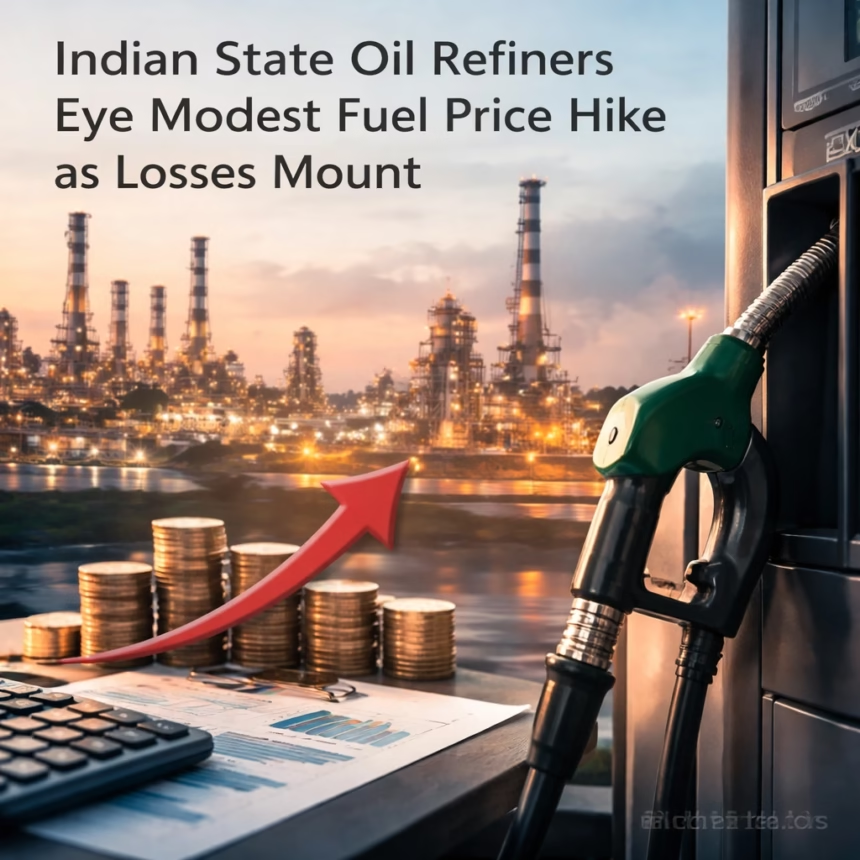
India's state-owned oil marketing companies (OMCs) are reportedly considering a modest increase in petrol and diesel prices across the nation. This potential adjustment, anticipated in the coming weeks, aims to alleviate the significant financial strain incurred by these public sector undertakings (PSUs) after nearly a year of absorbing elevated global crude oil costs. The move comes as these vital entities navigate a complex landscape of commercial viability, energy security, and government policy.
Background: A Year of Absorbing Global Shocks
India's retail fuel market is predominantly controlled by three state-owned giants: Indian Oil Corporation (IOC), Bharat Petroleum Corporation Ltd (BPCL), and Hindustan Petroleum Corporation Ltd (HPCL). Together, these OMCs account for over 90% of the country's fuel distribution network, playing a critical role in the daily lives of millions of citizens and the broader economy. While the pricing of petrol and diesel was technically deregulated in 2010 and 2014, respectively, government influence often plays a significant role in retail price adjustments, especially during periods of high inflation or electoral sensitivity.
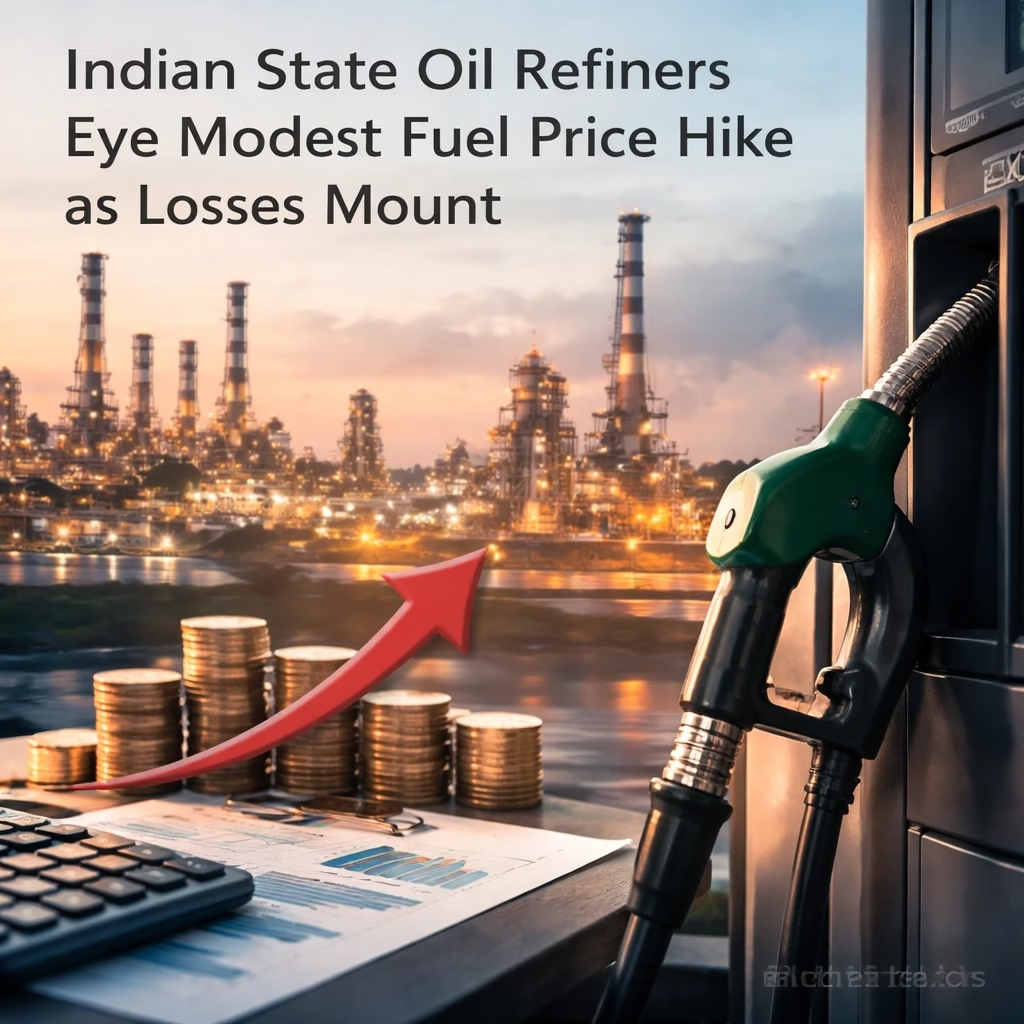
The current financial predicament for these OMCs stems largely from the global energy crisis triggered by geopolitical events in early 2022. Following Russia's invasion of Ukraine, international crude oil benchmarks, notably Brent crude, surged dramatically, peaking above $120 per barrel. Despite this sharp rise in input costs, retail petrol and diesel prices in India have remained largely stable since April 6, 2022. This deliberate stability was a policy decision to shield consumers from inflationary pressures, effectively forcing OMCs to sell fuel at a loss.
The Cost of Price Stability
The financial impact on the OMCs has been substantial. In the first quarter of Fiscal Year 2022-23 (Q1 FY23), from April to June 2022, all three major OMCs reported significant net losses. Indian Oil Corporation posted a net loss of INR 1,992.53 crore, Bharat Petroleum Corporation Ltd reported a net loss of INR 6,290.8 crore, and Hindustan Petroleum Corporation Ltd recorded a staggering net loss of INR 10,196.9 crore. Cumulatively, these losses exceeded INR 18,000 crore (approximately $2.2 billion) in just one quarter, highlighting the immense pressure on their balance sheets.
More Read

These losses continued into the second and third quarters of FY23, albeit with some moderation as global crude prices began to ease from their peaks. The OMCs were effectively buying crude oil at high international rates and selling refined products domestically at prices that did not reflect their true cost of acquisition and processing. This sustained period of under-recovery has severely impacted their profitability, cash flows, and ability to fund crucial capital expenditure projects.
Key Developments: Navigating the Recovery Path
In recent months, the global crude oil market has shown signs of moderation. Brent crude has largely traded within the $75-$85 per barrel range, a significant drop from its 2022 highs. This stabilization has provided some respite to the OMCs, reducing the gap between their procurement costs and retail selling prices. However, the accumulated losses from the previous quarters, coupled with the ongoing need to replenish inventories purchased at higher rates, mean that the OMCs are still operating below their desired profitability margins.
Industry sources indicate that the OMCs have been in ongoing discussions with the Ministry of Petroleum and Natural Gas, presenting their financial situation and the need for a pricing correction. While the government has historically provided subsidies for cooking gas (LPG) to OMCs, direct compensation for retail petrol and diesel losses has been rare, making price adjustments the primary mechanism for financial recovery.
More Read

The “Modest” Hike Strategy
Crucially, any impending price hike is expected to be modest and gradual, rather than a sharp, sudden increase. This strategy aims to minimize inflationary shocks and public backlash, especially given the political sensitivity surrounding fuel prices in India. The recent conclusion of the Karnataka state assembly elections may also provide a window for such adjustments, as major price revisions are often deferred during election periods.
The OMCs are reportedly aiming to recover their previous losses and achieve a sustainable marketing margin. This would involve a series of small, incremental increases spread over several weeks or months, allowing consumers and the economy to adapt without significant disruption. The goal is to restore the financial health of these vital PSUs, enabling them to invest in infrastructure, green energy initiatives, and refining capacity expansion.
Impact: Ripple Effects Across the Economy
A hike in petrol and diesel prices, however modest, will inevitably have a cascading effect across various segments of the Indian economy.
Consumers
Households will directly feel the pinch through increased transportation costs for personal vehicles. For many, this translates into a higher monthly budget allocation for fuel, potentially reducing discretionary spending. The psychological impact of rising fuel prices can also contribute to a general perception of inflation, even if other commodity prices remain stable.
Industries and Logistics
Industries heavily reliant on transportation, such as manufacturing, agriculture, and e-commerce, will face higher logistics costs. Trucking companies, a backbone of India's supply chain, will likely pass on increased diesel costs to their clients, leading to higher prices for goods ranging from food grains to consumer durables. This could fuel broader inflationary pressures, impacting the Consumer Price Index (CPI). Farmers, who use diesel for irrigation pumps and tractors, will also see their input costs rise, potentially affecting food prices.
Government
For the government, the decision to allow a price hike is a delicate balancing act. While it helps restore the financial health of state-owned enterprises and reduces the potential need for future bailouts, it also carries the risk of stoking inflation and public discontent. The administration must weigh the fiscal health of its OMCs against its commitment to managing inflation and maintaining social stability.

Oil Marketing Companies
For IOC, BPCL, and HPCL, a price hike is crucial for their long-term viability. It would improve their profitability, strengthen their balance sheets, and enable them to reduce debt. Healthy financials are essential for these companies to undertake planned capital expenditures, including investments in renewable energy, biofuels, and upgrading refining infrastructure, aligning with India's energy transition goals.
What Next: Anticipated Milestones and Future Policy
The timing and magnitude of the potential fuel price hike remain subject to ongoing assessment of global crude oil prices, domestic inflation trends, and the overall economic situation. Most analysts anticipate a phased approach, with small increments that are less likely to trigger widespread public outcry.
Monitoring Global Trends
The OMCs and the government will continue to closely monitor international crude oil prices. A sustained drop in global rates could potentially reduce the urgency or scale of the proposed hike, while a sudden surge could necessitate more significant adjustments. The stability of the Brent crude benchmark around the $75-$80 per barrel mark is seen as a crucial factor in determining the OMCs' recovery trajectory.
Future Pricing Mechanisms
The current situation has reignited discussions about the need for a more dynamic and transparent fuel pricing mechanism in India. While deregulation exists on paper, the practical reality often involves OMCs absorbing shocks. Experts suggest exploring options such as a fuel price stabilization fund, which could cushion the impact of extreme global price volatility, or a clearer framework for automatic price adjustments that reduces political intervention. Such reforms would provide greater predictability for both OMCs and consumers.
Investment and Energy Transition
Beyond immediate financial recovery, the OMCs have ambitious plans for India's energy future. They are key players in the nation's push towards green energy, with significant investments earmarked for hydrogen production, solar power, biofuels, and electric vehicle charging infrastructure. A robust financial position is indispensable for funding these long-term, strategic investments, which are critical for India to achieve its net-zero emissions targets by 2070. The fourth quarter (Q4 FY23) financial results, expected soon, will offer further insights into their recovery path, providing a clearer picture of their profitability as crude prices stabilized towards the end of the fiscal year.
The impending decision on fuel prices underscores the delicate balance India must strike between ensuring the commercial health of its strategic state-owned enterprises and protecting its citizens from inflationary pressures, all while navigating the volatile currents of the global energy market.