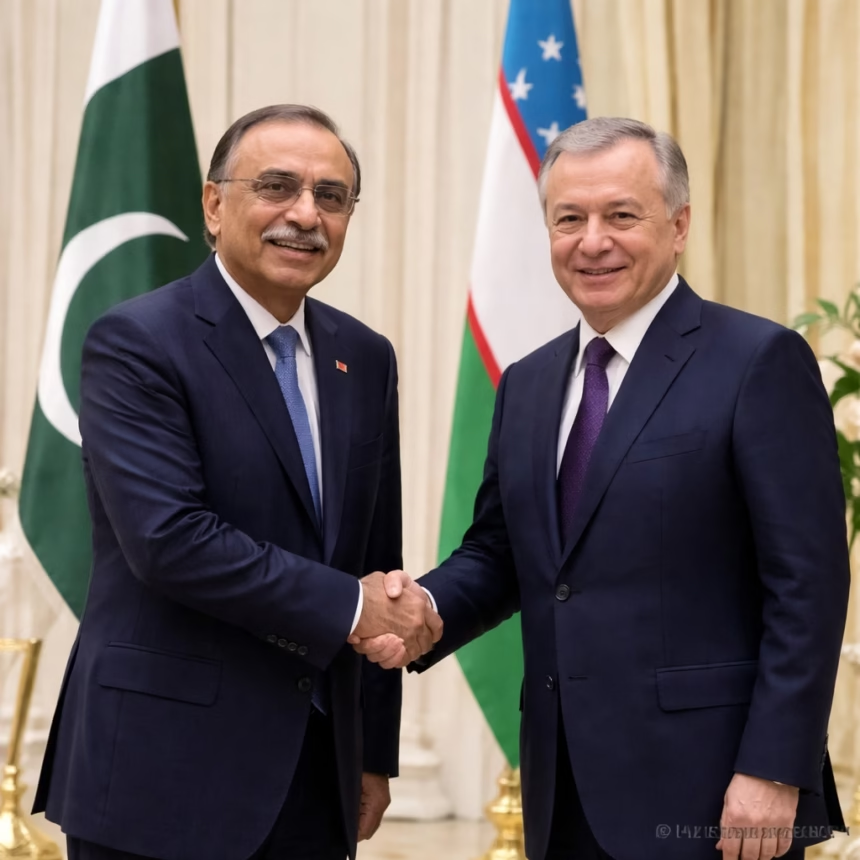
Game Changer? Zardari's Uzbekistan Visit Could Reshape Central Asian Alliances!
President Asif Ali Zardari of Pakistan has enthusiastically welcomed an invitation from Uzbek President Shavkat Mirziyoyev for a state visit to Uzbekistan. The significant development, conveyed recently from Islamabad, signals a robust commitment from both nations to elevate their bilateral relationship across multiple strategic sectors.
This high-level exchange underscores a mutual desire to forge deeper economic, political, and cultural ties, potentially heralding a new era of cooperation that could significantly impact regional dynamics and connectivity.
Background: A Legacy of Shared Aspirations and Strategic Alignment
The relationship between Pakistan and Uzbekistan, though geographically separated by Afghanistan, is rooted in historical and cultural affinities that span centuries. Both nations share a rich Islamic heritage, with strong connections dating back to the Silk Road era. Following Uzbekistan's independence in 1991, Pakistan was among the first countries to recognize the new republic, establishing diplomatic relations and laying the groundwork for a partnership built on mutual respect and shared strategic interests.
Pakistan has long pursued a "Vision Central Asia" policy, aiming to strengthen its ties with the landlocked Central Asian Republics (CARs) to unlock vast opportunities in trade, energy, and connectivity. Uzbekistan, as the most populous nation in Central Asia and a regional economic powerhouse, is a cornerstone of this vision. Its strategic location, bordering all other CARs, makes it a critical partner for Pakistan's ambition to access Central Asian markets and for Central Asia's desire for access to warm-water ports.
Over the past three decades, bilateral interactions have seen periods of fluctuating intensity. However, recent years have witnessed a concerted effort from both sides to inject new momentum into the relationship. High-level delegations, including ministerial visits and business forums, have sought to identify and capitalize on complementarities in trade, agriculture, and defense cooperation. The signing of various Memoranda of Understanding (MoUs) and agreements, particularly concerning transit trade and investment protection, reflects a growing institutional framework for cooperation.
More Read

A significant aspect of this background is the shared commitment to regional connectivity projects. Discussions around railway lines and road networks, especially those traversing Afghanistan, have been central to the bilateral dialogue. These projects are not merely about logistics; they represent a geopolitical imperative to foster economic integration and stability across a volatile region. The potential extension of Pakistan's China-Pakistan Economic Corridor (CPEC) into Central Asia through Afghanistan has also been a recurring theme, positioning Uzbekistan as a vital link in a broader regional economic architecture.
Key Developments: Forging a Path to Enhanced Partnership
The recent invitation from President Mirziyoyev to President Zardari marks a significant inflection point in the bilateral relationship. It follows a series of proactive diplomatic engagements by both countries aimed at solidifying their strategic partnership. President Zardari's swift and positive response, coupled with his emphasis on strengthening ties across all sectors, underscores Pakistan's high regard for Uzbekistan as a key regional ally.
Economic Corridors and Transit Trade
A central pillar of the renewed focus is the enhancement of trade and economic cooperation. Both leaders recognise the immense untapped potential. Pakistan’s access to Central Asian markets for its textiles, pharmaceuticals, surgical instruments, and agricultural products remains a priority. Conversely, Uzbekistan seeks greater access to Pakistan’s ports of Karachi and Gwadar for its exports of cotton, minerals, and manufactured goods. The Afghanistan-Pakistan Transit Trade Agreement (APTTA) and the proposed Trilateral Working Group involving Afghanistan are crucial mechanisms being explored to streamline transit logistics and overcome existing bottlenecks.
More Read

Discussions are expected to revolve around practical steps to operationalize the Mazar-e-Sharif-Kabul-Peshawar railway line project. This ambitious initiative, if realized, would serve as a game-changer for regional connectivity, drastically reducing transit times and costs for goods moving between South Asia and Central Asia. Furthermore, efforts to harmonise customs procedures, reduce tariff barriers, and facilitate business-to-business linkages are anticipated to feature prominently in future dialogues.
Diversified Cooperation Beyond Trade
Beyond traditional trade, the scope of cooperation is rapidly diversifying. Energy security is a critical area for Pakistan, and Uzbekistan, with its rich hydrocarbon reserves and renewable energy potential, presents a valuable partner. Discussions could explore joint ventures in energy exploration, transmission, and the development of alternative energy sources.
Defense cooperation also remains a vital, albeit less publicised, aspect of the relationship. Both nations face common security challenges, including terrorism and regional instability. Exchanges in military training, intelligence sharing, and defense production could be further enhanced. Cultural and educational ties are also receiving renewed attention, with initiatives to promote student exchanges, joint research programs, and tourism to foster greater understanding and goodwill between the peoples.
The invitation itself is a testament to the personal rapport and shared vision between the two leaders, building on previous interactions and the diplomatic efforts of their respective foreign offices. It signals a move beyond mere rhetoric towards concrete actions and a structured framework for accelerated cooperation.
Impact: Reshaping Regional Geopolitics and Economic Landscape
The deepening of Pakistan-Uzbekistan ties carries significant implications, not just for the two countries but for the broader Central and South Asian regions. The impact is multifaceted, touching upon economic prosperity, geopolitical stability, and people-to-people connections.
Economic Boost and Regional Integration
Enhanced trade and investment will directly benefit the economies of both nations. For Pakistan, it means new export markets, diversification of trade routes, and potential energy imports. For Uzbekistan, it offers the shortest route to the Arabian Sea, opening up new export avenues and reducing reliance on traditional transit corridors. The operationalization of trans-regional connectivity projects, such as the rail links, could unlock billions of dollars in economic activity, creating jobs and fostering industrial growth in both countries and the transit regions.

This economic integration aligns with broader regional frameworks like the Economic Cooperation Organization (ECO) and the Shanghai Cooperation Organization (SCO), where both Pakistan and Uzbekistan are active members. Strengthened bilateral ties can bolster the effectiveness of these multilateral platforms in promoting regional prosperity.
Geopolitical Realignment and Stability
From a geopolitical perspective, closer ties between Pakistan and Uzbekistan can serve as a stabilizing force in a complex region. Pakistan’s engagement with Central Asia helps diversify its foreign policy objectives and reduces its over-reliance on traditional partnerships. For Uzbekistan, a strong partnership with Pakistan offers an alternative pathway to global markets and strengthens its position as a regional pivot.
The shared interest in a peaceful and stable Afghanistan is particularly crucial. Both nations have a vested interest in supporting an inclusive and prosperous Afghanistan, as it serves as the land bridge connecting them. Collaborative efforts on Afghanistan, including border management, counter-terrorism, and economic reconstruction initiatives, could significantly contribute to regional security. This partnership could also serve as a counter-balance to other regional powers, fostering a more multipolar and balanced geopolitical environment.
Strengthening People-to-People Connections
Beyond high-level policy, the strengthened relationship will foster greater understanding and interaction between the citizens of Pakistan and Uzbekistan. Increased tourism, facilitated by improved air and road links, will allow people to explore shared cultural heritage, including historical sites like Samarkand, Bukhara, and Lahore. Academic exchanges, scholarships, and cultural festivals will promote cross-cultural dialogue and strengthen the bonds of friendship.
This deeper understanding at the societal level is fundamental for building resilient and sustainable bilateral relations, transcending political cycles and economic fluctuations.
What Next: Anticipated Milestones and Future Trajectory
The upcoming state visit by President Zardari to Uzbekistan stands as the immediate and most crucial milestone. The agenda for this visit is expected to be comprehensive, covering a wide array of subjects designed to translate the expressed goodwill into concrete agreements and actionable plans.
The State Visit: A Blueprint for Cooperation
During the visit, both presidents are anticipated to hold extensive discussions on enhancing bilateral trade, investment, and connectivity projects. Key outcomes are likely to include the signing of new Memoranda of Understanding (MoUs) and agreements across various sectors, such as agriculture, information technology, education, and defense. Specific attention will be given to accelerating the implementation of existing agreements, particularly those related to transit trade and the proposed railway link.
Delegations accompanying President Zardari will likely include high-ranking ministers and a robust business contingent, facilitating direct interactions between Pakistani and Uzbek entrepreneurs. This business-to-business engagement is vital for identifying new investment opportunities and forging joint ventures.
Follow-up Mechanisms and Implementation
Following the presidential visit, both nations are expected to establish joint working groups or task forces dedicated to overseeing the implementation of agreed-upon initiatives. These groups will likely focus on specific areas such as trade facilitation, energy cooperation, and infrastructure development, ensuring consistent progress and addressing any challenges that may arise.
Regular ministerial-level meetings, including Joint Ministerial Commissions and Foreign Office Consultations, will serve as platforms for reviewing progress, setting new targets, and adapting strategies to evolving regional and global dynamics. The commitment to sustained dialogue and practical cooperation will be paramount.
Long-Term Vision: A Strategic Partnership
In the long term, Pakistan and Uzbekistan envision a strategic partnership that goes beyond transactional exchanges. This partnership aims to foster regional stability, economic prosperity, and cultural understanding. Both countries are keen to leverage their geographical positions and economic potential to create a vibrant economic corridor that benefits not only their populations but also the wider Central and South Asian regions.
The collaboration within multilateral forums like the SCO and ECO will also be strengthened, allowing Pakistan and Uzbekistan to jointly advocate for regional peace, connectivity, and development on a broader international stage. This visit, therefore, is not merely a diplomatic formality but a foundational step towards building a resilient, mutually beneficial, and strategically important alliance for decades to come.