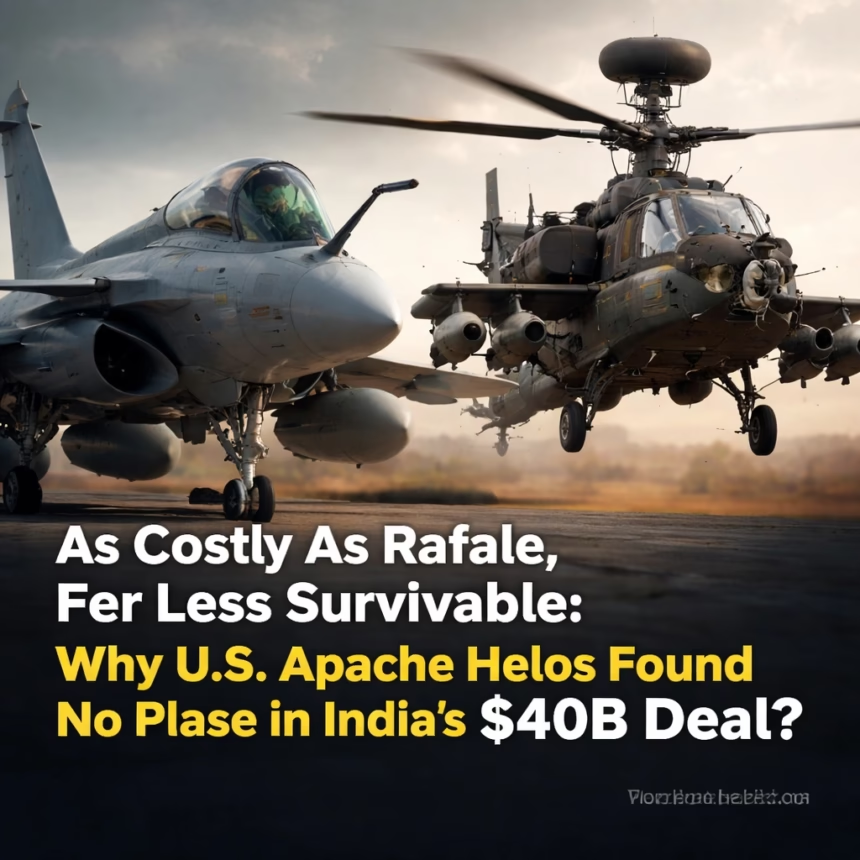
As Costly As Rafale, Far Less Survivable: Why U.S. Apache Helos Found No Place in India’s $40B Deal?

Viral_X
By
Viral_X
5 Min Read
#image_title

"Apache Dreams Crushed: How India's $40 Billion Helicopter Deal Became a Rafale's Best Friend"

In a surprise move, India's Ministry of Defence has scrapped plans to acquire the American-made Apache helicopter, opting instead for the French-made Rafale fighter jet. The decision, which has sent shockwaves through the Indian defence industry, raises questions about the future of the Apache in the country's military arsenal.

The process of selecting a new helicopter began in 2012, with the Indian Air Force (IAF) issuing a Request for Proposal (RFP) for 22 Advanced Light Helicopters (ALH). The US-made Apache, along with the Russian-made Ka-52 and the Eurocopter EC635, were among the contenders. However, after years of deliberation, the IAF finally settled on the Rafale, which was selected in 2016.

Background: A Long and Winding Road

The process of acquiring a new helicopter began in 2012, when the IAF issued an RFP for 22 ALHs. The RFP was initially expected to be completed by 2014, but was delayed multiple times due to technical issues and disagreements over the procurement process. In 2015, the IAF issued a new RFP, which was again delayed due to disagreements over the price and technical specifications of the Apache.

In 2016, the IAF finally settled on the Rafale, which was selected over the Apache and the Ka-52. The deal, worth over $8 billion, was hailed as a major coup for France and a significant blow to the US defence industry.

Key Developments: A Shift in Priorities
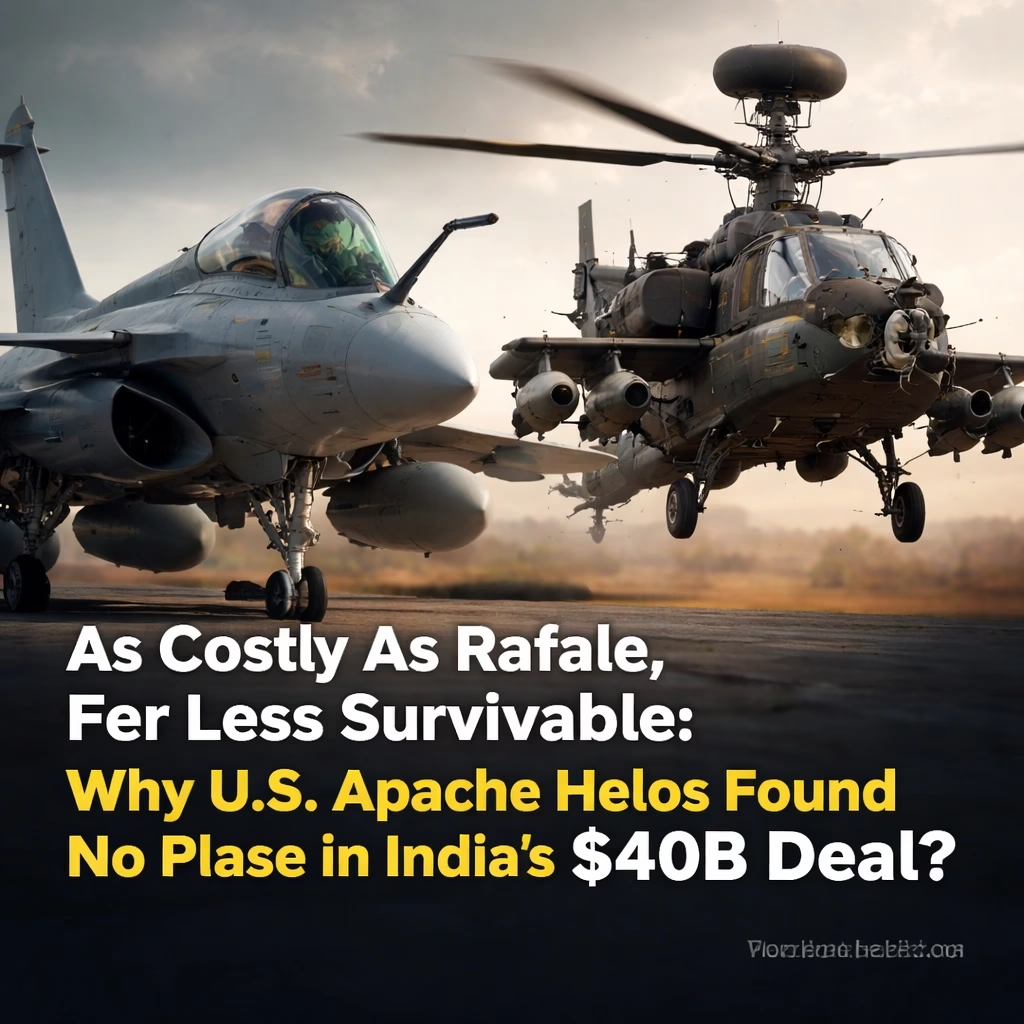
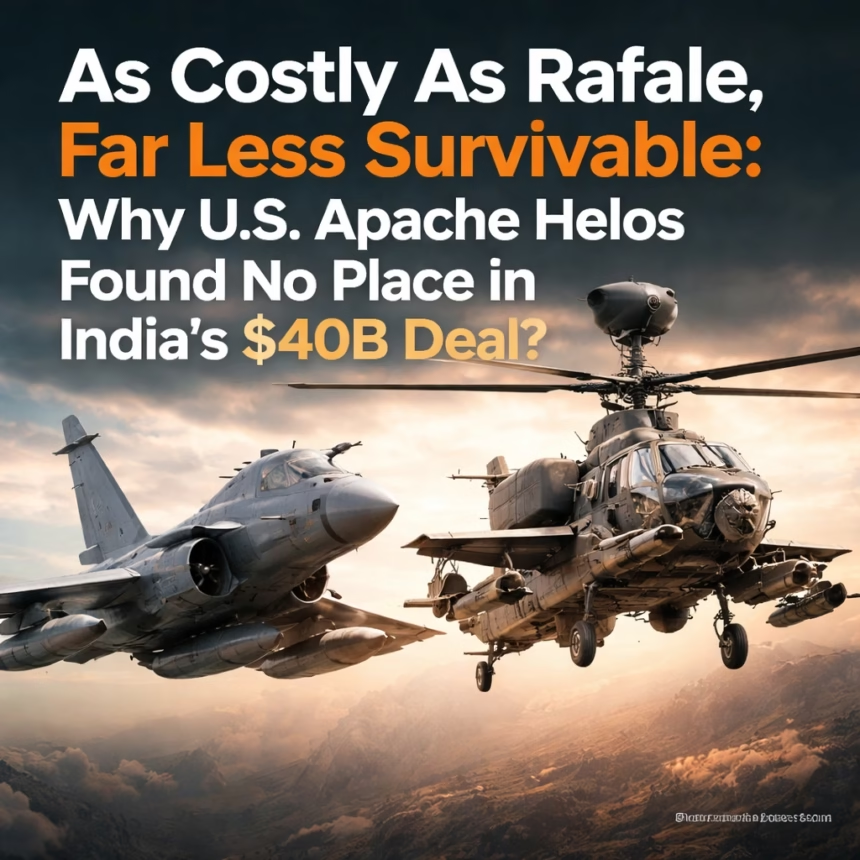
As Costly As Rafale, Far Less Survivable: Why U.S. Apache Helos Found No Place in India’s $40B Deal?

In recent months, however, there have been significant developments that have led to a re-evaluation of the Apache's prospects. In 2020, the US government announced a major overhaul of the Apache's combat system, which included the addition of advanced sensors and communication systems. However, this upgrade came with a hefty price tag, estimated to be over $20 billion.

Meanwhile, the Rafale deal has been going from strength to strength, with the first batch of aircraft expected to be delivered by 2023. The IAF has also announced plans to purchase additional Rafale jets, worth over $10 billion.

Impact: Who is Affected?

The decision to scrap the Apache deal has sent shockwaves through the Indian defence industry, with many contractors and suppliers facing significant losses. The US defence industry, which had been expecting a major contract, is also feeling the pinch.

However, the impact of the decision will not be limited to the defence industry alone. The scrapping of the Apache deal will also have significant implications for the Indian economy, with thousands of jobs lost and billions of dollars in economic activity disrupted.

What Next: Expected Milestones

In the coming months, the Indian Ministry of Defence is expected to finalize the Rafale deal, with the first batch of aircraft expected to be delivered by 2023. The IAF is also expected to begin training pilots on the new aircraft, with the aim of having a fully operational fleet by 2025.

As the Rafale deal moves forward, the Indian defence industry will be watching with bated breath to see how the deal unfolds. Will the IAF be satisfied with the Rafale, or will it prove to be a costly and regrettable decision? Only time will tell.

The Rafale's Rise to Prominence

The Rafale, which was once considered a long shot, has emerged as a major player in the Indian defence industry. With its advanced combat systems and sleek design, the Rafale is set to play a major role in the IAF's future.

The Apache's Decline

The Apache, which was once considered a top contender for the Indian helicopter deal, has seen its prospects decline significantly in recent months. With the addition of advanced sensors and communication systems, the Apache's combat capabilities have improved, but its price tag has increased significantly.

The Future of the Apache in India

The decision to scrap the Apache deal has raised questions about the future of the aircraft in the Indian military arsenal. Will the Apache be phased out, or will it continue to play a role in the IAF's operations?

Only time will tell, but one thing is certain: the decision to scrap the Apache deal has sent shockwaves through the Indian defence industry, and the implications will be felt for years to come.

Share This Article

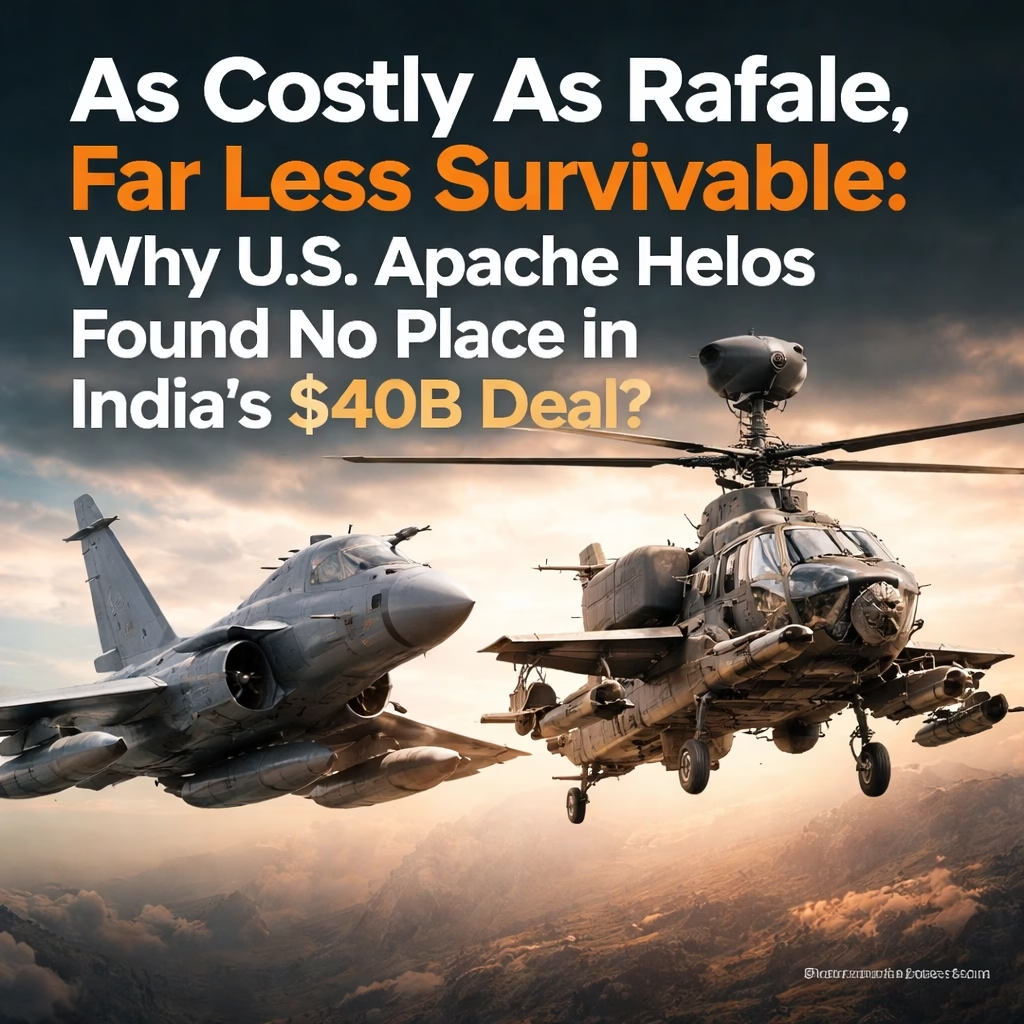
As Costly As Rafale, Far Less Survivable: Why U.S. Apache Helos Found No Place in India’s $40B Deal?

Viral_X
By
Viral_X
7 Min Read
#image_title

India's ambitious multi-billion dollar defense modernization push has seen a significant shift in procurement strategies, with a recent $40 billion deal notably excluding the formidable U.S. Apache attack helicopters. This decision, unfolding over the past year, underscores a complex interplay of cost-effectiveness, operational suitability, and India's growing emphasis on indigenous manufacturing, prompting questions about the future of foreign rotary-wing acquisitions.

Background: India’s Evolving Defense Landscape

For decades, India has been a major global arms importer, diversifying its arsenal across Russian, European, Israeli, and American platforms. The Indian armed forces, facing strategic challenges along its northern and western borders, have been on an aggressive modernization drive. While the U.S. AH-64E Apache Guardian has previously found a place in India's inventory, with 22 units delivered to the Indian Air Force (IAF) between 2020 and 2021, and six more ordered for the Indian Army in 2020, its absence in the latest major procurement round highlights a changing calculus.

India’s Modernization Drive

The current defense spending spree, estimated at over $40 billion, encompasses a broad spectrum of military hardware. This includes fighter jets, naval vessels, submarines, drones, and advanced missile systems, all aimed at bolstering India’s capabilities across air, land, and sea. The deal’s scope emphasizes cutting-edge technology and strategic independence, a cornerstone of the “Atmanirbhar Bharat” (Self-Reliant India) initiative launched in 2020. This policy prioritizes domestic defense production, technology transfer, and reducing reliance on foreign suppliers.

Key Developments: The $40 Billion Deal’s Focus

The recent procurement focus has centered on high-value, high-impact platforms. A significant portion of the $40 billion deal is allocated to advanced fighter aircraft, notably the acquisition of 26 Rafale M (Marine) fighter jets for the Indian Navy, a deal valued at approximately $5.5 billion. Other major components include indigenous submarine projects, advanced drone systems, and upgrades to existing fleets. The absence of additional Apache helicopters in this specific, large-scale procurement is not an isolated event but rather indicative of several strategic considerations.

The Indigenous Imperative

India’s defense establishment is increasingly prioritizing domestic alternatives. For the attack helicopter role, the Light Combat Helicopter (LCH) Prachand, developed by Hindustan Aeronautics Limited (HAL), has emerged as a strong contender. The LCH Prachand, specifically designed for high-altitude operations and various terrains, has already seen initial inductions into both the IAF and the Indian Army. Its development aligns perfectly with the ‘Make in India’ initiative, offering cost advantages, easier maintenance, and customization potential without foreign dependency.

Cost vs. Capability Debate

The U.S. Apache AH-64E, while a highly capable and battle-proven platform, comes with a substantial price tag, both for acquisition and through-life support. Reports suggest an estimated unit cost upwards of $60-70 million, excluding weapons, spares, and training. When juxtaposed against the perceived “survivability” of fixed-wing fighter jets like the Rafale, which operate in a different threat environment and offer multi-role capabilities, the cost-benefit analysis for additional Apaches in this particular deal may have shifted. Helicopters, by their very nature, operate at lower altitudes and speeds, making them more vulnerable to certain ground-based air defenses compared to high-flying, agile fighter jets. The comparison is not direct, as their roles differ, but the overall strategic allocation of funds plays a crucial role.

Apache’s Niche Role

While Apaches excel in close air support, anti-armor, and reconnaissance roles, India’s current strategic priorities might have leaned towards bolstering air superiority, maritime strike, and long-range precision capabilities, which are addressed by platforms like the Rafale M and other systems within the $40 billion framework. The existing Apache fleet, combined with the emerging LCH Prachand, might be deemed sufficient for immediate attack helicopter requirements, freeing up funds for other critical acquisitions.

Impact: Strategic Shifts and Industry Implications

The decision to bypass additional Apache procurements in this major deal carries significant implications for various stakeholders.

Strategic Autonomy

For India, it reinforces its commitment to strategic autonomy in defense. By investing in indigenous platforms like the LCH Prachand, India aims to reduce reliance on foreign suppliers, enhance its technological base, and foster a robust domestic defense-industrial complex. This move aligns with India’s long-term vision of becoming a defense exporter rather than just an importer.

Industry Shifts

The U.S. defense industry, particularly Boeing, which manufactures the Apache, faces a missed opportunity for a significant follow-on order. While the U.S. remains a key defense partner for India, this particular procurement decision signals India’s willingness to look beyond established foreign platforms when domestic alternatives are viable or when strategic priorities shift. It also opens avenues for other global players or domestic firms to fill specific capability gaps.

Geopolitical Implications

From a geopolitical standpoint, this decision reflects India’s nuanced approach to defense partnerships. While maintaining strong ties with the U.S., India continues to diversify its procurement base and assert its independent strategic choices. It underscores that defense deals are not solely about military hardware but also about technology transfer, industrial collaboration, and long-term strategic alignment.

What Next: Future Milestones and Collaborations

The current $40 billion deal is a snapshot of India's immediate priorities. However, the requirement for advanced attack helicopters remains a continuous need for both the Indian Air Force and Army.

Future procurement cycles will likely see continued emphasis on the indigenous LCH Prachand, with ongoing upgrades and expanded production. India may also explore collaborations for future generation rotary-wing platforms, potentially involving technology transfer agreements with international partners, rather than outright purchases of fully built foreign systems.

The focus will also be on the successful integration and operationalization of the systems acquired under the current $40 billion deal, particularly the Rafale M jets and indigenous naval assets. India's defense modernization path is dynamic, driven by evolving geopolitical realities, technological advancements, and a steadfast commitment to self-reliance. While the Apache has secured its place in India's current fleet, its exclusion from this particular mega-deal marks a significant pivot in India's defense procurement strategy.

As Costly As Rafale, Far Less Survivable: Why U.S. Apache Helos Found No Place in India’s $40B Deal?

Share This Article